Leveraging 3d‐4f Coordination: Molecular Quantum Spring‐Magnet Behavior in Axial Ni2Ln Complexes
Zhaoyang Jing, Eufemio Moreno‐Pineda, Sagar Paul, Appu Sunil, Olaf Fuhr, Yaorong Chen, Wolfgang Wernsdorfer, Mario Ruben

TL;DR
Scientists created molecular magnets using Ni and lanthanide ions that mimic the behavior of larger magnets, showing potential for quantum and nanoscale devices.
Contribution
The study introduces a new class of molecular magnets with tunable bistability through 3d–4f coordination and anisotropy alignment.
Findings
Ni2Tb, Ni2Dy, and Ni2Ho complexes show slow magnetic relaxation and open hysteresis loops.
Ferromagnetic coupling between Ni and lanthanide ions enhances magnetic bistability.
Collinear anisotropy axes and electronic configurations are favorable for magnetic performance.
Abstract
We report heterotrimetallic 3d–4f complexes, mimicking classical exchange spring magnets at the molecular scale. The complexes feature a linear Ni···Ln···Ni core, where the lanthanide ion is sandwiched between two Ni2+ centers coordinated by N3O3 ligand environments. The complexes are isostructural, while CASSCF calculations reveal collinear anisotropy axes and favorable electronic configurations for magnetic bistability in selected systems. Magnetic characterization via DC, AC, and µSQUID magnetometry down to 30 mK demonstrates slow magnetic relaxation and open hysteresis loops exclusively in Ni2Tb, Ni2Dy, and Ni2Ho. These systems exhibit ferromagnetic 3d‐4f coupling, while their isolated or antiferromagnetically coupled analogs (Ni2Y, Zn2Tb/Dy) and Ni2Er/Yb counterparts show fast relaxation and closed loops. Analysis suggests that the Ni2+ ions alone, with modest anisotropy, deviate…
Genes, proteins, chemicals, diseases, species, mutations and cell lines named across the full text — each resolved to its canonical identifier and authoritative record.
Click any figure to enlarge with its caption.
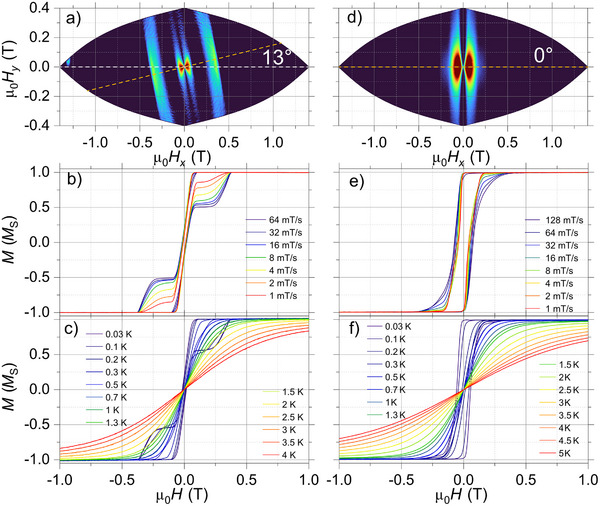 Figure 1
 Figure 2
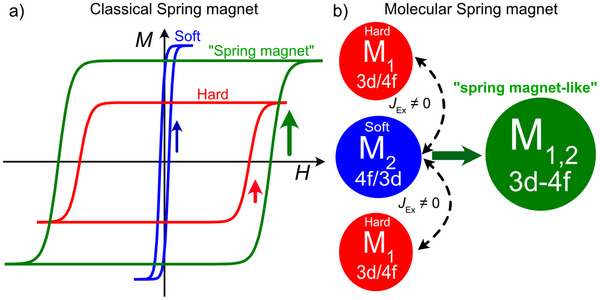 Figure 3
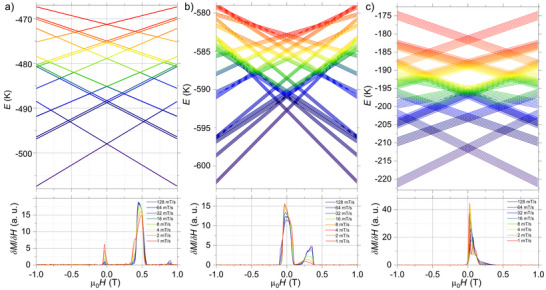 Figure 4
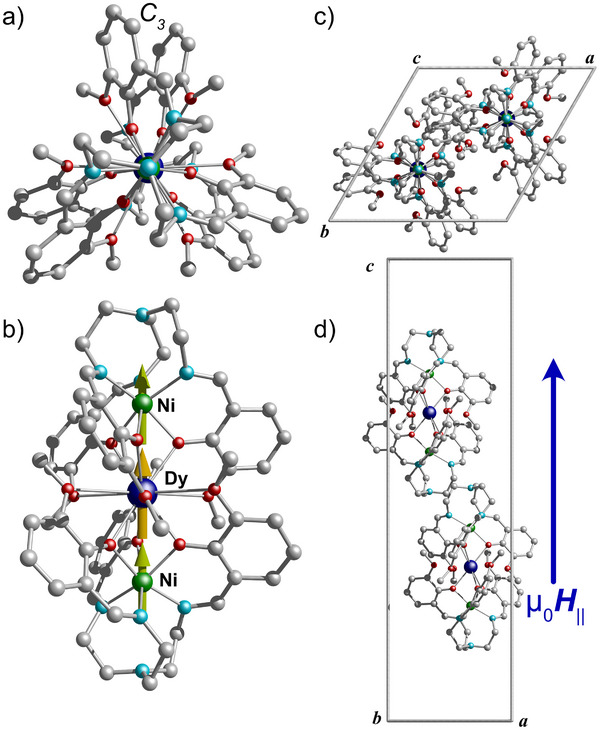 Figure 5
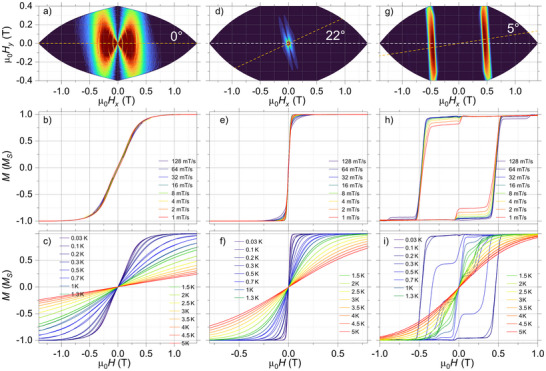 Figure 6
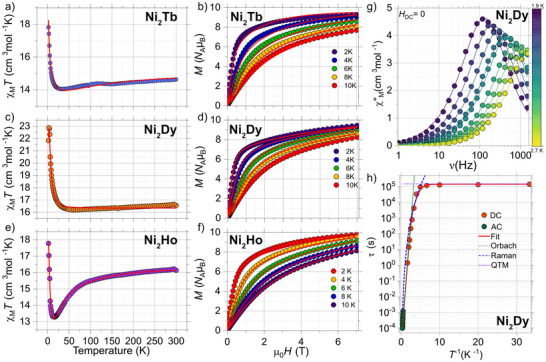 Figure 7
Peer Reviews
No public reviews on file for this paper yet. If you reviewed it on a platform where reviews are public (OpenReview, ICLR, NeurIPS, ICML), you can paste yours below so the community can read it here.
Videos
No videos yet. Explain this paper in a talk, walkthrough, or lecture? Add one.
Taxonomy
TopicsMagnetism in coordination complexes · Lanthanide and Transition Metal Complexes · Synthesis and Properties of Aromatic Compounds