O2 Activation at an Enzymatic Diiron Site: Bridging Ligand Substitutions Alter Diferric‐(Hydro)peroxo States
Jae‐Hun Jeoung, Stefan Rünger, Kilian Weißer, Jakob Ruickoldt, Samriddhi Bhattacharya, Christian Limberg, Holger Dobbek

TL;DR
This paper shows how changing bridging ligands in a diiron enzyme can alter its structure and reactivity with oxygen, enabling the formation of different (hydro)peroxo intermediates.
Contribution
The study demonstrates that bridging ligand substitutions in sulerythrin can generate all three structural subclasses of diferrous active sites and modulate O2 reactivity.
Findings
Replacing bridging carboxylates in sulerythrin shifts coordination from 1,3- to 1,1-carboxylate, shortening the Fe–Fe distance.
Modifying carboxylate bridges alters the nature of diferric (hydro)peroxo intermediates formed upon O2 reaction.
Sulerythrin can be engineered to produce various stable (hydro)peroxo intermediates for further study.
Abstract
A variety of non‐heme diiron enzymes employ a conserved 2‐His‐4‐carboxylate motif to coordinate a dinuclear Fe site and activate dioxygen for diverse types of reactions. Two of the carboxylate residues act as bridging ligands between the Fe ions. As the type and coordination geometry of the bridging ligands in the diferrous state are thought to modulate reactivity, they were used to group diiron oxygenases into three structural subclasses. Here, we use the small diiron‐enzyme sulerythrin as a model to demonstrate that replacements of the bridging carboxylate amino acids allow us to decrease the distance between the two Fe ions, change the coordination of the bridging ligands from 1,3‐carboxylates to 1,1‐carboxylates and generate all three structural subclasses of diferrous active sites within the same protein scaffold. In addition to the known classes, we generated a coordination mode…
Genes, proteins, chemicals, diseases, species, mutations and cell lines named across the full text — each resolved to its canonical identifier and authoritative record.
Click any figure to enlarge with its caption.
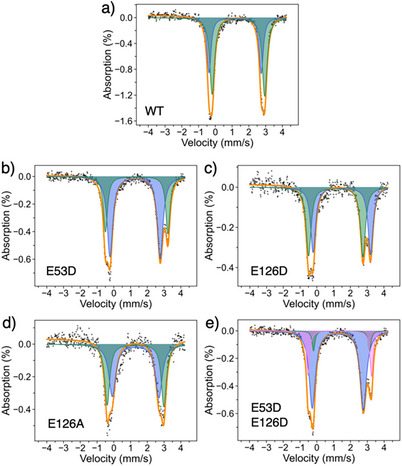 Figure 1
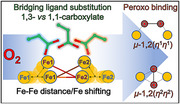 Figure 2
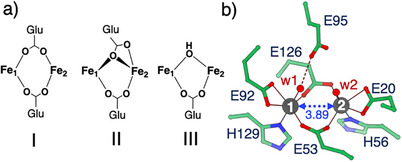 Figure 3
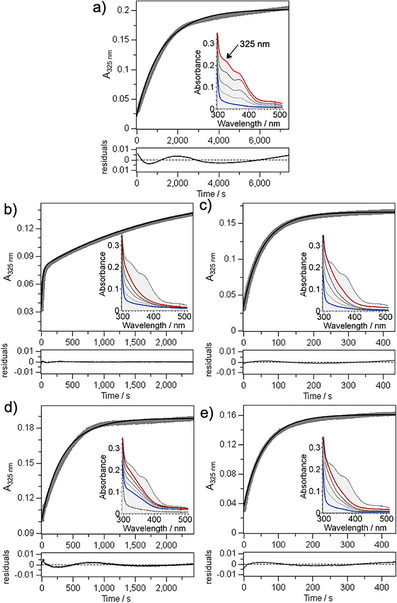 Figure 4
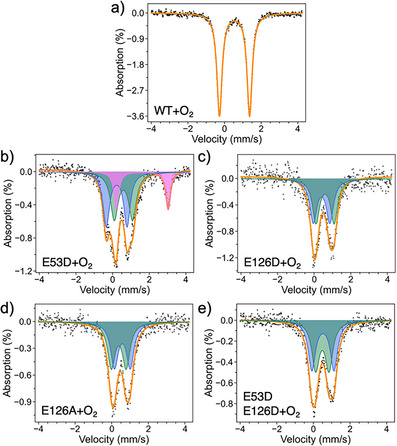 Figure 5
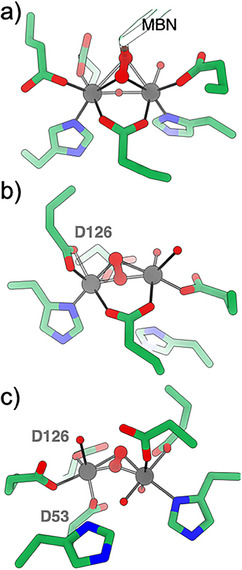 Figure 6
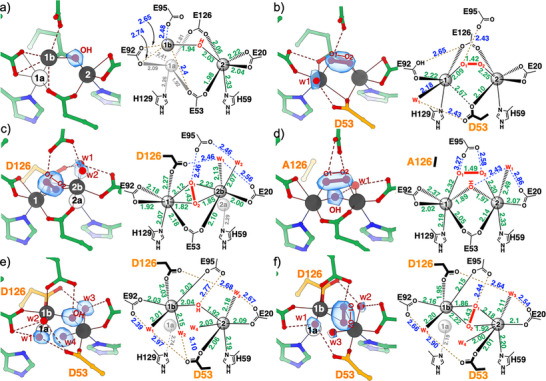 Figure 7
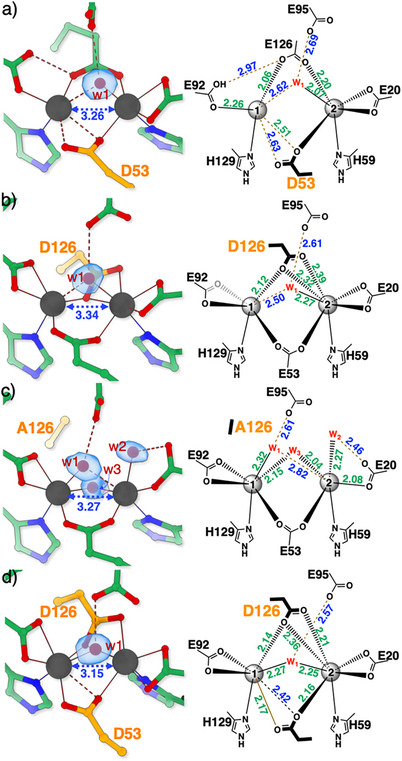 Figure 8
Peer Reviews
No public reviews on file for this paper yet. If you reviewed it on a platform where reviews are public (OpenReview, ICLR, NeurIPS, ICML), you can paste yours below so the community can read it here.
Videos
No videos yet. Explain this paper in a talk, walkthrough, or lecture? Add one.
Taxonomy
TopicsMetal-Catalyzed Oxygenation Mechanisms · Photosynthetic Processes and Mechanisms · Hemoglobin structure and function