Importance of Considering the Duplex Collecting System During Routine Endourological Procedures: A Case Report
Mahdi Mottaghi, Pranay Manda, Ernest A Morton, Mohammad Hajiha

TL;DR
A case report highlights the importance of recognizing a duplicated kidney system during medical procedures, even when imaging fails to detect it.
Contribution
This case emphasizes the clinical significance of anatomic variants during endourological procedures.
Findings
A duplicated collecting system was identified during stent placement despite normal imaging results.
Anatomic variants may not be reliably detected by diagnostic imaging.
Recognition of such anomalies is crucial for effective patient management.
Abstract
We report the case of a 58-year-old woman who initially presented to the emergency department with intermittent nausea, vomiting, and left upper quadrant abdominal pain for six days. As part of the abdominal pain workup in the emergency department, contrast-enhanced abdominopelvic CT and laboratory assessment were performed, which were consistent with pyelonephritis secondary to a distal ureteral stone. Interestingly, while the imaging failed to detect any significant anatomic variation, a duplicated collecting system was diagnosed during ureteral stent placement. Recognition of this anomaly was crucial for successful patient management. Awareness of anatomic variants is essential during endourological procedures, as diagnostic imaging may not reliably detect them.
Genes, proteins, chemicals, diseases, species, mutations and cell lines named across the full text — each resolved to its canonical identifier and authoritative record.
Click any figure to enlarge with its caption.
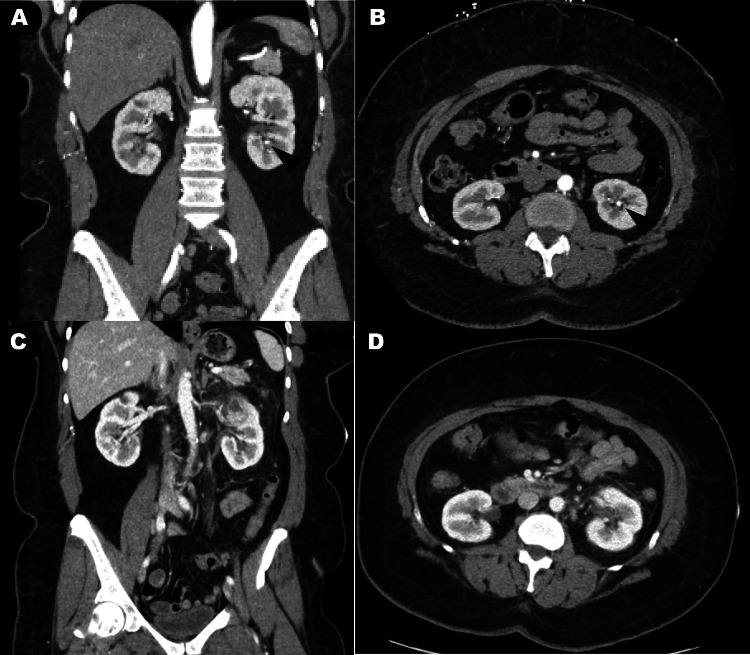 Figure 1
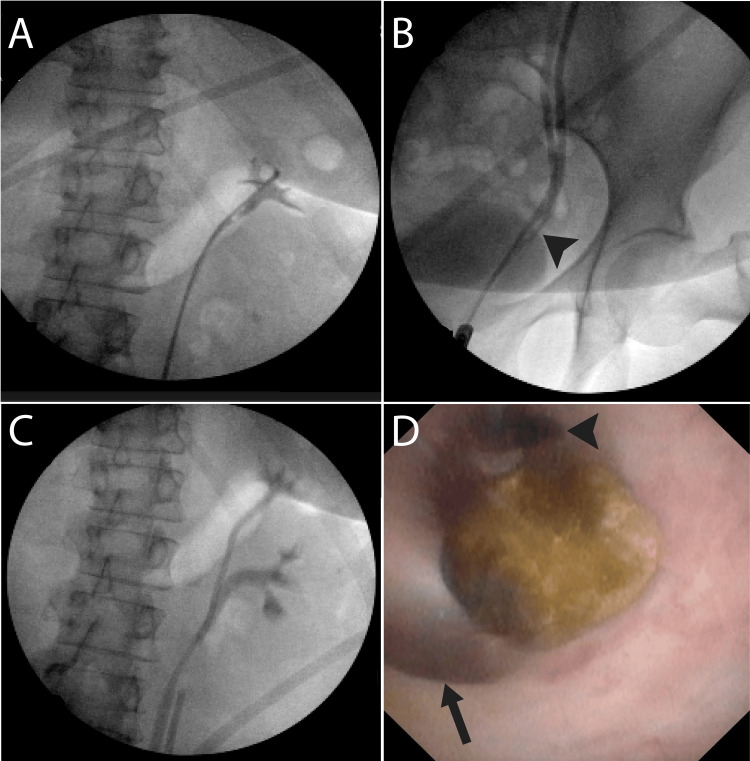 Figure 2
Peer Reviews
No public reviews on file for this paper yet. If you reviewed it on a platform where reviews are public (OpenReview, ICLR, NeurIPS, ICML), you can paste yours below so the community can read it here.
Videos
No videos yet. Explain this paper in a talk, walkthrough, or lecture? Add one.
Taxonomy
TopicsKidney Stones and Urolithiasis Treatments · Ureteral procedures and complications · Appendicitis Diagnosis and Management