An affixed, ingestible blood-sensing monitor for continuous monitoring after high-risk endoscopic procedures: a case series
Kimberly F. Schuster, Alexandra Goad, Steven N. Steinway

TL;DR
A new ingestible sensor was tested to detect bleeding after high-risk endoscopic procedures, showing promise for real-time monitoring.
Contribution
The study introduces a fixed, capsule-based sensor for continuous postprocedural bleeding detection in high-risk endoscopic patients.
Findings
The sensor detected bleeding in 3 out of 5 cases, with repeat endoscopy confirming bleeding in 2 sensor-positive cases.
Sensor migration occurred in 3 cases, but no adverse events were observed during follow-up.
The sensor was safely used as an adjunct to standard monitoring, supporting its feasibility.
Abstract
Detecting postprocedural bleeding (PPB) after high-risk endoscopic interventions remains challenging. A fixed intraluminal bleeding sensor could improve PPB detection. This case series included patients undergoing endoscopic retrograde cholangiopancreatography (ERCP) who were monitored for 24 to 48 hours by affixing a capsule-based bleeding sensor to the duodenal wall. Five patients underwent ERCP with sphincterotomy (n = 3) or ampullectomy (n = 2). The sensor was positive in 3 and negative in 2. Repeat endoscopy confirmed bleeding in 2 sensor-positive cases and 1 sensor-negative case, and hemostasis was successfully achieved. Sensor migration occurred in 3 cases. One patient with persistently negative readings was safely discharged. No adverse events occurred over 3 to 6 months of follow-up. This pilot series supports the feasibility of a fixed capsule–based sensor for real-time PPB…
Genes, proteins, chemicals, diseases, species, mutations and cell lines named across the full text — each resolved to its canonical identifier and authoritative record.
Click any figure to enlarge with its caption.
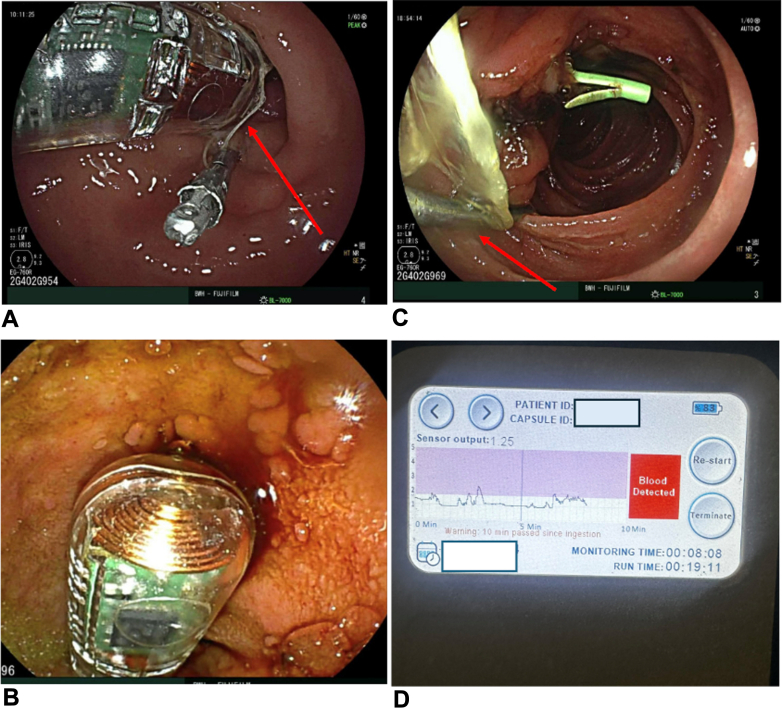 Figure 1
Peer Reviews
No public reviews on file for this paper yet. If you reviewed it on a platform where reviews are public (OpenReview, ICLR, NeurIPS, ICML), you can paste yours below so the community can read it here.
Videos
No videos yet. Explain this paper in a talk, walkthrough, or lecture? Add one.
Taxonomy
TopicsAnesthesia and Sedative Agents · Hemodynamic Monitoring and Therapy · Enhanced Recovery After Surgery