The evolution of single-use duodenoscope utilization at a large-volume endoscopic retrograde cholangiopancreatography tertiary care center
Yervant Ichkhanian, Hashem N. Albunni, Aditya Gutta, James L. Watkins, Evan L. Fogel, Jeffrey J. Easler, Nasir Saleem, Mark A. Gromski

TL;DR
This study examines the long-term use and outcomes of single-use duodenoscopes at a high-volume medical center, showing increasing adoption and improved satisfaction among endoscopists.
Contribution
The study provides real-world evidence of single-use duodenoscope performance across multiple models and evolving clinical practices.
Findings
Technical success was achieved in 94% of cases using single-use duodenoscopes.
Newer models showed improvements in stiffness, image stability, and elevator functionality.
Use of single-use scopes increased from 2.6% in 2020 to 4.7% in 2023, with greater satisfaction among junior faculty.
Abstract
Previous studies have shown promising outcomes with single-use duodenoscopes, often examining only 1 version. The aim of this study was to evaluate the long-term outcomes across multiple models at a large referral center. Endoscopic retrograde cholangiopancreatography (ERCP) cases (July 2020-September 2023) were retrospectively reviewed to assess technical success, defined as successful cannulation without switching devices. A 3-tier system guided the use of single-use duodenoscopes: recommended for drug-resistant cases (Tier 1), considered for immunosuppressed patients (Tier 2), and discouraged in routine cases (Tier 3). Of 8375 ERCPs, 267 (3.2%) involved single-use duodenoscopes (Tier 1, 25%; Tier 2, 54%; and Tier 3, 21%). The majority focused on the biliary system (91%), with 9% targeting the pancreatic duct. Technical success was achieved in 94%. Technical failures were primarily…
Genes, proteins, chemicals, diseases, species, mutations and cell lines named across the full text — each resolved to its canonical identifier and authoritative record.
Click any figure to enlarge with its caption.
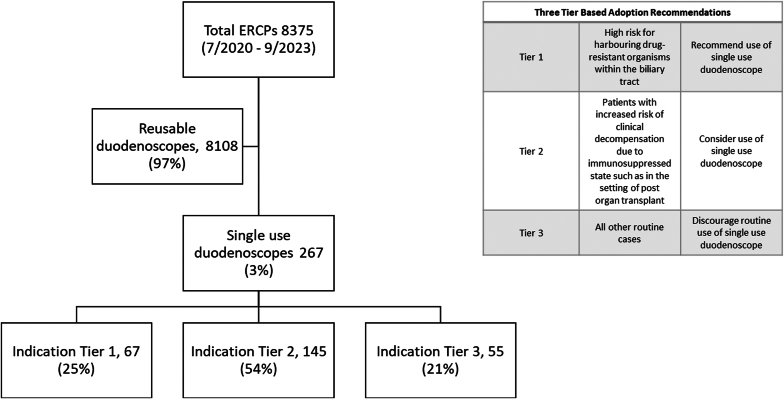 Figure 1
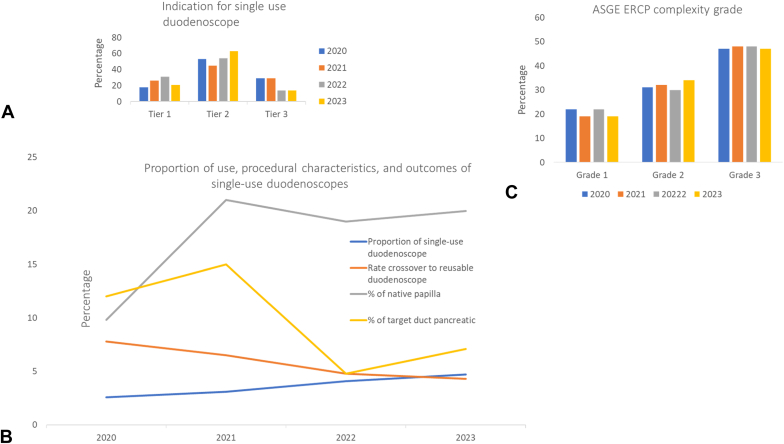 Figure 2
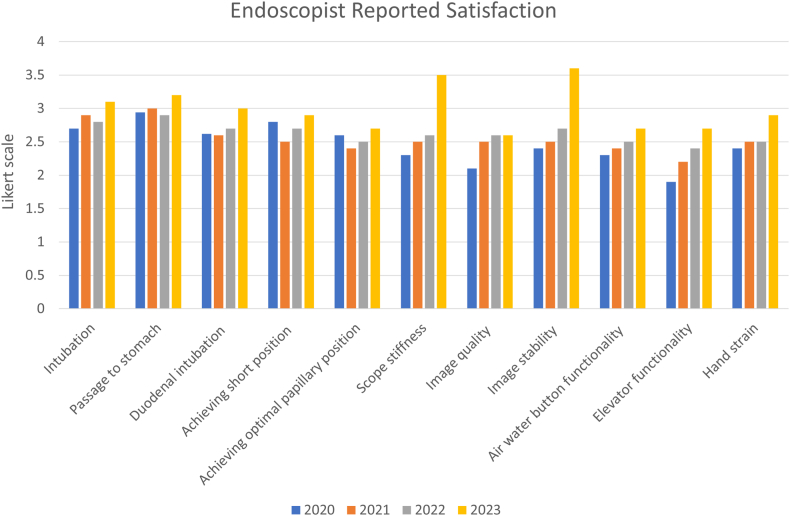 Figure 3
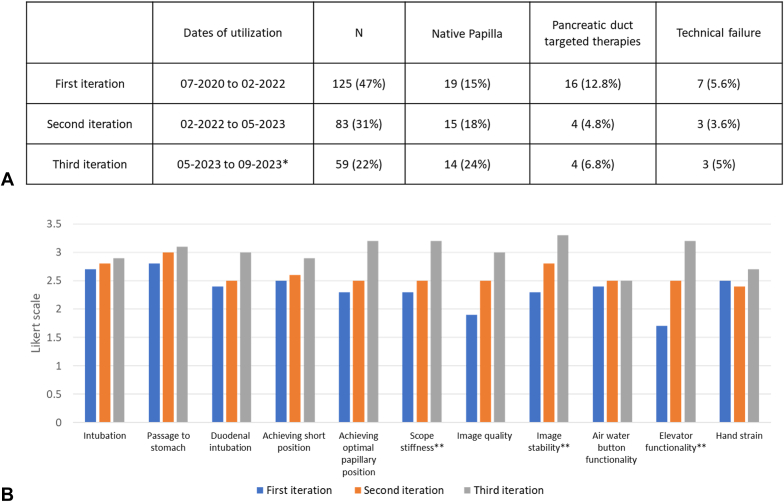 Figure 4
Peer Reviews
No public reviews on file for this paper yet. If you reviewed it on a platform where reviews are public (OpenReview, ICLR, NeurIPS, ICML), you can paste yours below so the community can read it here.
Videos
No videos yet. Explain this paper in a talk, walkthrough, or lecture? Add one.
Taxonomy
TopicsColorectal Cancer Screening and Detection · Esophageal and GI Pathology · Medical Device Sterilization and Disinfection