An experimental medicine protocol for exploring the haemodynamic effects of dual agonism at the glucagon‐like peptide‐1 and glucagon receptor in healthy subjects
James Goodman, Victoria E. Parker, Carmel M. McEniery, Giovanni Di Stefano, Annette Hubsch, Evangelia Vamvaka, Jo Helmy, Fotini Kaloyirou, Navazh Jalaludeen, Peter Barker, Lutz Jermutus, Joseph Cheriyan, Philip Ambery, Ian B. Wilkinson

TL;DR
This study examines how combining two drugs affects heart function in healthy people, finding that it increases heart rate and cardiac workload.
Contribution
The study is the first to investigate acute haemodynamic effects of dual GLP-1 and glucagon agonism in healthy subjects.
Findings
Co-infusion of exenatide and glucagon increased heart rate and rate pressure product.
No significant changes in blood pressure or cardiac output were observed.
The increase in cardiac work was driven by heart rate, not systolic blood pressure.
Abstract
Glucagon‐like peptide‐1 (GLP‐1) and glucagon dual receptor agonists are in clinical development for a range of metabolic conditions, including type 2 diabetes and obesity. The cardiovascular actions at these receptors are well studied, but less is known about their combination. The aim was to explore the acute haemodynamic effects of dual agonism at the GLP‐1 and glucagon receptor. Healthy male participants attended randomized, saline‐controlled intravenous infusion studies using glucagon (low, 25 ng/kg/min), glucagon (high, 50 ng/kg/min), exenatide (loading dose 50 ng/min for 30 min then 25 ng/min) and exenatide:glucagon co‐infusion for 120 min in Part A (glucagon dose‐comparison study) and 60 min in Part B (dual‐agonism study). In Part A (n = 7, median age 21 years, interquartile range 21‐32 years), glucagon (high) increased heart rate by 11 beats per minute (bpm) (95% confidence…
Genes, proteins, chemicals, diseases, species, mutations and cell lines named across the full text — each resolved to its canonical identifier and authoritative record.
Click any figure to enlarge with its caption.
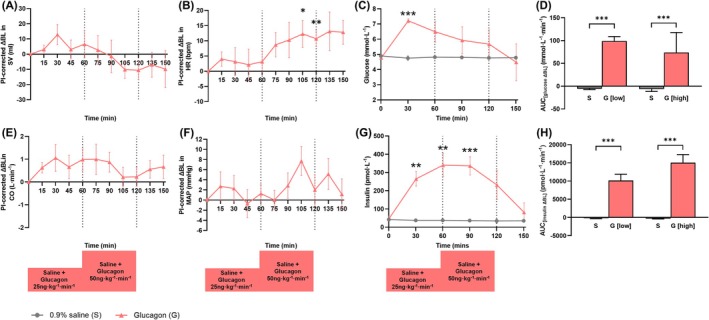 Figure 1
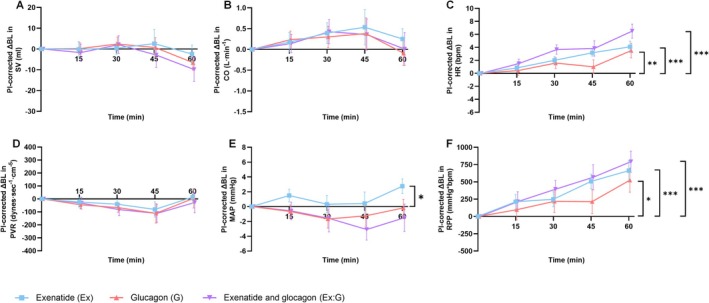 Figure 2
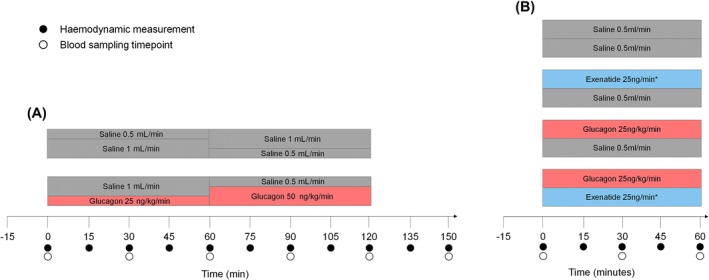 Figure 3
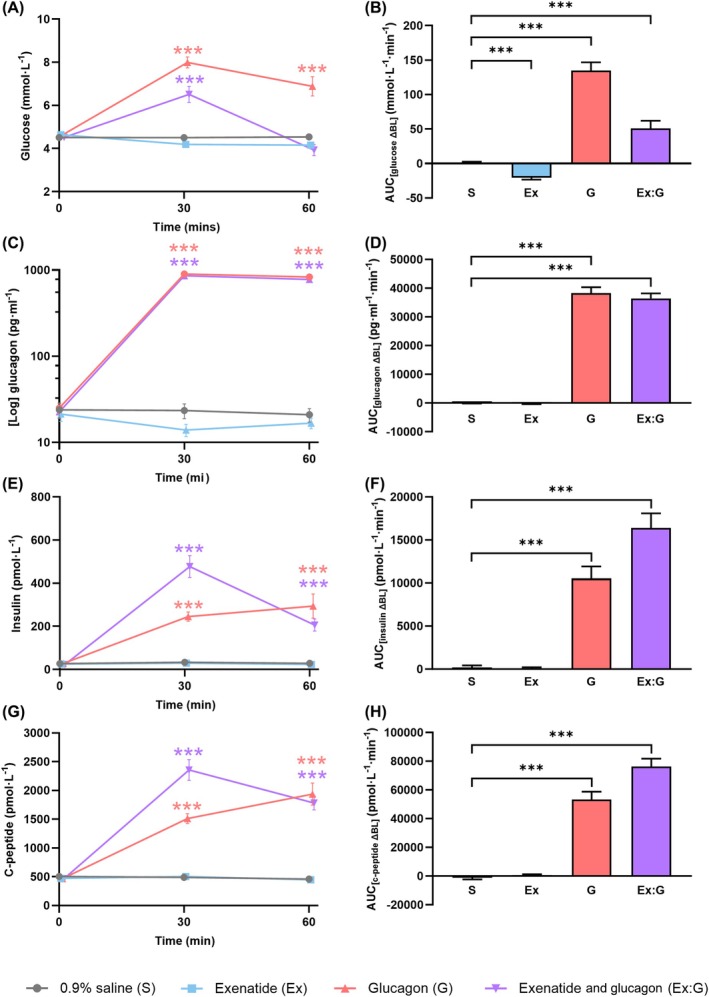 Figure 4
Peer Reviews
No public reviews on file for this paper yet. If you reviewed it on a platform where reviews are public (OpenReview, ICLR, NeurIPS, ICML), you can paste yours below so the community can read it here.
Videos
No videos yet. Explain this paper in a talk, walkthrough, or lecture? Add one.
Taxonomy
TopicsDiabetes Treatment and Management · Receptor Mechanisms and Signaling · Heart Failure Treatment and Management