Less missing values—evaluation of proteomics workflows for the quantification of (small) proteins
Jürgen Bartel, Vaikhari Kale, Dennis Joshua Pyper, Harald Schwalbe, Sandra Maaß

TL;DR
This study evaluates methods to improve the detection of small proteins in proteomics, resulting in a comprehensive dataset for Clostridioides difficile.
Contribution
The study provides a systematic evaluation of workflows for quantifying small proteins and generates the most comprehensive C. difficile protein dataset to date.
Findings
Small protein enrichment improves identification and quantification of low-abundance small proteins.
Spectral libraries enhance the number of robustly quantified proteins and lower detection limits.
The dataset covers 84.7% of the predicted C. difficile proteome and 61.4% of predicted small proteins.
Abstract
Quantitative information on protein abundance is crucial to understand biological processes and is therefore frequently gathered in proteomic studies. However, the quality of a quantitative proteomic dataset is greatly affected by the number of missing values, which need to be minimized to produce robust and meaningful data. In this context, small proteins (≤100 amino acids) pose specific analytical challenges, which hinder their efficient identification and quantitative characterization in complex proteomes. In this study, methods for sample preparation and MS-data processing are systematically evaluated for their contribution to identification and quantification of small proteins of Clostridioides difficile 630 Δerm. Results show that small protein enrichment can enhance the number of identified and quantified proteins also for low abundant small proteins. Through application of…
Genes, proteins, chemicals, diseases, species, mutations and cell lines named across the full text — each resolved to its canonical identifier and authoritative record.
Click any figure to enlarge with its caption.
 Figure 1
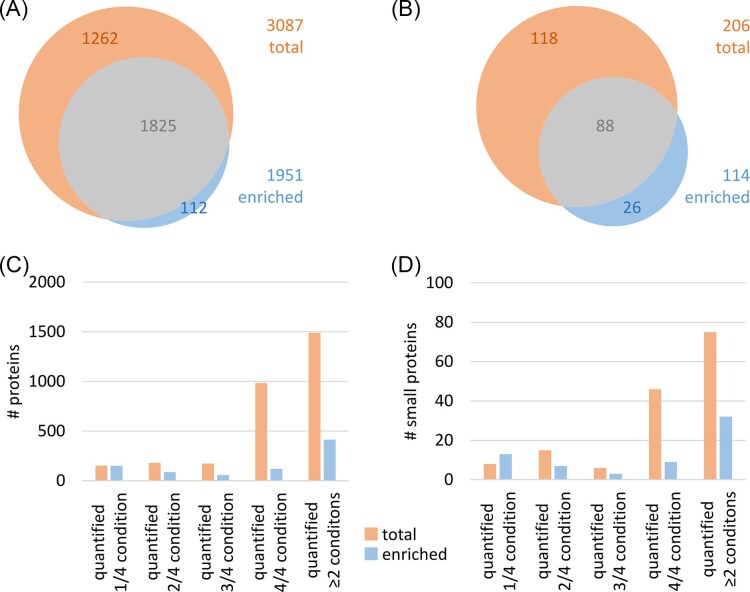 Figure 2
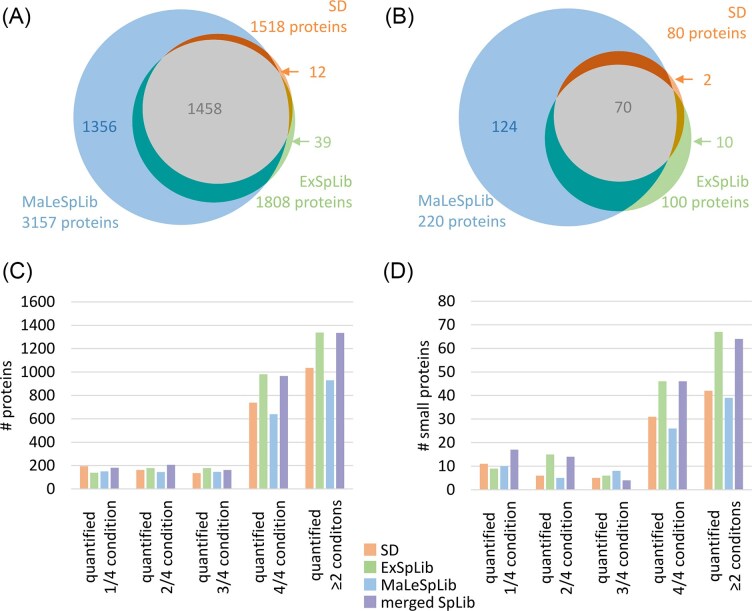 Figure 3
 Figure 4
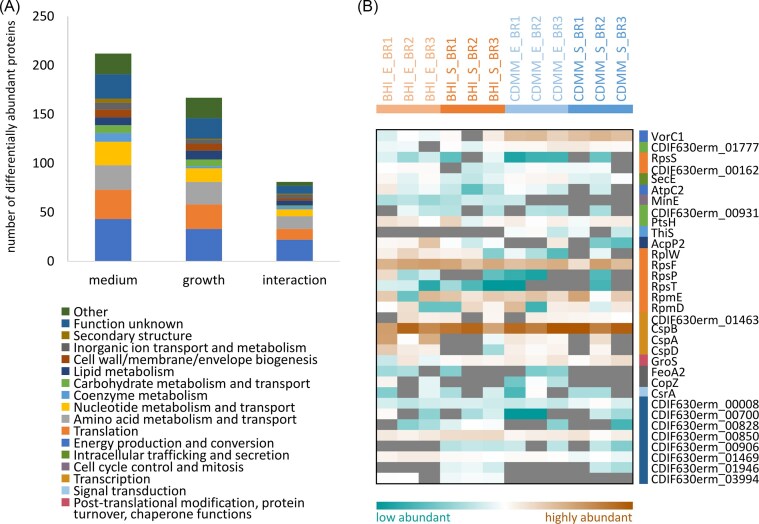 Figure 5
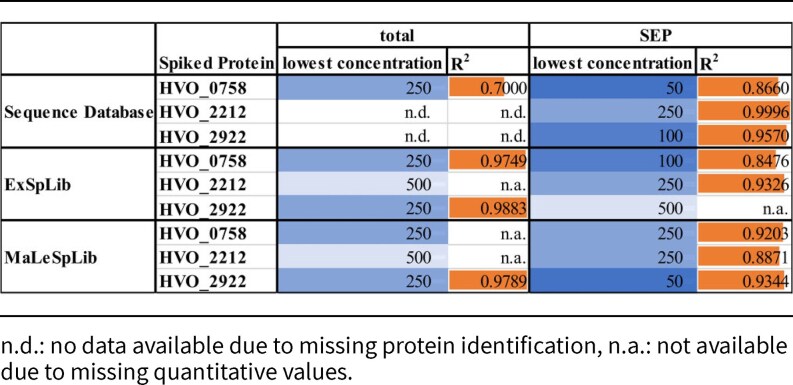 Figure 1
Peer Reviews
No public reviews on file for this paper yet. If you reviewed it on a platform where reviews are public (OpenReview, ICLR, NeurIPS, ICML), you can paste yours below so the community can read it here.
Videos
No videos yet. Explain this paper in a talk, walkthrough, or lecture? Add one.
Taxonomy
TopicsClostridium difficile and Clostridium perfringens research · Advanced Proteomics Techniques and Applications · Bacterial Identification and Susceptibility Testing