A donor–acceptor photosensitizer-catalyst dyad for light-driven nicotinamide hydrogenation
Alexander Tombrink, Mohini Semwal, Tamar Maisuradze, Alexander K. Mengele, Daniel Straub, Alexander J. C. Kuehne, Sven Rau, Stephan Kupfer, Benjamin Dietzek-Ivanšić, Birgit Esser

TL;DR
The paper introduces a new light-driven catalyst system that uses a donor-acceptor photosensitizer to reduce NAD+ efficiently.
Contribution
A novel donor–acceptor photosensitizer-catalyst dyad is designed for light-driven nicotinamide hydrogenation.
Findings
The PS-CAT dyad 2tBuCzDPPZRhCp* achieves a TON of 3.2 in NAD+ reduction after 4 hours.
Photophysical properties depend strongly on solvent polarity due to the donor–acceptor structure.
Femtosecond and Raman studies reveal insights into the excited state dynamics of the dyad.
Abstract
Using light energy to drive chemical transformations is of great relevance, with photosynthesis in nature as a grand example. In artificial light-driven catalysis, part of nature's complex supramolecular architecture can be mimicked through the so-called covalently linked photosensitizer-catalyst (PS-CAT) dyads. We herein report a dyad using an organic donor–acceptor PS, with dipyridophenazine as the acceptor and tert-butylcarbazole as the donor (2tBuCzDPPZ), that contains a coordination site for a rhodium(iii)Cp* center as the catalyst. The organic PS shows a charge-transfer transition upon visible-light irradiation and has redox properties similar to typically used ruthenium-based PSs. The resulting PS-CAT dyad 2tBuCzDPPZRhCp* shows – with methoxy-substituted 1,3-dimethyl-2-phenyl-2,3-dihydro-1H-benzo[d]imidazole (BIH-OMe) as the sacrificial electron donor – photocatalytic activity in…
Genes, proteins, chemicals, diseases, species, mutations and cell lines named across the full text — each resolved to its canonical identifier and authoritative record.
Click any figure to enlarge with its caption.
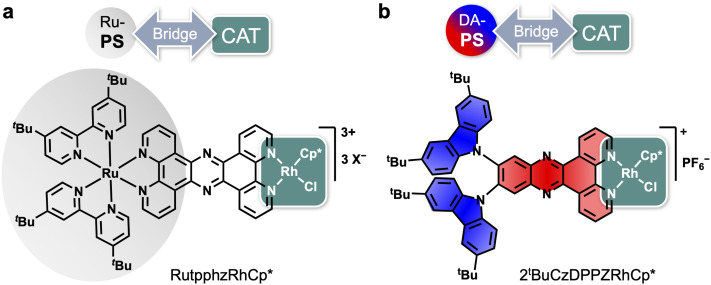 Figure 1
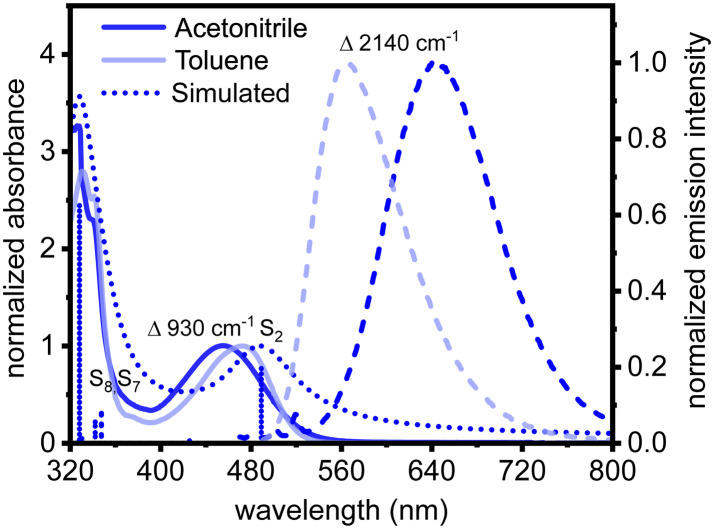 Figure 2
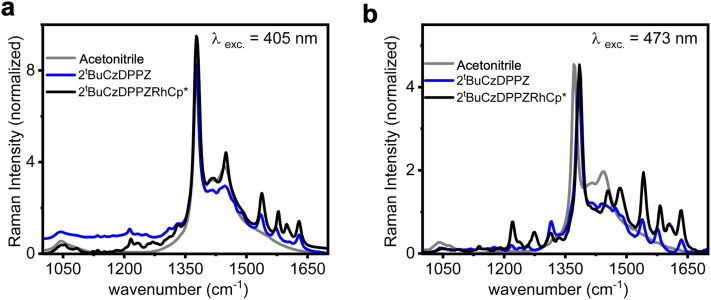 Figure 3
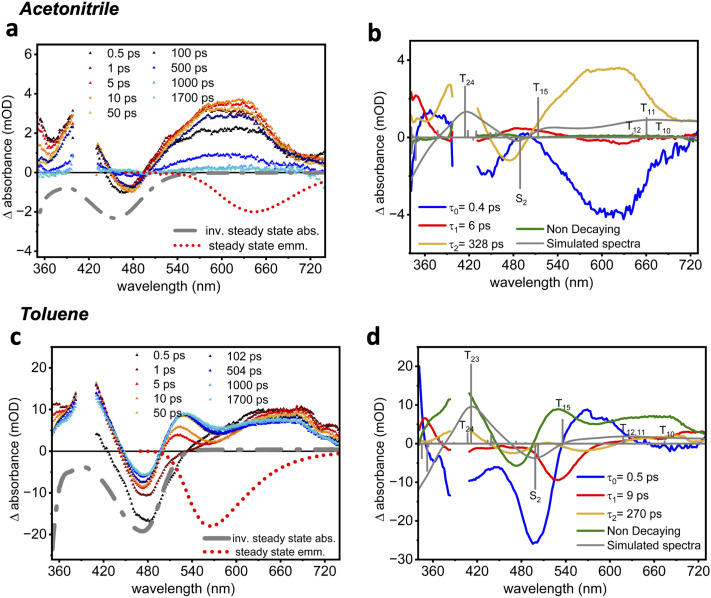 Figure 4
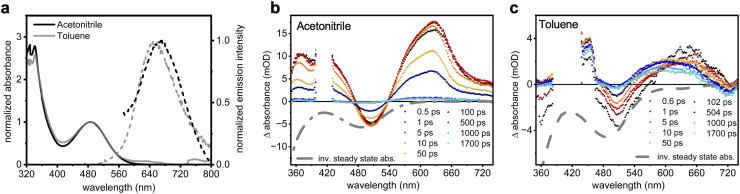 Figure 5
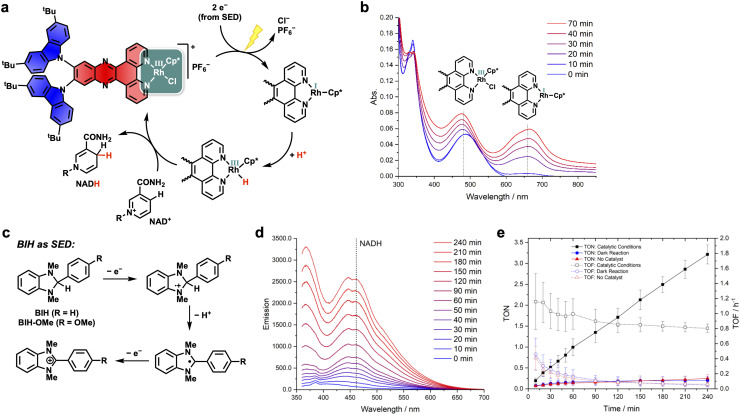 Figure 6
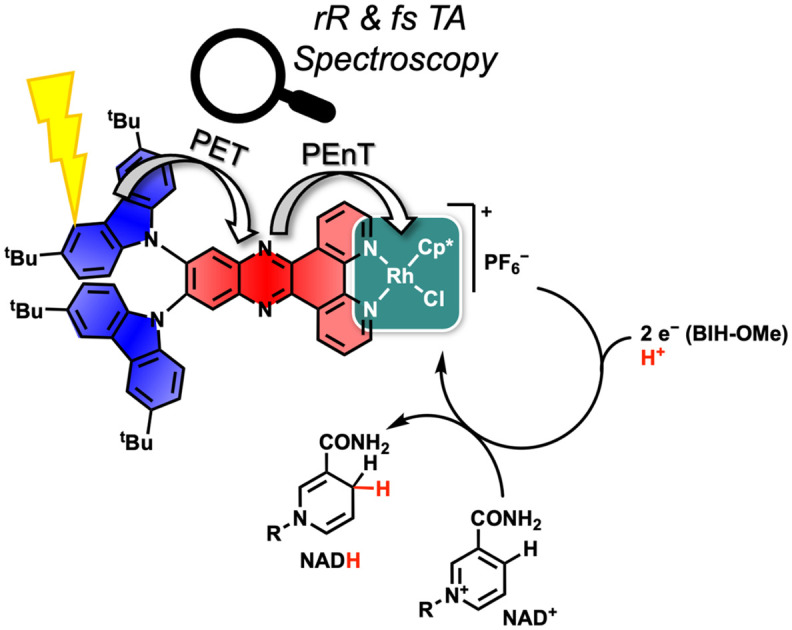 Figure 7
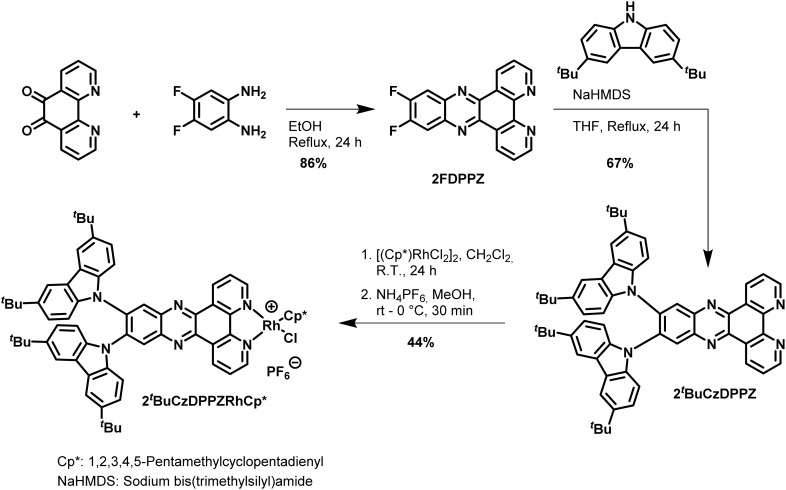 Figure 8
 Figure 9
 Figure 10
 Figure 11
 Figure 12
Peer Reviews
No public reviews on file for this paper yet. If you reviewed it on a platform where reviews are public (OpenReview, ICLR, NeurIPS, ICML), you can paste yours below so the community can read it here.
Videos
No videos yet. Explain this paper in a talk, walkthrough, or lecture? Add one.
Taxonomy
TopicsRadical Photochemical Reactions · Asymmetric Hydrogenation and Catalysis · Metalloenzymes and iron-sulfur proteins