Temporal Stretch‐Induced Nuclear Mechanosensing Coordinates Early Chromatin Accessibility and Genome Protection
Hye‐Won Shim, Ji‐Young Yoon, Hwalim Lee, Shanika Karunasagara, Cheng Ji Li, Yongdae Shin, Sukbum Hong, Dong‐Joon Lee, Jung‐Hwan Lee, Kam W. Leong, Hae‐Won Kim

TL;DR
This study shows how mechanical stretching of cells leads to changes in the nucleus that affect chromatin and protect the genome.
Contribution
The study reveals a coordinated nuclear mechanosensing cascade linking cytoskeletal remodeling to chromatin accessibility and genome protection.
Findings
Cyclic stretching causes rapid chromatin decondensation and nuclear softening with reduced H3K9me3 levels.
Perinuclear actin assembly and emerin translocation correlate with chromatin accessibility and DNA repair gene activation.
Failure to coordinate these events leads to DNA damage, highlighting a biophysical mechanism for genomic integrity.
Abstract
Cells respond to mechanical stimuli by transmitting forces to the nucleus, activating mechanosensitive molecules that alter chromatin organization and gene expression. While force‐induced changes in cell fate are recognized, the spatiotemporal dynamics of nuclear mechanosensing remain unclear. Here, nuclear responses are investigated to temporal cyclic stretching in human dermal fibroblasts, uncovering a cascade of mechanosensitive events linking cytoskeletal remodeling, chromatin accessibility, and gene expression. Brief cyclic stretch induces rapid chromatin decondensation and nuclear softening, marked by reduced H3K9me3 levels. The stretch reinforces perinuclear actin assembly from globular actins, activated by Ca2+ release from the nucleus/endoplasmic reticulum. Notably, perinuclear actin remodeling correlated with decreased H3K9me3 coordinates through emerin translocation at the…
Genes, proteins, chemicals, diseases, species, mutations and cell lines named across the full text — each resolved to its canonical identifier and authoritative record.
Click any figure to enlarge with its caption.
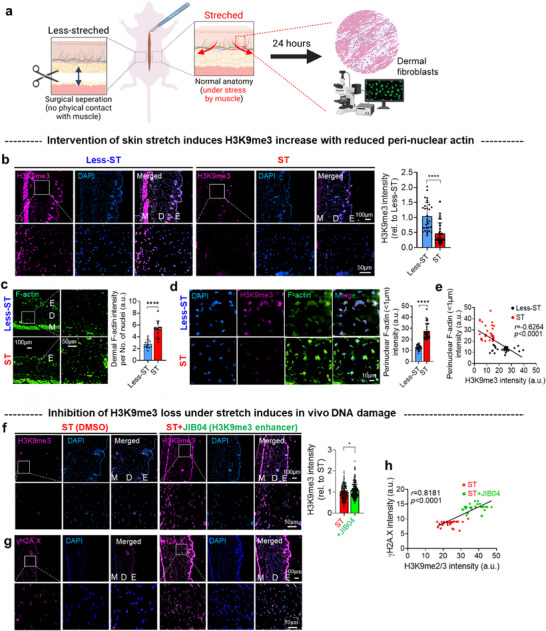 Figure 1
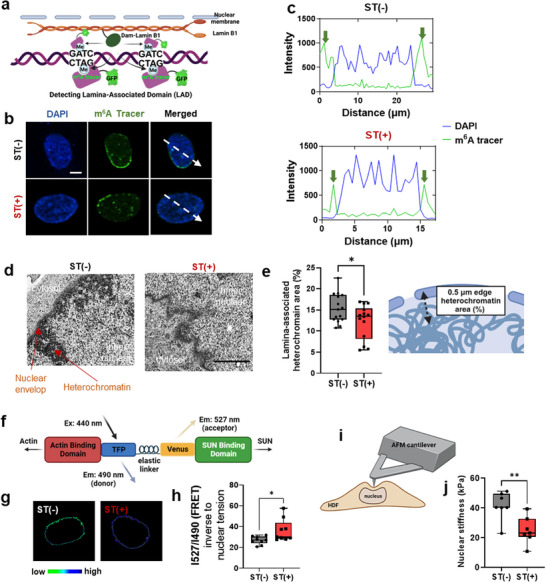 Figure 2
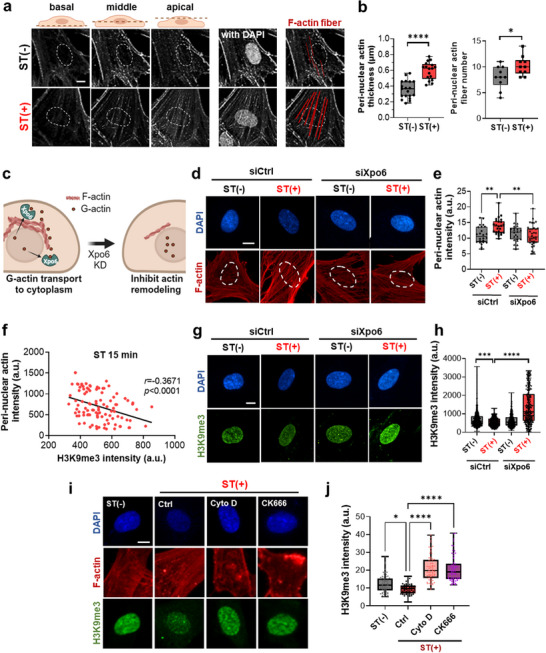 Figure 3
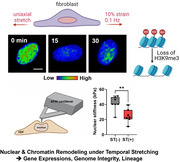 Figure 4
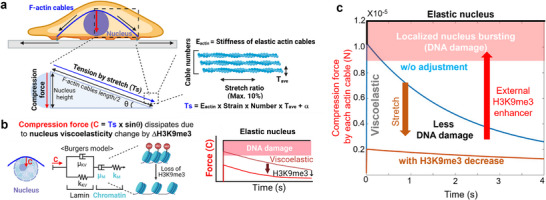 Figure 5
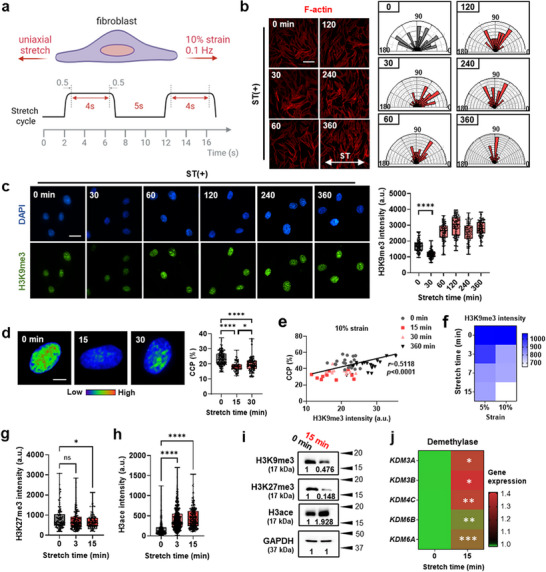 Figure 6
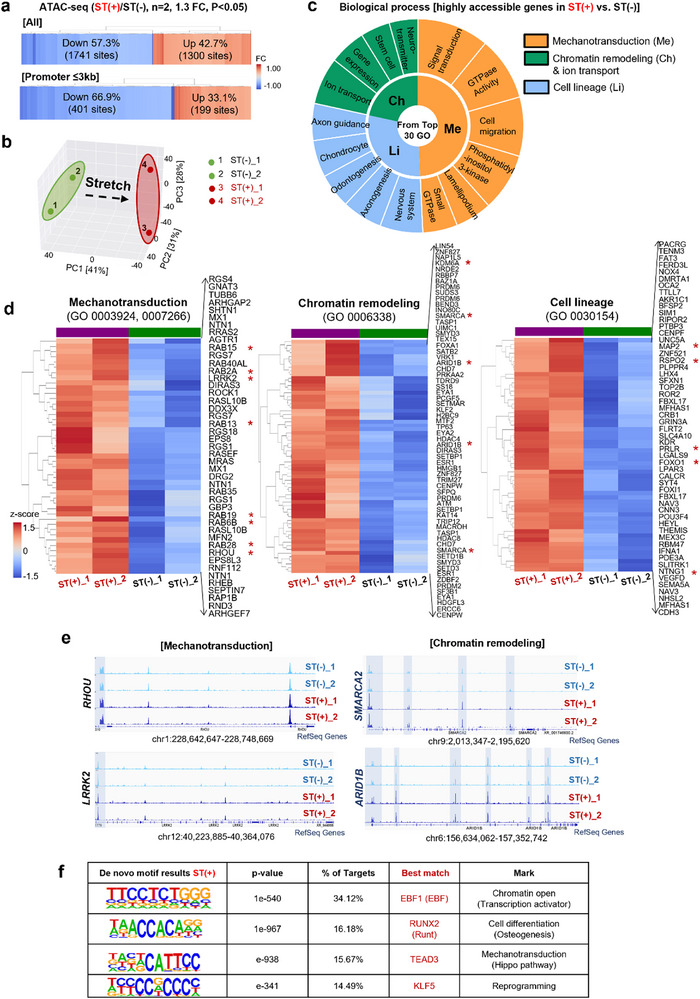 Figure 7
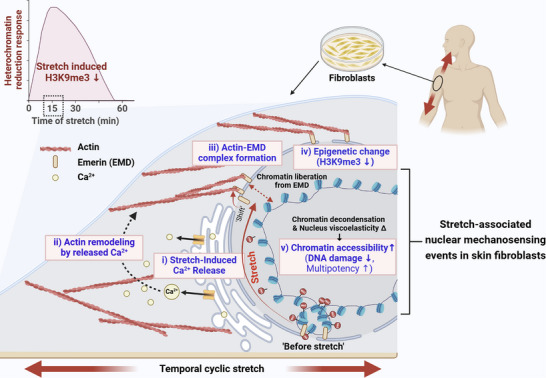 Figure 8
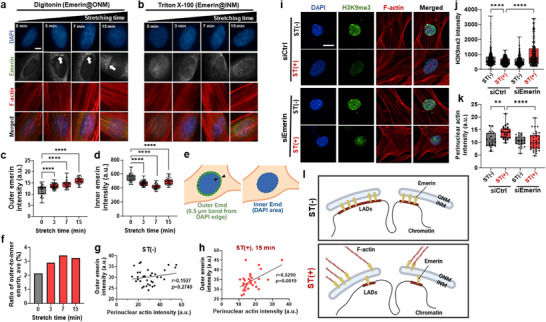 Figure 9
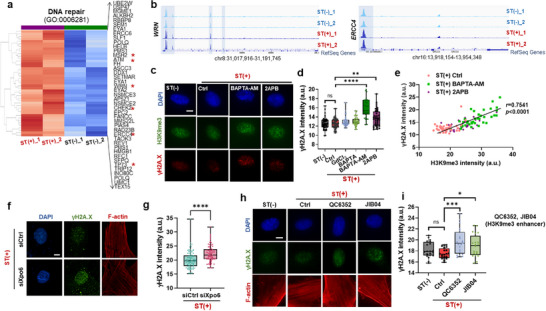 Figure 10
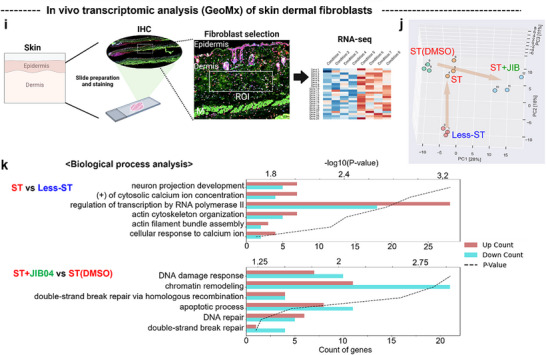 Figure 11
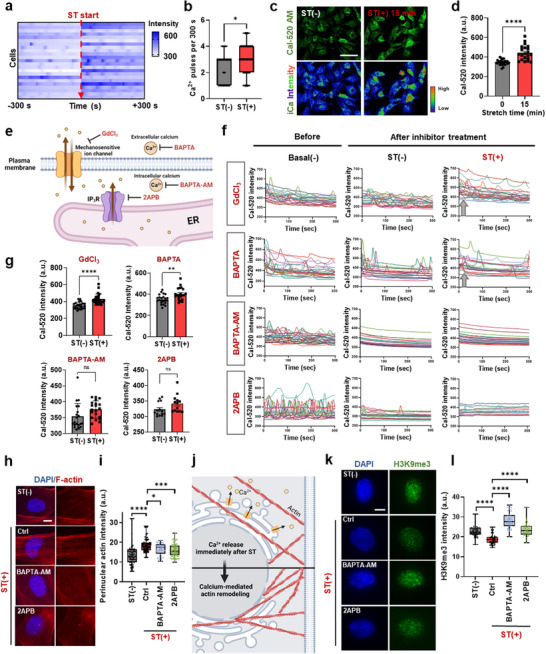 Figure 12
Peer Reviews
No public reviews on file for this paper yet. If you reviewed it on a platform where reviews are public (OpenReview, ICLR, NeurIPS, ICML), you can paste yours below so the community can read it here.
Videos
No videos yet. Explain this paper in a talk, walkthrough, or lecture? Add one.
Taxonomy
TopicsGenomics and Chromatin Dynamics · RNA Research and Splicing · Nuclear Structure and Function