Single‐Position Peptide Clustering for Peptidomics Reveals Novel Disease Biomarkers and Dysregulated Proteolytic Characteristics
Na Li, Yaxin Zhu, Yumeng Yan, Jifeng Wang, Lili Niu, Xiang Ding, Mengmeng Zhang, Zhensheng Xie, Tanxi Cai, Xiaojing Guo, Jianming Luo, Peng An, Xiangqian Guo, Fuquan Yang

TL;DR
A new method for analyzing peptides in blood reveals disease-specific protein breakdown patterns and potential biomarkers for β-thalassemia.
Contribution
Introduces a novel amino acid score-based clustering strategy for peptidomics, enabling precise biomarker discovery and proteolysis profiling.
Findings
Amino acid score-based clustering identifies novel peptide cluster biomarkers validated with heavy-labeled peptides.
The method uncovers disease-specific peptide-protein-protease relationships in β-thalassemia plasma samples.
Reference sample-assisted algorithms improve cohort study performance and handle missing data effectively.
Abstract
Mass spectrometry‐based peptidomics provides a comprehensive platform for mapping global proteolytic alterations and identifying disease biomarkers. However, existing analytical frameworks often lack the precision to capture disease‐specific signatures. Here, a single‐position peptide clustering strategy is introduced, leveraging the amino acid score (aa‐score) method, and applying it to plasma peptidomics in β‐thalassemia. By integrating grouped aa‐scores with tailored visualization, a clear and interpretable profile of protein degradation is generated from otherwise redundant datasets. Importantly, the use of heavy‐labeled peptides or reference samples in targeted quantitative peptidomics enabled, for the first time, the proposal of aa position‐based peptide cluster biomarkers. Combined with proteomics and complementary analyses, this strategy revealed disease‐specific…
Genes, proteins, chemicals, diseases, species, mutations and cell lines named across the full text — each resolved to its canonical identifier and authoritative record.
Click any figure to enlarge with its caption.
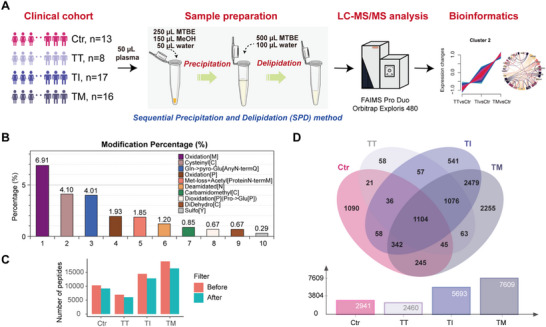 Figure 1
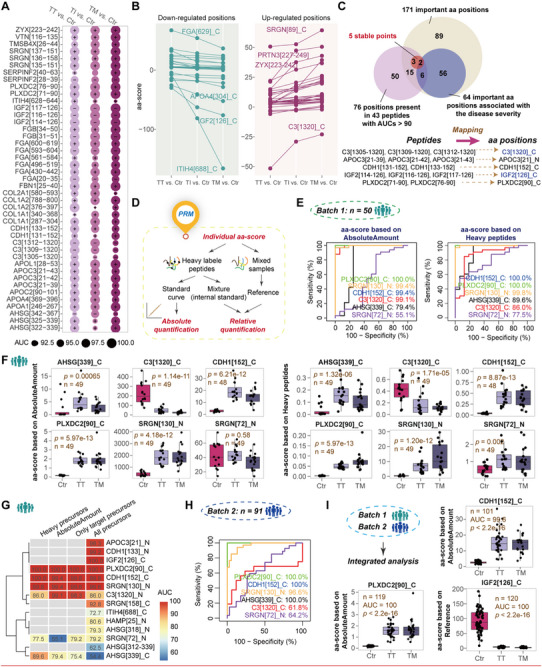 Figure 2
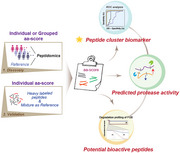 Figure 3
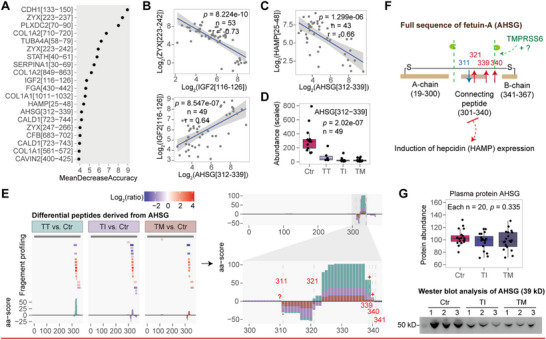 Figure 4
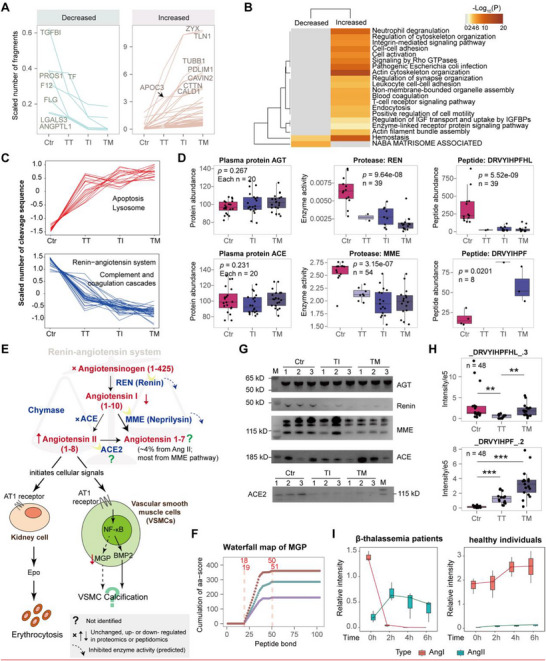 Figure 5
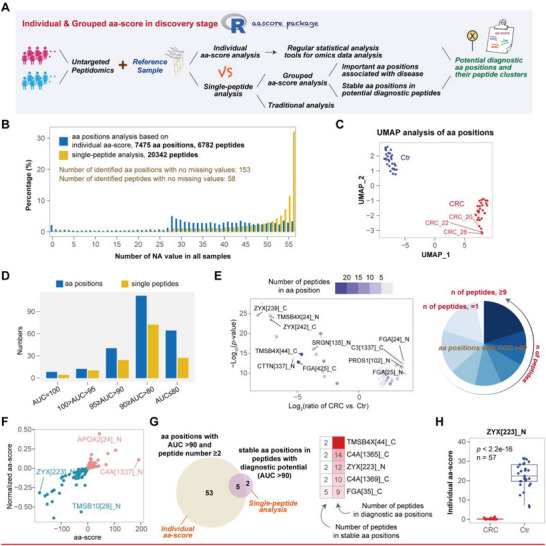 Figure 6
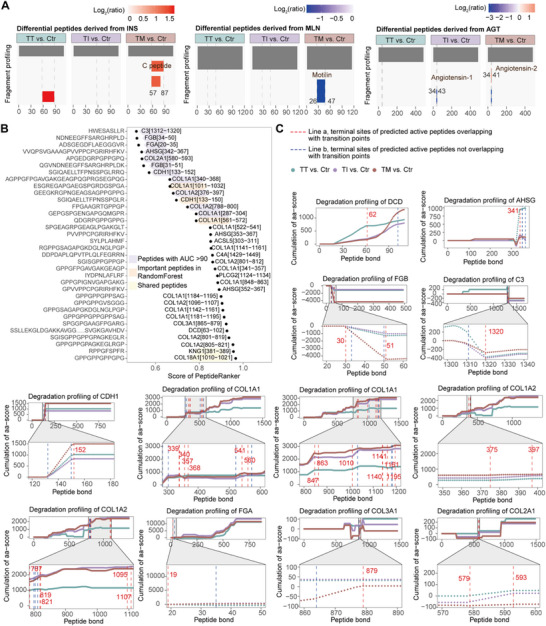 Figure 7
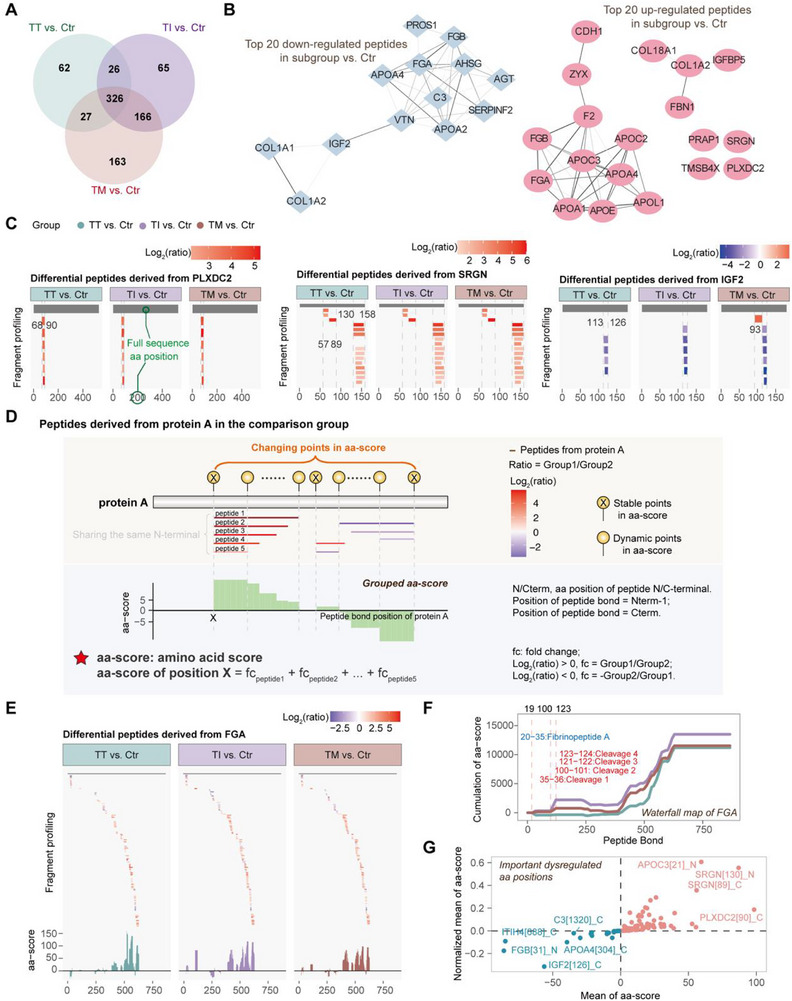 Figure 8
Peer Reviews
No public reviews on file for this paper yet. If you reviewed it on a platform where reviews are public (OpenReview, ICLR, NeurIPS, ICML), you can paste yours below so the community can read it here.
Videos
No videos yet. Explain this paper in a talk, walkthrough, or lecture? Add one.
Taxonomy
TopicsAdvanced Proteomics Techniques and Applications · Biotin and Related Studies · vaccines and immunoinformatics approaches