Under‐Urine‐Adhered Supramolecular Hydrogel with Linearly Sustained Quercetin Release Facilitates Hemorrhagic Cystitis Healing via Inflammation Regulation
Xu Cao, Hua Zhang, Yang Luo, Yaoqi Chen, Jie Yao, Renhao Ni, Tong Zhu, Yudong Yao, Jun Chen, Baolin Guo, Kerong Wu

TL;DR
A new hydrogel adhesive was developed to treat hemorrhagic cystitis by sticking to wet tissues, releasing quercetin over time, and reducing inflammation.
Contribution
A supramolecular hydrogel adhesive with sustained quercetin release and anti-inflammatory properties for hemorrhagic cystitis healing is introduced.
Findings
The hydrogel shows sustained quercetin release over 48 hours and rapid hemostasis with 15-second clotting time.
It effectively restores bladder urothelial barrier function and reduces inflammation in hemorrhagic cystitis models.
The hydrogel exhibits antimicrobial activity and scavenges reactive oxygen species with 600 µm H2O2 clearance.
Abstract
The clinical management of hemorrhagic cystitis remains challenging because of persistent inflammation and bladder mucosal barrier disruption. Although intravesical therapies, such as quercetin and hyaluronic acid (HA), show potential, their efficacy is limited by rapid urinary clearance. Hydrogels offer potential as sustained‐release drug carriers and protective barriers, yet designing adhesive hydrogels with optimal wet tissue adhesion, controlled degradation, and regulation of anti‐inflammation remains difficult. Here it is aimed to develop a supramolecular gelatin‐based hydrogel adhesive (HADA/gelatin/Ac‐β‐CD/quercetin, HGCQ) that combines acrylated β‐cyclodextrin as a dynamic crosslinker and hydrophobic drug carrier with dopamine‐functionalized HA for enhanced tissue adhesion and antioxidant functionality. The HGCQ hydrogel exhibits controlled degradation in artificial urine with…
Genes, proteins, chemicals, diseases, species, mutations and cell lines named across the full text — each resolved to its canonical identifier and authoritative record.
Click any figure to enlarge with its caption.
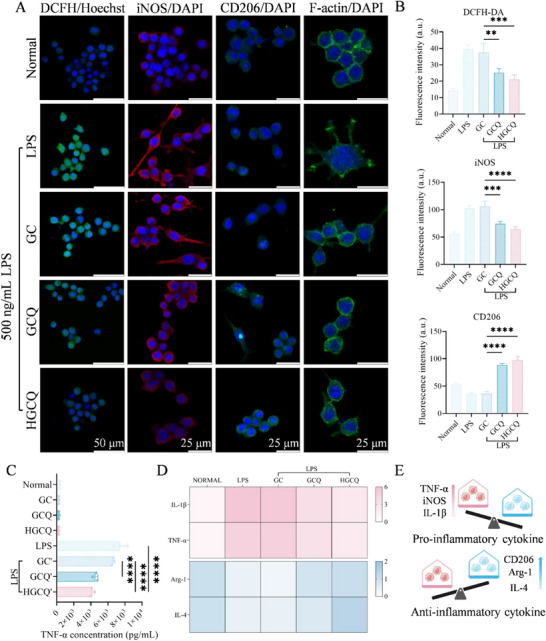 Figure 1
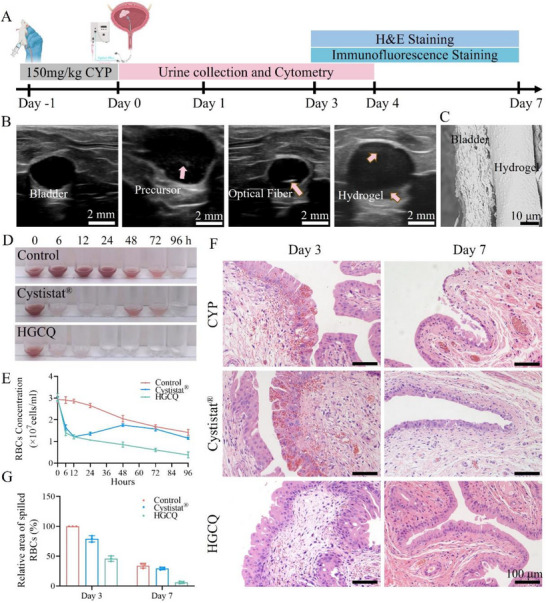 Figure 2
 Figure 3
 Figure 4
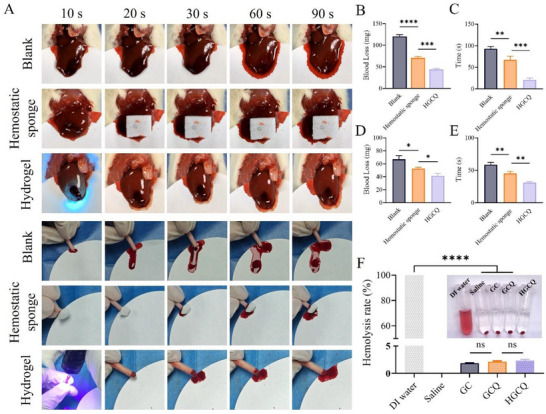 Figure 5
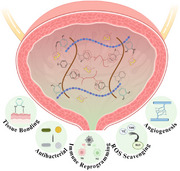 Figure 6
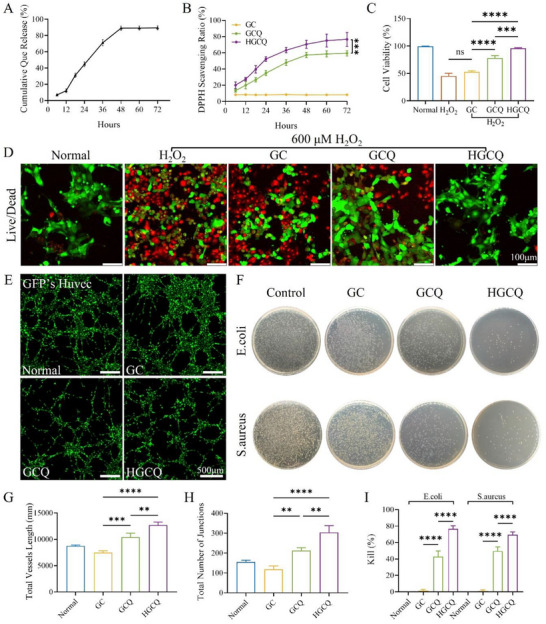 Figure 7
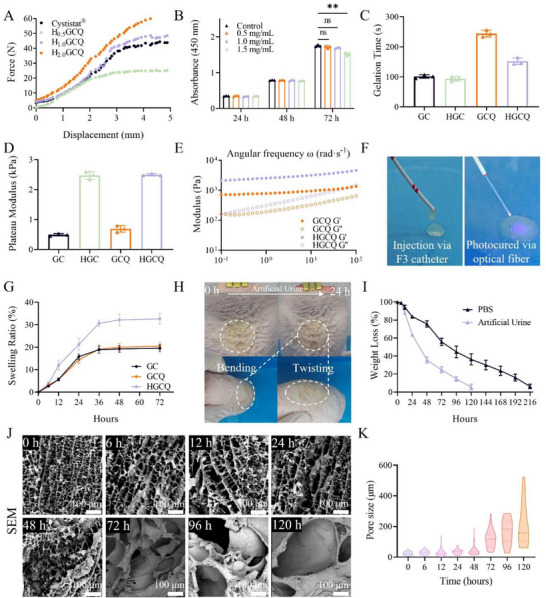 Figure 8
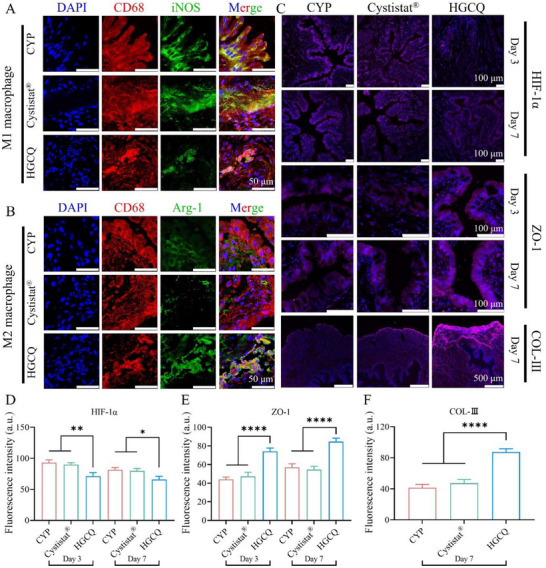 Figure 9
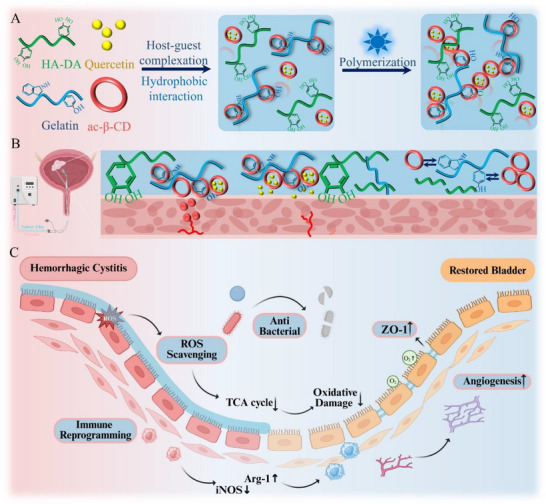 Figure 10
Peer Reviews
No public reviews on file for this paper yet. If you reviewed it on a platform where reviews are public (OpenReview, ICLR, NeurIPS, ICML), you can paste yours below so the community can read it here.
Videos
No videos yet. Explain this paper in a talk, walkthrough, or lecture? Add one.
Taxonomy
TopicsTissue Engineering and Regenerative Medicine · Wound Healing and Treatments · Surgical Sutures and Adhesives