Investigation and Correlation Analysis of Pathogens Carried by Ticks and Cattle in Tumen River Basin, China
Pengfei Min, Jianchen Song, Yinbiao Meng, Shaowei Zhao, Zeyu Tang, Zhenyu Wang, Sicheng Lin, Fanglin Zhao, Meng Liu, Longsheng Wang, Lijun Jia

TL;DR
This study identifies tick species and pathogens in the Tumen River Basin, showing that ticks can transmit harmful diseases to cattle and potentially pose public health risks.
Contribution
The study provides the first detailed analysis of tick species and associated pathogens in the Tumen River Basin, highlighting their role as disease vectors.
Findings
Five tick species were identified in the Tumen River Basin, including Haemaphysalis longicornis and Ixodes persulcatus.
Three pathogens—Babesia ovata, Theileria orientalis, and Theileria sinensis—were detected in both ticks and cattle blood samples.
Ticks in the region are likely vectors for these pathogens, which can threaten cattle health and possibly public health.
Abstract
Ticks are a significant external parasite of livestock, capable of transmitting diseases to animals through blood-feeding, resulting in substantial economic losses to the livestock industry. The Tumen River is located in the northeastern border region of China, and there is little information about which tick species infest cattle and which can carry harmful blood parasites. This study was conducted in seven regions of the Tumen River Basin. There are 5 species of ticks in the Tumen River basin including Haemaphysalis longicornis, Haemaphysalis concinna, Haemaphysalis japonica, Dermacentor silvarum and Ixodes persulcatus. Three pathogens posing significant threats to livestock, particularly cattle, were detected in blood samples from ticks and cattle: Babesia ovata, Theileria orientalis, and Theileria sinensis. The pathogens detected in tick and cow blood are highly homologous. These…
Genes, proteins, chemicals, diseases, species, mutations and cell lines named across the full text — each resolved to its canonical identifier and authoritative record.
Click any figure to enlarge with its caption.
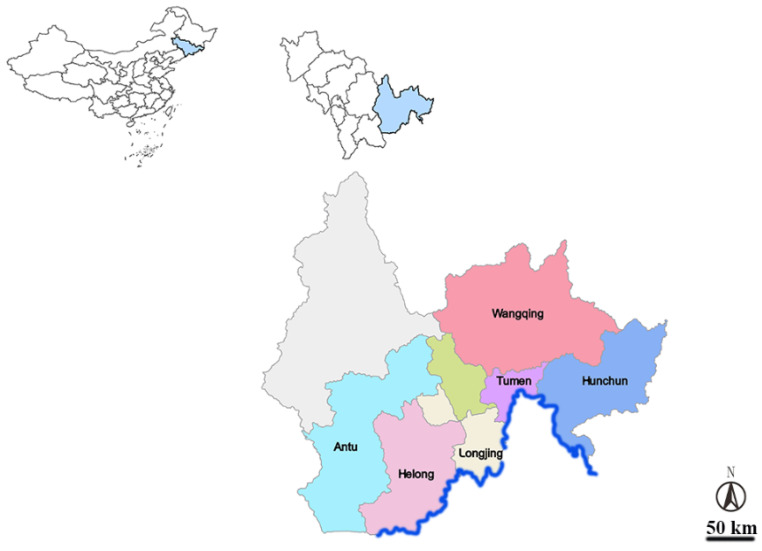 Figure 1
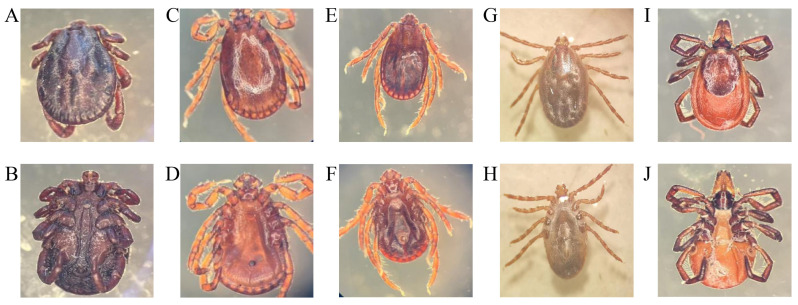 Figure 2
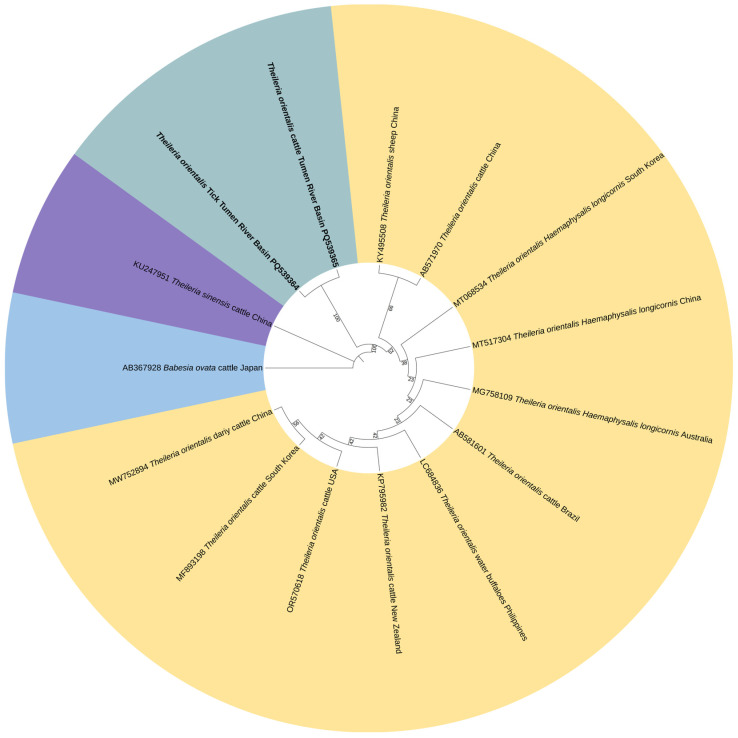 Figure 3
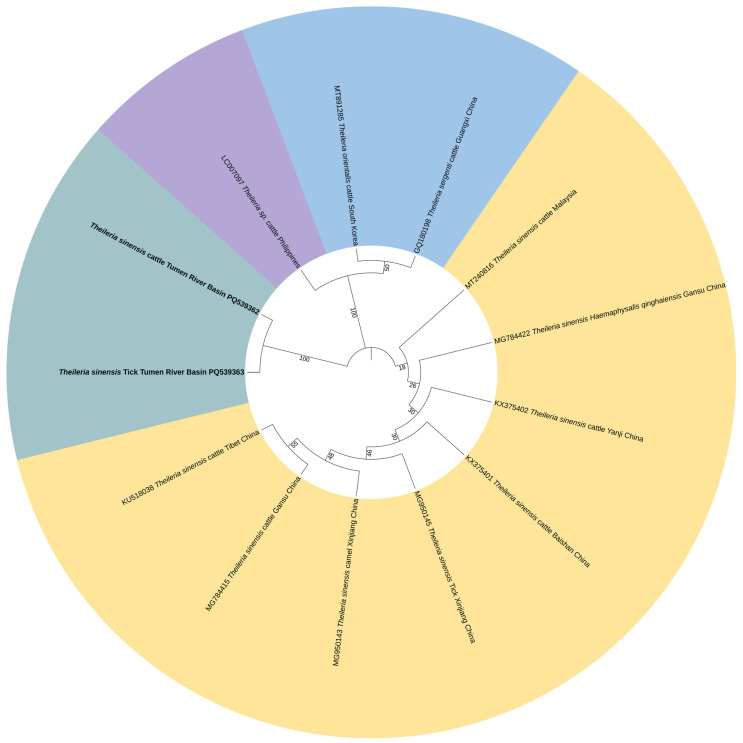 Figure 4
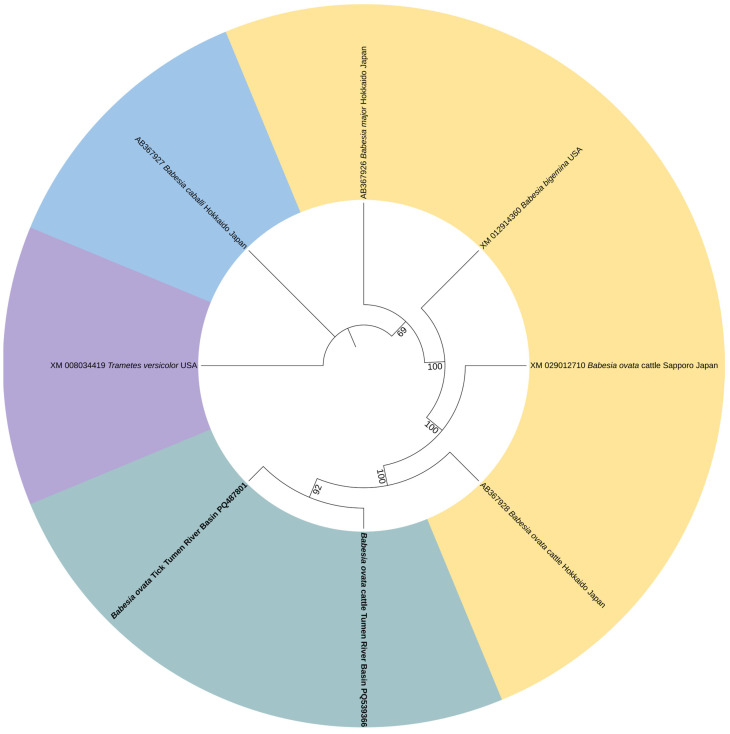 Figure 5
- —Scientific Research and Innovation Team Project of Yanbian University and Jilin Province
- —111 Project
- —State Key Laboratory for Diagnosis and Treatment of Severe Zoonotic Infectious Diseases, Jilin University
- —Key Research and Development Project of the Department of Science and Technology of Jilin Province
Peer Reviews
No public reviews on file for this paper yet. If you reviewed it on a platform where reviews are public (OpenReview, ICLR, NeurIPS, ICML), you can paste yours below so the community can read it here.
Videos
No videos yet. Explain this paper in a talk, walkthrough, or lecture? Add one.
Taxonomy
TopicsVector-borne infectious diseases · Viral Infections and Vectors · Zoonotic diseases and public health
1. Introduction
The tick is a blood-sucking arthropod found on every land on Earth and is parasitic on most vertebrates, such as humans, mammals, reptiles and birds [1,2]. There are records of tick infestation as early as 1550 BC [3]. The survival time of ticks is generally two years. Except for individual ticks, all four stages of tick growth require blood. Ixodes takes a blood meal once at different stages of growth, while soft ticks can take blood meals multiple times [4,5]. In addition to the physical bite of the tick, which can make people and animals feel pain and develop allergic reactions, wasting, poisoning and other adverse effects, the most harmful is the vector role of the tick [2]. Ticks can transmit pathogens such as protozoa, viruses and bacteria as they feed [6]. Tick-borne pathogens need to be acquired from susceptible hosts and passed on to new hosts as they move to the next stage of growth, so that tick-borne pathogens remain. The number of zoonotic pathogens transmitted by ticks as vectors is the largest and increasing [7,8,9]. This directly damages human and animal health and indirectly affects the economy and development of society. Ticks are most common in tropical and subtropical regions, and therefore cause the greatest economic damage in these regions [10]. With the expansion of tick distribution and tick-borne disease epidemic areas, more effective control methods and risk monitoring are urgently needed. In recent years, various newly discovered tick-borne pathogens have brought great challenges to the prevention and control of tick-borne diseases.
Piroplasmida is a genus of protozoan parasites that infect the red blood cells and lymphocytes of vertebrates, primarily transmitted by ticks. It can infect domestic animals such as horses, cattle, sheep, and camels, posing the greatest threat to cattle. Babesia and Theileria are the two main families of Piroplasmida [11]. Babesia is divided into numerous subspecies, including Babesia caballi, Babesia ovata, Babesia bigemina and others [12]. The Theileria is primarily divided into three subtypes: Theileria sergenti, Theileria orientalis and Theileria sinensis [13]. The Tumen River Basin, as a major livestock breeding base in Northeast China, has seen limited research on the three pathogens Babesia ovata, Theileria orientalis and Theileria sinensis, despite their significant harm to cattle.
The Tumen River basin is located at the junction of China, North Korea and Russia, with high forest coverage, rich vegetation, a wide variety of wild animals and relatively developed animal husbandry [14]. The basin’s warm climate and favorable ecological environment are suitable for tick growth and reproduction. The Tumen River Basin is an important ecological functional area, but the species of ticks and the prevalence of tick-borne diseases in the basin are still unclear. Therefore, it is necessary to carry out investigation and research to better understand the tripartite relationship between ticks, tick-borne diseases and animal hosts. This study provides a scientific basis for the prevention and control of ticks and tick-borne diseases in the Tumen River Basin, and provides guidance for the treatment of tick-borne diseases in the basin.
2. Materials and Methods
2.1. Sample Collection
From March 2021 to October 2022, ticks living free in forest and grassland and ticks living on the body surface of cattle were collected in seven counties and cities primarily focused on cattle farming around the Tumen River basin, including Antu, Helong, Hunchun, Longjing, Tumen, Wangqing and Yanji (Figure 1). Free ticks were collected using the cloth flag method. Ticks on the bovine body surface are collected using tweezers. EDTA-containing bovine venous blood samples were collected from cattle ranches and cattle farmers in the tick collection areas of Antu, Hunchun, Helong, Tumen and Yanji. Cattle are classified by sex into male and female, by management into graze and farm, and by age into three stages: <1 years old; 1–2 years old; >2 years old. The sampling season corresponds to the period of peak tick activity in the region—spring. The months involved are April through June each year. Samples are collected once per month, totaling six collections over a two-year period. Ticks and bovine blood samples are collected on the same day. Ticks were classified according to location, time, breed, environment, sex and other information. A total of 913 ticks and 247 bovine blood samples were collected.
2.2. Tick Classification and Nucleic Acid Extraction
The morphological structures of different species of male and female ticks were observed with a stereomicroscope. Each tick was washed three times in normal saline solution and placed in a 1.5 mL centrifuge tube, and 600 μL phosphate-buffered saline was added. The ticks were then ground with a tissue breaker, followed by centrifugation at 1300× g for 1 min. Approximately 200 μL of the supernatant was collected to extract the nucleic acid. The genomic DNA from the tick was extracted using the TIANamp Genomic DNA kit (TIANGEN, Beijing, China). DNA should be stored at −20 °C.
2.3. Bovine Blood Nucleic Acid Extractio
The genomic DNA from the bovine blood was extracted using the TIANamp Blood DNA Kit (TIANGEN, Beijing, China). DNA should be stored at −20 °C.
2.4. Detection of Pathogens in Ticks and Bovine Blood
Polymerase Chain Reaction (PCR) was used to detect pathogens in DNA extracted from ticks and bovine blood. Species-specific primers were used to amplify the chaperonin-containing t-complex polypeptide 1 (CCTeta) gene of Babesia ovata and the major piroplasm surface protein (MPSP) gene of Theileria sinensis and Theileria orientalis. The primers used in this study are listed in Table 1. The PCR was conducted with a 25 µL reaction volume comprising 1 µL of reverse and forward primer (10 pmol), 2 µL of template DNA (60–80 ng/µL), 12.5 µL of Green Taq Mix (Vazyme, Nanjing, China) and 10.5 µL of distilled water. The PCR conditions are presented in Table 2.
2.5. Sequence Identity and Phylogenetic Analyses
The PCR products of the positive samples were sent to Shanghai Shenggong Biotechnology Company for Sanger sequencing. Newly obtained sequences were compared with the National Center for Biotechnology Information database (https://www.ncbi.nlm.nih.gov/, accessed on 15 May 2023) using the Basic Local Alignment Search Tool (https://blast.ncbi.nlm.nih.gov/Blast.cgi, accessed on 15 May 2023) and related sequences were retrieved from the GenBank database (https://www.ncbi.nlm.nih.gov/genbank/, accessed on 15 May 2023). ClustalW software (https://clustalw.com/, accessed on 20 May 2023) was used for multiple sequence alignment. Phylogenetic trees were constructed using the Neighbor-Joining method with a p-distance model and bootstrapping of 1000 replicates to calculate the evolutionary relationship using Molecular Evolutionary Genetics Analysis software (v.11.0; https://www.megasoftware.net/, accessed on 6 June 2023)
2.6. Statistical Analysis
The chi-squared test was used to compare proportions of detected sample positivity in different condition via Prism 9 software (GraphPad Software, LLC, San Diego, CA, USA). When the p-value was lower than 0.05, the difference was considered statistically significant.
3. Results
3.1. Tick Species Survey Results
According to the identification results, there were three genera and five species of ticks in Tumen River basin, which included 148 Haemaphysalis longicornis, 152 Haemaphysalis japonica, 164 Haemaphysalis concinna, 39 Ixodes persulcatus, and 410 Dermacentor silvarum with proportions of 16.21%, 16.65%, 17.96%, 4.27%, and 44.91% (Figure 2A–J and Table 3).
3.2. Results of Pathogen Investigation
We detected Babesia ovata in H. longicornis, I. persulcatus, H. japonica and H. concinna; Theileria orientalis in H. longicornis, H. japonica and H. concinna; and Theileria sinensis in H. longicornis and H. japonica. In terms of age, adult ticks are more likely to carry pathogens than nymphs. In different environments, the detection rate of T. sinensis on the body surface was significantly increased, the detection rate of T. orientalis on the body surface of animals was lower than that of forest and grassland, and the detection rate of B. ovata was not significantly changed in the three environments (Table 4). All three pathogens were detected in bovine blood. Age and sex had significant effects on the infection rate of T. orientalis in cattle, but feeding style did not affect the infection rate. The opposite is true for T. sinensis and B. ovata (Table 5).
3.3. Phylogenetic Analysis of Pathogen
Phylogenetic analysis showed that the T. orientalis MPSP gene sequences generated from ticks (PQ539364) and cattle (PQ539365) in the Tumen River Basin clustered with the South Korea strain (MF893198), Brazil strain (AB581601), and Australia strain (MG758109) (Figure 3). In a similar manner, the T. sinensis MPSP gene sequences generated from ticks (PQ539363) and cattle (PQ539362) obtained in this study shared 100% identities and clustered with sequences from Gansu China (MG784422), Baishan China (KX375401), and Malaysia (MT240816) (Figure 4). The nucleotide sequence identity data demonstrated that sequences of the B. ovata CCTeta gene obtained in this study shared more than 95% identity with most of the B. ovata CCTeta gene sequences previously identified in Japan. The phylogenetic analysis showed the B. ovata CCTeta gene sequence from ticks (PQ487801) and cattle (PQ539366) in the Tumen River Basin in the same clade as the B. ovata CCTeta gene sequence (AB367928) from Hokkaido cattle in Japan (Figure 5).
4. Discussion
Tumen River Basin is located at 41°59′~44°1′ North latitude, 128°17′–131°18′ East longitude, with a total drainage area of 33,168 square kilometers. This basin is located in the main area of Changbai Mountain, affected by the topographic height, and the climate elements have vertical changes. The Tumen River Basin serves as a vital ecological functional zone, featuring diverse wetland types, fertile soils, and abundant water resources. The mild climate and rich biodiversity in the Tumen River Basin are conducive to tick breeding. Therefore, it is of great significance to investigate the species and distribution of ticks in the Tumen River Basin for the prevention and control of tick-borne diseases. In this study, 913 ticks collected from seven counties and cities in the Tumen River Basin were classified and analyzed. Among the five identified species, D. silvarum was the dominant tick species in the Tumen River Basin.
B. ovata mainly parasitizes the red blood cells of cattle [15]. It is a kind of large piroplasms; the piroplasms is round, oval and pear seed in shape; each body contains 1~2 clusters of chromatin; and the central cavity is often formed [18]. B. ovata produces asexually in the red blood cells of the intermediate host, such as cattle and sheep, forming two or four bodies by way of budding [19]. Chinese scholars have also found B. ovata in ticks collected from the body surface of naturally infected cattle [20]. The positive rate of B. ovata among 913 ticks in the Tumen River Basin was 5.36%. All counties and cities had different degrees of infection. According to regional distribution, the infection rate of B. ovata in the middle reaches of the Tumen River Basin was the highest. B. ovata was detected in H. longicornis, H. concinna, H. japonica and I. persulcatus. The infection rate of H. longicornis was the highest as the main transmission vector. There was no obvious change trend in B. ovata in different environments. According to the investigation results, B. ovata was detected in tick and bovine blood samples in the upper, middle and lower reaches of the Tumen River basin, indicating that the Tumen River basin is an endemic area of B. ovata. The positive rate in ticks was significantly lower than that in bovine blood samples. In addition, B. ovata was detected in the blood samples and ticks collected in the same county and city, and the sequence analysis homology was 100%, indicating that there is a certain correlation between B. ovata infection in cattle and ticks. Attention should be paid to preventing tick transmission of B. ovata in the Tumen River basin. B. ovata poses the most severe threat to cattle. Currently, there is insufficient evidence to indicate that humans can contract B. ovata through tick bites. However, this does not mean we can lower our guard. For farmers and livestock breeders in particular, preventing cattle from being bitten by ticks remains a key concern that requires their attention.
T. orientalis is very harmful to cattle and can kill cattle in severe cases [21]. It is mainly transmitted by ticks, and cases of transmission of T. orientalis by the invasive H. longicornis have been reported in Virginia, USA [22]. The disease is found all over the world, with New Zealand, Australia and Japan among the endemic countries [23]. In this study, the positive rate of T. orientalis detected in ticks was 12.04%, and seven counties and cities were infected. This indicates that T. orientalis is widely distributed in the Tumen River basin. According to the regional distribution characteristics, the positive rate in the middle reaches of the Tumen River basin was the highest, and the positive rate in the upper reaches was significantly lower than that in the middle and lower reaches. H. longicornis, H. concinna, H. japonica and T. orientalis were detected. The detection rate of H. longicornis was the highest. These results indicate that different species of ticks have great differences in the transmission of T. orientalis. T. orientalis was detected in the blood of ticks and cattle in all counties and cities of the Tumen River basin. The sequence homology analysis of ticks and cattle showed 98.7%, indicating that cattle infection with T. orientalis was related to tick transmission.
T. sinensis was first discovered in Gansu, China, and Haemaphysalis Qinghaiensis and H. japonica have the ability to transmit T. sinensis [24,25]. T. sinensis is currently considered to be a novel tick-borne pathogen. It has been reported that the existence of T. sinensis has been confirmed in yaks in Qinghai for the first time [26]. T. sinensis was detected in H. longicornis and H. japonica in Hunchun, which may be related to environmental differences between regions. This survey is the first time that T. sinensis in H. japonica and H. longicornis was found in the Tumen River basin, and, especially, the discovery of T. sinensis in H. japonica should be paid attention to. The homology of tick and bovine origin of T. sinensis was 100%, indicating that T. sinensis prevalent in the Tumen River basin was of the same origin, but the positive rate of T. sinensis in ticks was only 0.87%. Whether the main cause of T. sinensis infection in cattle was tick transmission remains to be further studied.
The prevention and control of ticks and tick-borne diseases remain a serious challenge. For most farmers and livestock breeders, scientifically effective tick prevention remains the key to interrupting the transmission of tick-borne diseases. Currently, classic topical medications such as permethrins play a vital role in preventing tick infestations. Surveys indicate that treating clothing with permethrin is highly effective against ticks. It can reduce the probability of being bitten by ticks by 93% [27]. In animal studies, permethrins also demonstrated good preventive and curative effects [28]. Treating farmers’ and livestock breeders’ clothing with pesticides is a simple and effective method for tick control. This approach is not only effective against ticks but also useful for controlling insects such as mosquitoes [29]. However, each method has certain limitations. Reports indicate that while traditional acaricides may yield some results in small-scale experiments, their effectiveness significantly diminishes as the scope of research expands [30]. Additional studies indicate that employing the classic “4-Posters” method can significantly reduce tick populations within the study area [31]. These also proved, although effective, not ‘cost-effective’ given the tons of corn required to attract deer. In summary, there are ‘strategic’ and practical measures that the farmers or public health infrastructures can adopt to reduce the scourge of ticks and tick-vectored diseases. This is a key focus area for our future research.
The primary method employed in our study was PCR, a highly specific detection technique. Of course, our research has certain limitations. While PCR is the most common method for detecting tick-borne pathogens, it can only detect a single pathogen at a time, making it prone to overlooking co-infections [32]. With technological advancements, Next-Generation Sequencing (NGS) has gained widespread application in pathogen detection. This technology can identify tens of millions of sequences within a sample and, through bioinformatics analysis, determine all potential pathogens present in the sample [33]. NGS has a significantly enhanced detection efficiency and is likely to become a hotspot for future research. Additionally, this study did not perform serological testing to determine which tick-borne pathogens elicited immune responses in the animals. This work will be conducted in our subsequent research. As is well known, ticks can carry a wide variety of pathogens, with Babesia alone exhibiting numerous genotypes [34]. However, due to limited research funding, we selected only a few representative pathogens for illustration in this study. We plan to conduct in-depth research and discussion on the gaps identified in this investigation in our next phase.
5. Conclusions
There are 5 species of ticks in the Tumen River basin. Three pathogens Babesia ovata, Theileria orientalis and Theileria sinensis were detected in ticks and cattle blood in Tumen River basin. The pathogens detected in tick and cow blood are highly homologous. This study suggests that ticks may be the transmission vector of the above three pathogens, and farmers should focus on prevention. Our research provides theoretical support for future disease prevention and control in the Tumen River Basin and enables precise prevention and control of imported risks through early warning systems. This offers theoretical support for promoting the sustainable development of animal husbandry and fostering harmonious coexistence between humans and nature.
The reference list from the paper itself. Each links out to its DOI / PubMed record.
- 1Hornok S. Abichu G. Meli M.L. Tanczos B. Sulyok K.M. Gyuranecz M. Gonczi E. Farkas R. Hofmann-Lehmann R. Influence of the biotope on the tick infestation of cattle and on the tick-borne pathogen repertoire of cattle ticks in Ethiopia P Lo S ONE 20149 e 10645210.1371/journal.pone.010645225248165 PMC 4172431 · doi ↗ · pubmed ↗
- 2Jongejan F. Uilenberg G. The global importance of ticks Parasitology 2004129 S 3S 1410.1017/S 003118200400596715938502 · doi ↗ · pubmed ↗
- 3Anderson J.F. Magnarelli L.A. Biology of ticks Infect. Dis. Clin. N. Am.20082219521510.1016/j.idc.2007.12.00618452797 · doi ↗ · pubmed ↗
- 4Beati L. Klompen H. Phylogeography of Ticks (Acari: Ixodida)Annu. Rev. Entomol.20196437939710.1146/annurev-ento-020117-04302730354695 · doi ↗ · pubmed ↗
- 5Rodriguez Y. Rojas M. Gershwin M.E. Anaya J.M. Tick-borne diseases and autoimmunity: A comprehensive review J. Autoimmun.201888214210.1016/j.jaut.2017.11.00729183642 · doi ↗ · pubmed ↗
- 6Pfaffle M. Littwin N. Muders S.V. Petney T.N. The ecology of tick-borne diseases Int. J. Parasitol.2013431059107710.1016/j.ijpara.2013.06.00923911308 · doi ↗ · pubmed ↗
- 7Colwell D.D. Dantas-Torres F. Otranto D. Vector-borne parasitic zoonoses: Emerging scenarios and new perspectives Vet. Parasitol.2011182142110.1016/j.vetpar.2011.07.01221852040 · doi ↗ · pubmed ↗
- 8Gilbert L. The Impacts of Climate Change on Ticks and Tick-Borne Disease Risk Annu. Rev. Entomol.20216637338810.1146/annurev-ento-052720-09453333417823 · doi ↗ · pubmed ↗