Self-Stabilizing Covalent Ligand Targets Bacterial Phosphatidylethanolamine and Enhances Antibiotic Efficacy
Keita Masuda, Yasuhiro Nakagawa, Quentin Boussau, Emilie Chabert, Tsukuru Masuda, Jerome Bonnet, Tatsuya Inukai, Shigeki Nakamura, Madoka Takai, Diego Cattoni, Horacio Cabral

TL;DR
A new covalent ligand called DMAX selectively targets bacterial membranes and enhances antibiotic effectiveness without harming mammalian cells.
Contribution
DMAX is a novel covalent ligand that selectively targets phosphatidylethanolamine in bacterial membranes, enabling enhanced antibiotic efficacy.
Findings
DMAX selectively interacts with phosphatidylethanolamine through covalent and ionic bonds, as confirmed by spectroscopic and computational analyses.
Fluorescently labeled DMAX binds to PE-enriched membranes and Gram-negative bacteria while avoiding mammalian cells.
Conjugating DMAX to Gemifloxacin increases antibiotic efficacy tenfold, even after rapid drug clearance.
Abstract
Background/Objectives: Discriminating bacterial from mammalian membranes remains a central challenge in antibiotic design. Bacterial membranes are enriched in phosphatidylethanolamine (PE), a lipid normally absent from the outer leaflet of mammalian cells, providing a signature for selective molecular engagement. We report a compact covalent ligand, 6-dimethylamino-4-ketohexanoic acid (DMAX), which targets PE via Schiff base formation, leveraging its tertiary amine to facilitate the reaction and strengthen ionic binding with the phosphate group. Methods: The reactivity of DMAX and PE was evaluated by computational simulations, and their interaction was examined by spectroscopic analyses (NMR and FT-IR) and an artificial membrane assay. The targeting ability of DMAX for live bacteria was determined by microscopy study, and its applicability to therapeutic system was tested in vitro under…
Genes, proteins, chemicals, diseases, species, mutations and cell lines named across the full text — each resolved to its canonical identifier and authoritative record.
Click any figure to enlarge with its caption.
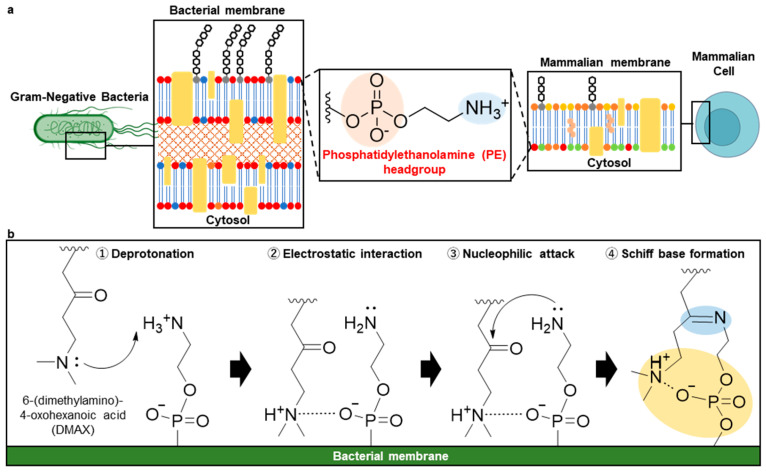 Figure 1
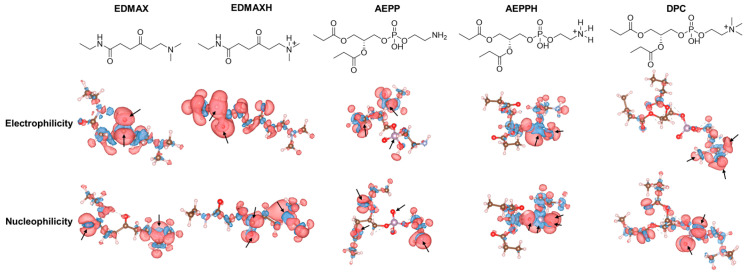 Figure 2
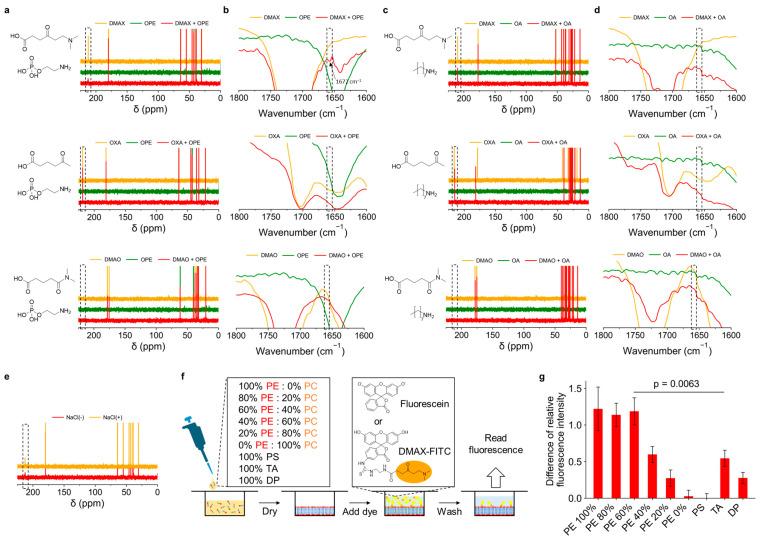 Figure 3
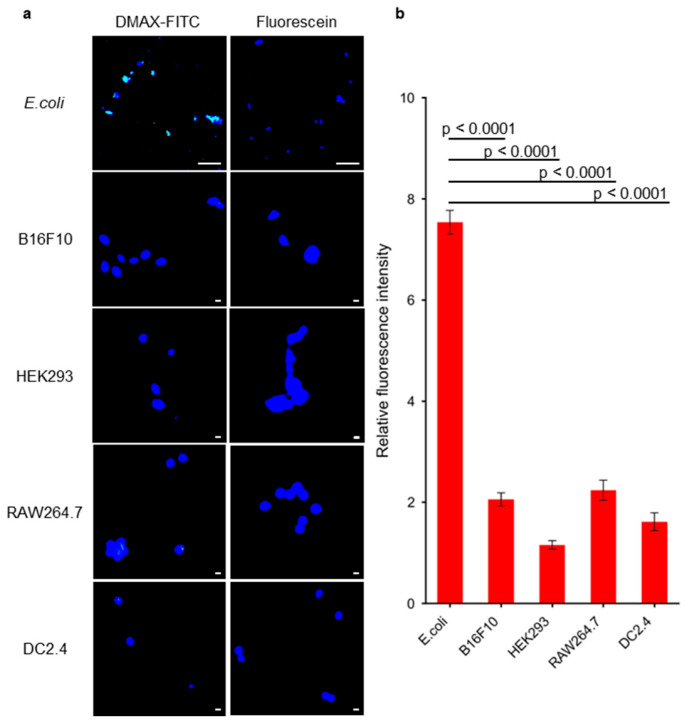 Figure 4
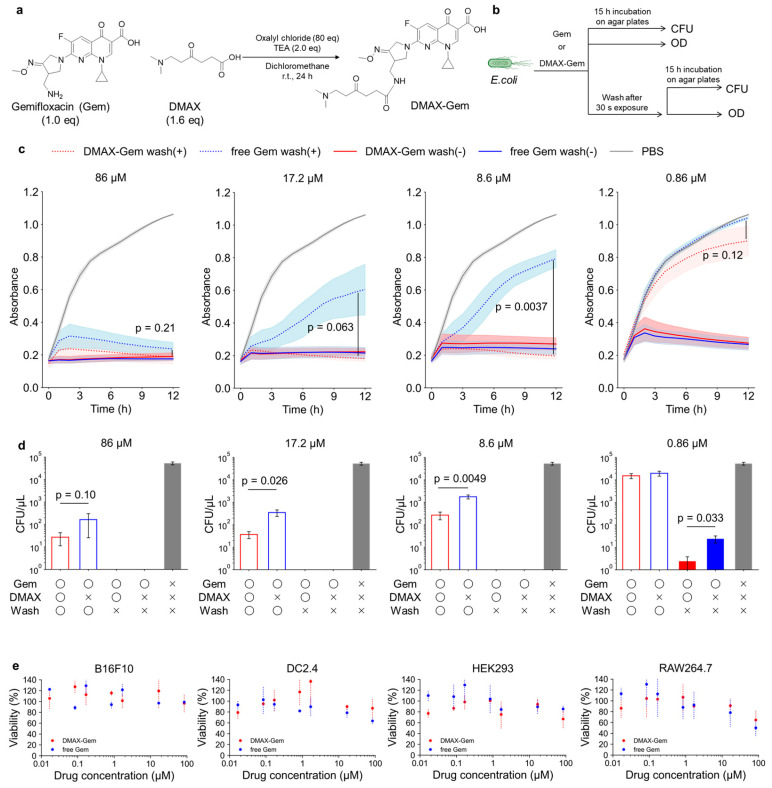 Figure 5
Peer Reviews
No public reviews on file for this paper yet. If you reviewed it on a platform where reviews are public (OpenReview, ICLR, NeurIPS, ICML), you can paste yours below so the community can read it here.
Videos
No videos yet. Explain this paper in a talk, walkthrough, or lecture? Add one.
Taxonomy
TopicsClick Chemistry and Applications · Antimicrobial agents and applications · RNA Interference and Gene Delivery