Novel Hit Compounds Against a Neglected Sexually Transmitted Infection: Synthesis and Trichomonacidal Activity of 1,3-Thiazolidin-4-One Derivatives
Alexia Brauner de Mello, Melinda G. Victor, Wilson Cunico, Jorge Fernández-Villalba, Frederico Schmitt Kremer, Lucas Mocellin Goulart, Juan José García-Rodríguez, Camila Belmonte Oliveira, Alexandra Ibáñez-Escribano

TL;DR
This study explores new compounds that effectively fight Trichomonas vaginalis, a common sexually transmitted infection, with promising safety and drug potential.
Contribution
The study introduces 1,3-thiazolidin-4-one derivatives as novel trichomonacidal agents with strong activity and low cytotoxicity.
Findings
Seventy percent of the compounds showed over 80% antiparasitic activity at 100 μM.
Compounds 4a, 4b, and 4f exhibited IC50 ≤ 20 µM and no cytotoxicity to mammalian cells.
Molecular docking predicted strong interactions with T. vaginalis enzymes like lactate dehydrogenase and purine nucleoside phosphorylase.
Abstract
Background: Infections caused by the protozoan Trichomonas vaginalis affect millions of people worldwide and are responsible for one of the most common sexually transmitted diseases. Despite the efficacy of 5-nitroimidazoles like metronidazole, concerns regarding widespread resistance and the absence of viable alternatives for specific patient populations necessitate the development of structurally diverse pharmacological agents. In this study, we investigated the antiparasitic activity of 1,3-thiazolidin-4-one derivatives against T. vaginalis. Methods: Thiazolidines were synthesized via multicomponent reaction (MCR) using one-pot methodology and tested in vitro against the parasite and mammalian cell lines. Results: Seventy percent of the compounds showed more than 80% antiparasitic activity at 100 μM, with compounds 4a, 4b, and 4f exhibiting IC50 ≤ 20 µM. None of the molecules…
Genes, proteins, chemicals, diseases, species, mutations and cell lines named across the full text — each resolved to its canonical identifier and authoritative record.
Click any figure to enlarge with its caption.
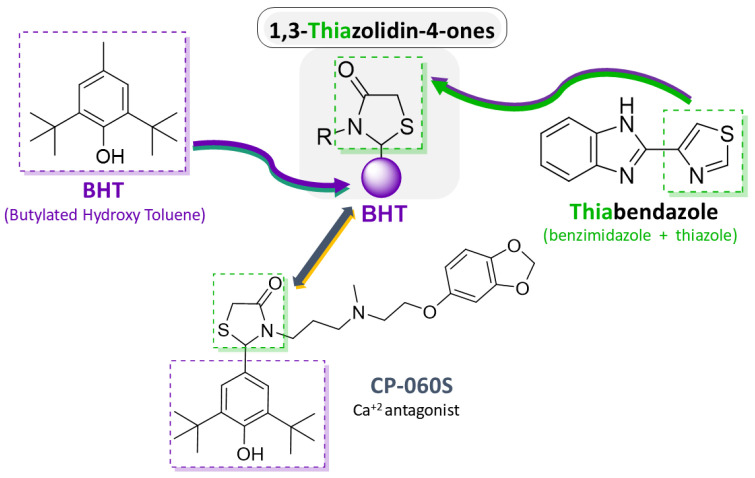 Figure 1
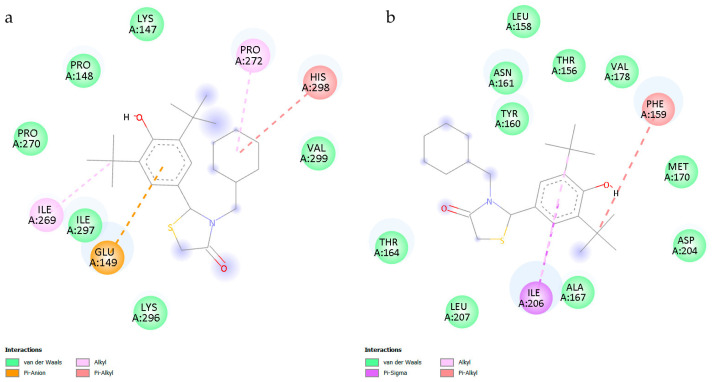 Figure 2
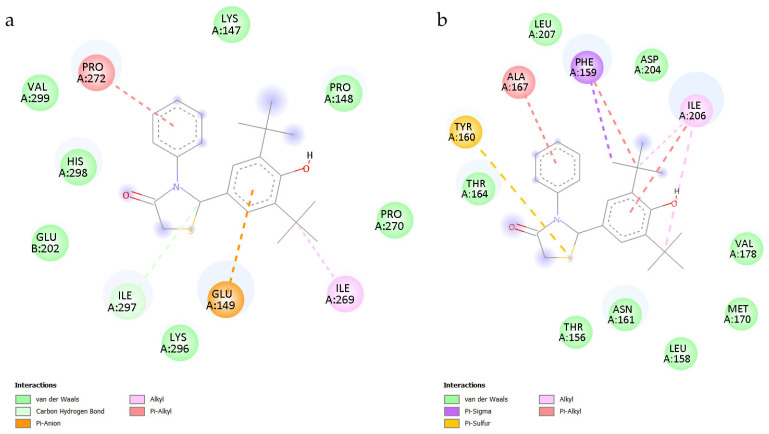 Figure 3
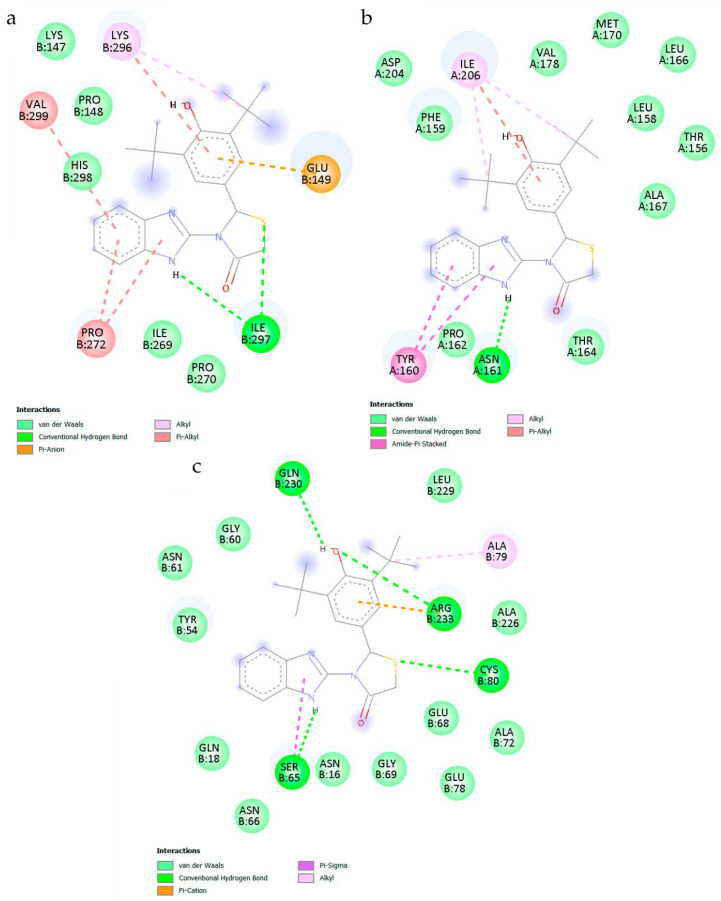 Figure 4
 Figure 5
 Figure 6
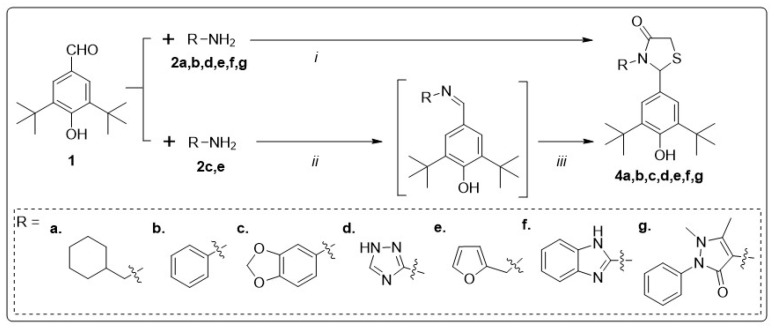 Figure 7
Peer Reviews
No public reviews on file for this paper yet. If you reviewed it on a platform where reviews are public (OpenReview, ICLR, NeurIPS, ICML), you can paste yours below so the community can read it here.
Videos
No videos yet. Explain this paper in a talk, walkthrough, or lecture? Add one.
Taxonomy
TopicsReproductive tract infections research · Synthesis and biological activity · Biochemical and Molecular Research