From Tea to Topical Agent: Machine Learning and Bioinformatics Reveal KU DING Tea’s Anti-UV Ingredients and Mechanisms
Jing Huang, Mingzhi Zhang, Xiangling Qin, Qi Yang, Jinling Xie, Xiaotao Hou, Erwei Hao, Jiagang Deng, Zhengcai Du

TL;DR
This study uses machine learning and bioinformatics to identify anti-UV ingredients in KU DING tea and explain how they might work.
Contribution
The novel use of machine learning and network pharmacology to explore KU DING tea's anti-UV mechanisms and transdermal potential.
Findings
76 chemical components were identified in KU DING tea, with 21 predicted to have good transdermal potential.
Machine learning predicted salicylic acid and methyl salicylate as likely anti-UV components.
Network pharmacology suggested MAPK14 and NFKB1 as key targets in the AGE-RAGE signaling pathway.
Abstract
Objectives: KU DING tea is a traditional Chinese herbal tea traditionally used topically for inflammation. This study aimed to investigate its potential anti-UV effects. Methods: The chemical components of KU DING tea were identified using UHPLC-Q-TOF-MS. Permeability prediction was performed to assess transdermal potential. A machine learning was applied to predict anti-UV activity, and network pharmacology analysis was used to explore the potential mechanism of action. Result: A total of 76 chemical components were identified, with 21 predicted to have good transdermal potential. A machine learning Random Forest (RF) model (accuracy 0.84, F1 0.84, AUC 0.93) predicted components like salicylic acid and methyl salicylate likely possess significant anti-UV activity. Network pharmacology indicated the mechanism may involve targets MAPK14 and NFKB1, influencing the AGE-RAGE signaling…
Genes, proteins, chemicals, diseases, species, mutations and cell lines named across the full text — each resolved to its canonical identifier and authoritative record.
Click any figure to enlarge with its caption.
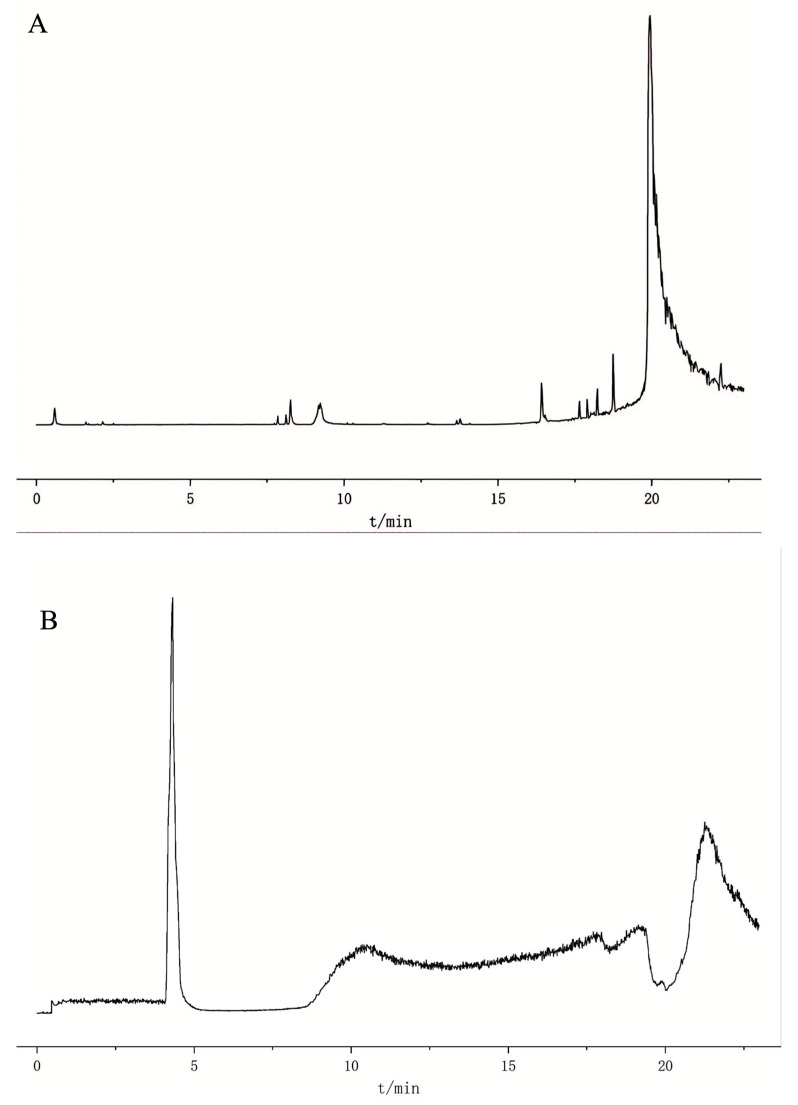 Figure 1
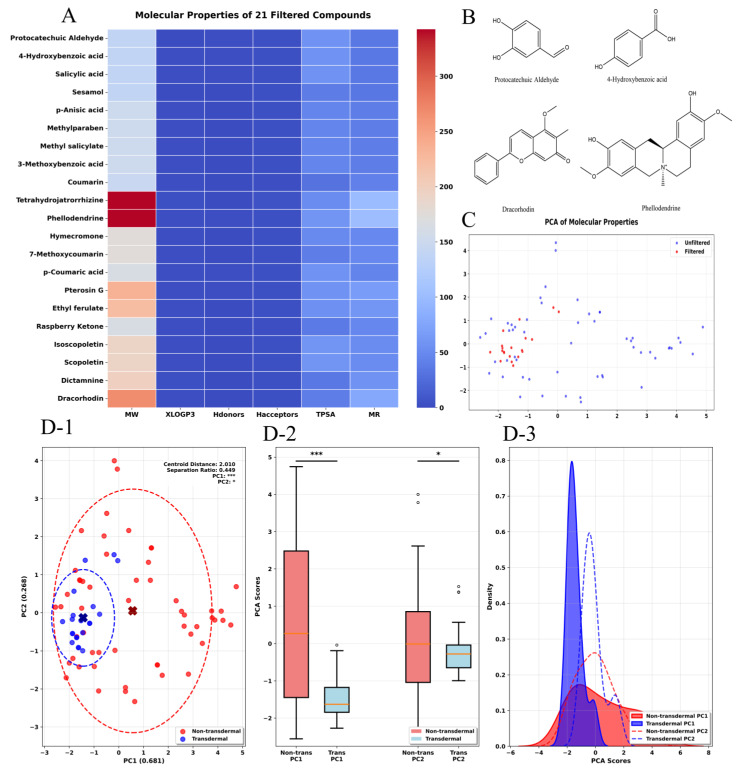 Figure 2
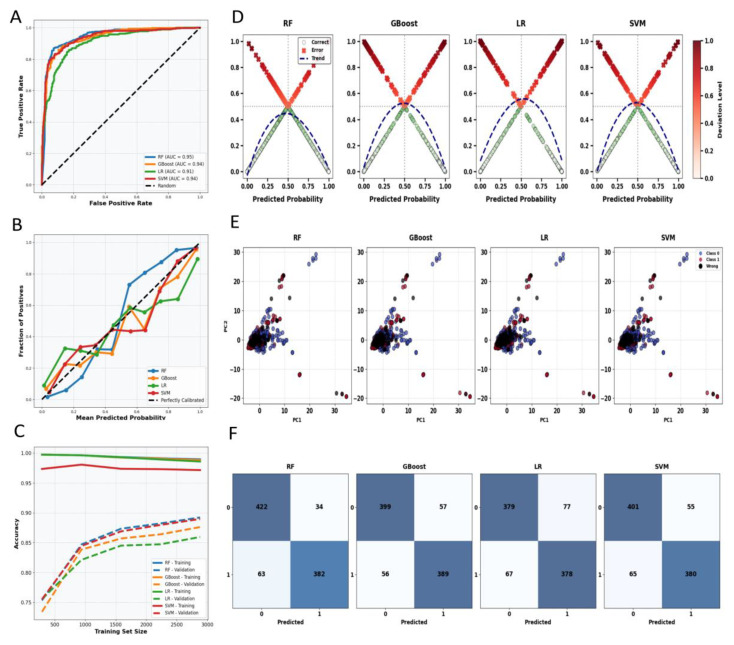 Figure 3
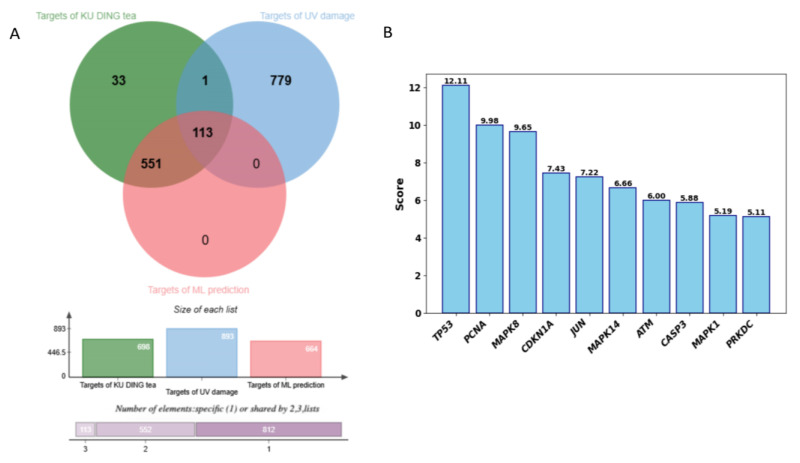 Figure 4
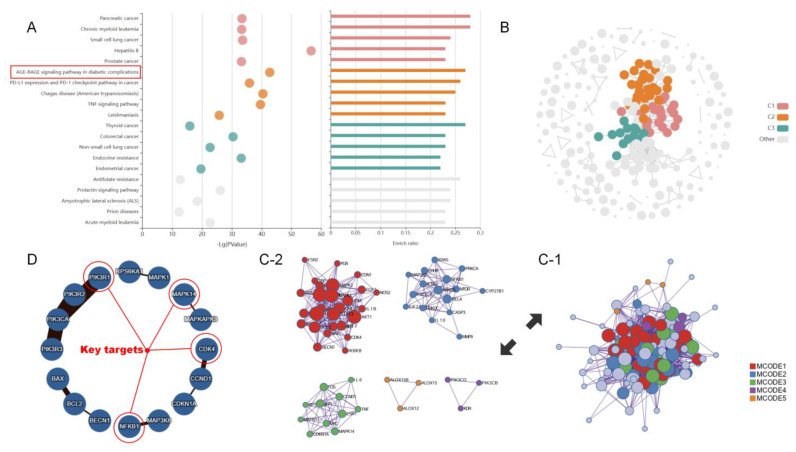 Figure 5
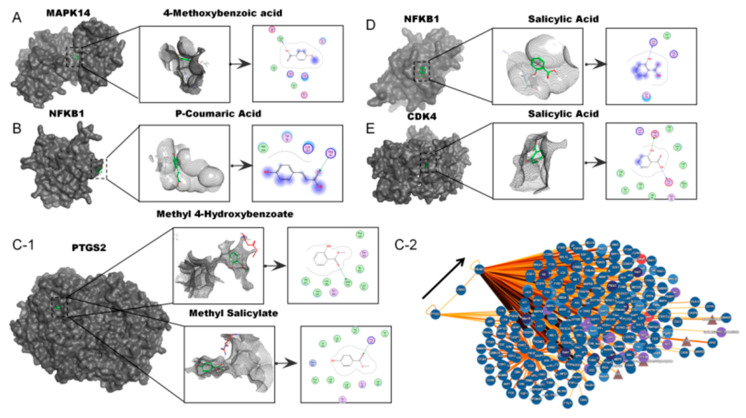 Figure 6
Peer Reviews
No public reviews on file for this paper yet. If you reviewed it on a platform where reviews are public (OpenReview, ICLR, NeurIPS, ICML), you can paste yours below so the community can read it here.
Videos
No videos yet. Explain this paper in a talk, walkthrough, or lecture? Add one.
Taxonomy
TopicsSkin Protection and Aging · Tea Polyphenols and Effects · melanin and skin pigmentation