Field Susceptibility of Almond (Prunus dulcis) Cultivars to Red Leaf Blotch Caused by Polystigma amygdalinum in Apulia (Italy) and Influence of Environmental Conditions
Pompea Gabriella Lucchese, Emanuele Chiaromonte, Donato Gerin, Angelo Agnusdei, Francesco Dalena, Davide Cornacchia, Davide Digiaro, Giuseppe Incampo, Davide Salamone, Pasquale Venerito, Francesco Faretra, Franco Nigro, Stefania Pollastro

TL;DR
This study examines how different almond varieties respond to a leaf disease in southern Italy and how weather affects its spread.
Contribution
The first report of RLB tolerance in specific almond cultivars and insights into environmental factors influencing disease development.
Findings
‘Belona’, ‘Ferragnès’, ‘Genco’, and ‘Supernova’ showed the highest tolerance to Red Leaf Blotch.
Disease incidence was strongly linked to increased rainfall, higher humidity, and mild November temperatures.
P. amygdalinum was consistently detected in RLB-affected tissues and isolated in pure culture.
Abstract
Polystigma amygdalinum the causal agent of Red Leaf Blotch (RLB), is responsible for one of the most important foliar diseases affecting almond [Prunus dulcis (Miller) D.A. Webb] in the Mediterranean Basin and the Middle East. The study is aimed at improving knowledge on RLB epidemiology and the role of environmental conditions in disease development. Field monitoring was conducted from 2022 to 2025 in three almond orchards located in Apulia (southern Italy) and characterized by different microclimatic conditions. A total of 39 cultivars, including Apulian local germplasm and international cultivars (‘Belona’, ‘Genco’, ‘Guara’, ‘Ferragnès’, ‘Filippo Ceo’, ‘Lauranne® Avijor’, ‘Soleta’, and ‘Supernova’), were evaluated. Symptoms occurred from late spring to summer, resulting particularly severe on ‘Guara’ and ‘Lauranne® Avijor’, whereas ‘Belona’, ‘Ferragnès’, ‘Genco’, and ‘Supernova’…
Genes, proteins, chemicals, diseases, species, mutations and cell lines named across the full text — each resolved to its canonical identifier and authoritative record.
Click any figure to enlarge with its caption.
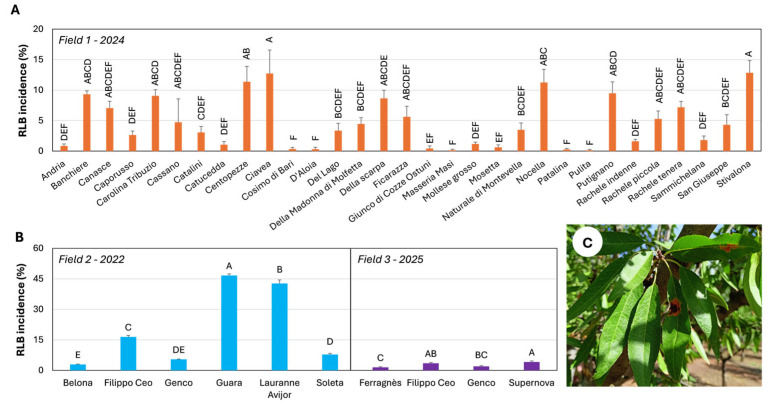 Figure 1
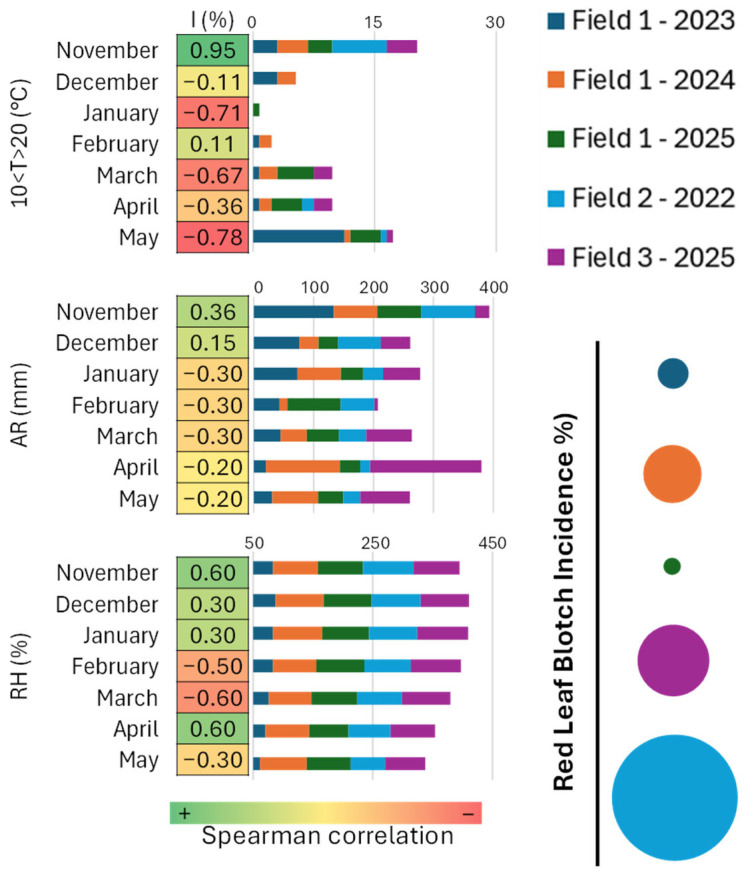 Figure 2
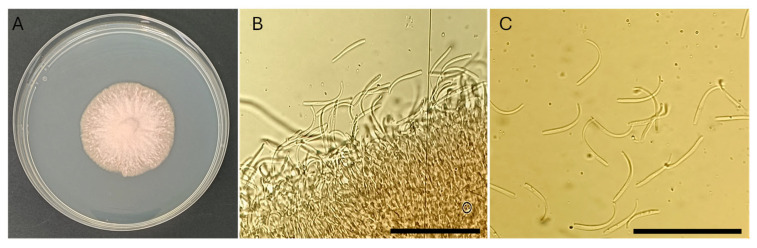 Figure 3
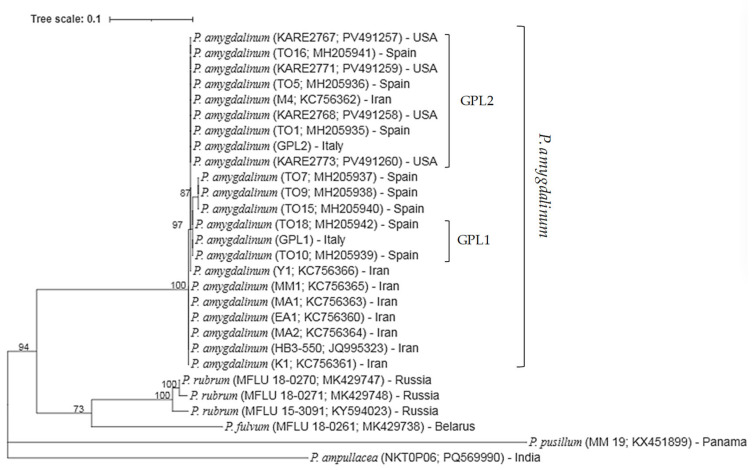 Figure 4
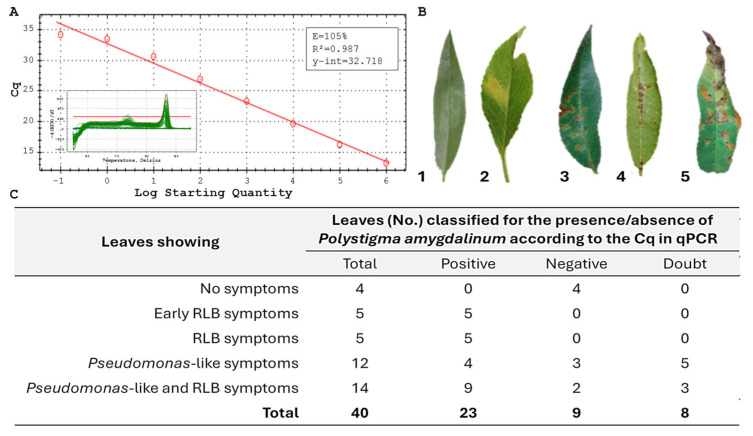 Figure 5
Peer Reviews
No public reviews on file for this paper yet. If you reviewed it on a platform where reviews are public (OpenReview, ICLR, NeurIPS, ICML), you can paste yours below so the community can read it here.
Videos
No videos yet. Explain this paper in a talk, walkthrough, or lecture? Add one.
Taxonomy
TopicsPlant Pathogens and Fungal Diseases · Fungal Plant Pathogen Control · Plant Pathogenic Bacteria Studies