Quinoa protein hydrolysates: antioxidant properties and cytoprotection against D-galactose-induced oxidative stress
Cheng Yang, Chao Yang, Yuanyuan Zhou, Jibing Ma, Yuming Wei, Jie Huang

TL;DR
This study shows that quinoa protein hydrolysates, especially those made with alcalase, have strong antioxidant properties and can protect liver cells from oxidative stress.
Contribution
The study identifies alcalase as the optimal enzyme for producing antioxidant quinoa protein hydrolysates with high functional and health-promoting potential.
Findings
Alcalase-generated hydrolysates showed the highest antioxidant activity and cytoprotection in HepG2 cells.
Pepsin hydrolysates had the highest ABTS and FRAP values due to aromatic-rich fragments.
QPHs significantly enhanced SOD, GPx, and CAT activities while reducing MDA levels in cells.
Abstract
Quinoa is widely recognized as a high-quality protein source suitable for producing bioactive hydrolysates with significant health-promoting potential. This study compared four proteases (alcalase, trypsin, pepsin, and neutral protease) to identify optimal enzymatic conditions for generating antioxidant quinoa protein hydrolysates (QPHs). Among them, alcalase exhibited the highest degree of hydrolysis (36.15%) and yielded the largest proportion of low-molecular-weight fragments (< 2 kDa, 41.08%). It also produced hydrolysates with the lowest surface hydrophobicity and particle size, reflecting more extensive structural disruption, and demonstrated the highest essential amino acid content (20.72 g/100 g). Functionally, alcalase-derived QPHs showed the strongest DPPH radical scavenging activity (4.30 mg TE/g), the highest reducing power (0.61), and provided the greatest cytoprotection in…
Genes, proteins, chemicals, diseases, species, mutations and cell lines named across the full text — each resolved to its canonical identifier and authoritative record.
Click any figure to enlarge with its caption.
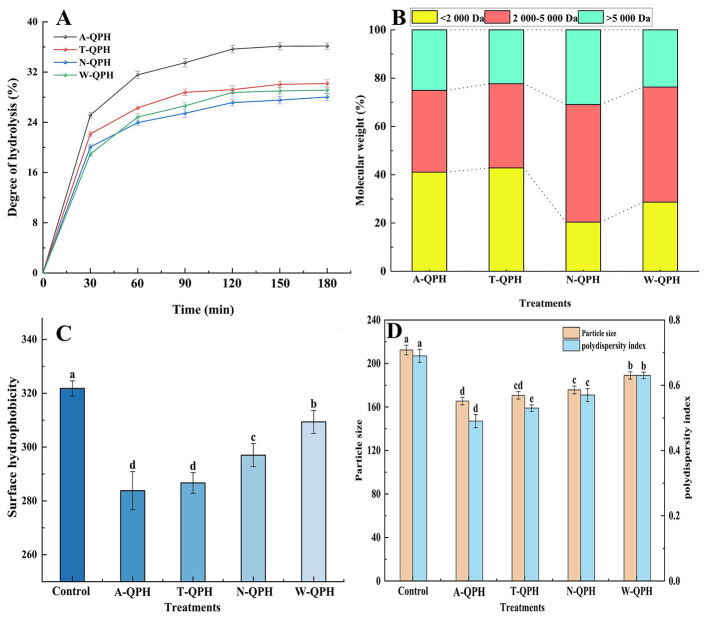 Figure 1
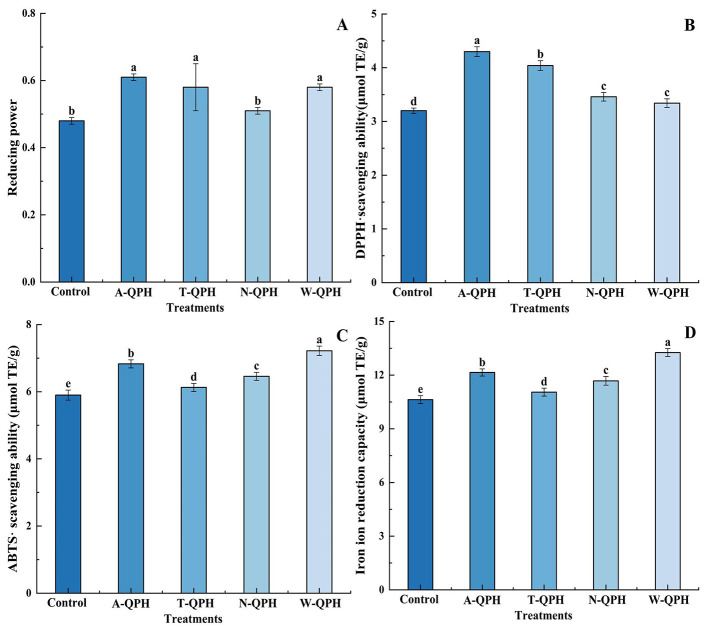 Figure 2
 Figure 3
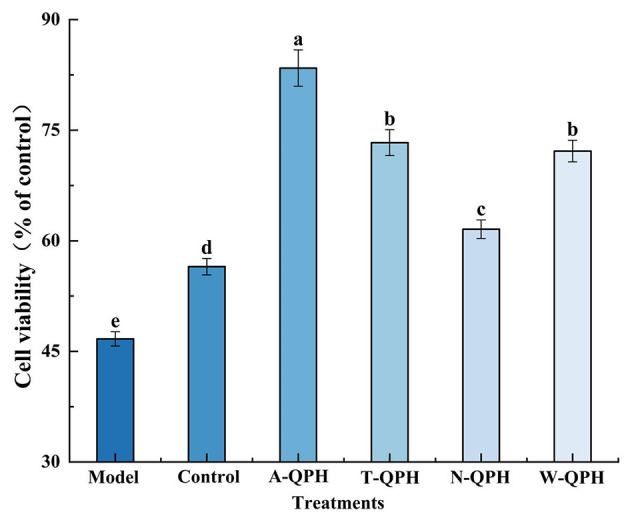 Figure 4
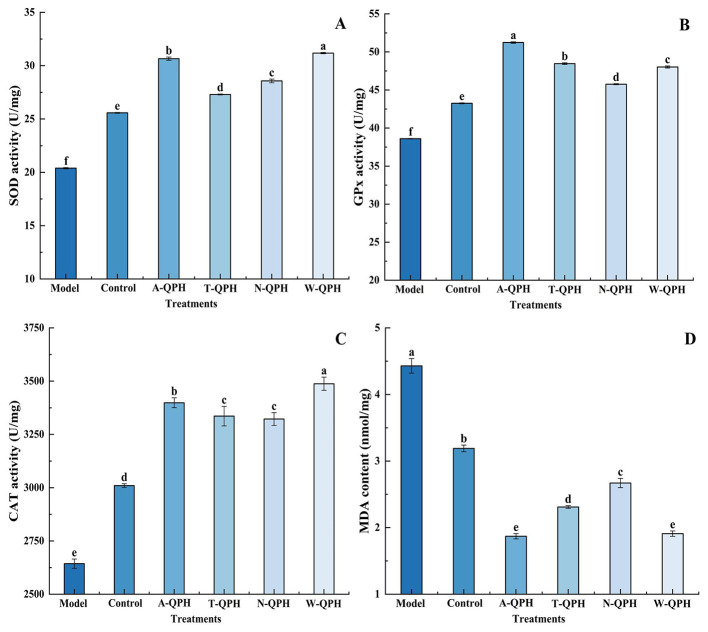 Figure 5
Peer Reviews
No public reviews on file for this paper yet. If you reviewed it on a platform where reviews are public (OpenReview, ICLR, NeurIPS, ICML), you can paste yours below so the community can read it here.
Videos
No videos yet. Explain this paper in a talk, walkthrough, or lecture? Add one.
Taxonomy
TopicsProtein Hydrolysis and Bioactive Peptides · Food Allergy and Anaphylaxis Research · Advanced Glycation End Products research