Using Dose–Response Correlation Re-Analyzing to Distinguish Placebo from Standardized Rose-Hip Powder (Lito) in a Clinical Trial on Osteoarthritis Where Data Initially Looked Identical
Alzahraa Mahmoud Motawei, Kristian Marstrand Warholm, Kaj Winther

TL;DR
This study shows how a simple dose-response analysis can reveal real benefits of a rose-hip supplement in osteoarthritis, even when standard methods couldn't tell it apart from a placebo.
Contribution
The novel use of dose-response correlation in distinguishing active treatment effects from placebo in clinical trials with nonspecific improvements.
Findings
Standard comparisons found no difference between active and placebo groups, but dose-response analysis revealed a treatment effect.
Only the active group showed a consistent negative correlation between body weight and symptom improvement.
Weight-stratified plots revealed an exposure-response gradient in the active group.
Abstract
Background: Large positive responses to placebo are common in clinical trials and pose a major challenge when evaluating different treatments, including new foods. Standard between-group comparisons may fail to detect true effects when placebo improvements are significant. We aimed to demonstrate how a simple dose–response correlation method can help differentiate genuine positive responses from those experienced with placebo through secondary analysis of a randomized controlled clinical trial of powdered Rosa-canina fruits. Methods: Data were reanalyzed from a multicenter, double-blind, randomized, placebo-controlled trial (N = 120; ClinicalTrials.gov NCT01459939) evaluating the effects of standardized Rosa-canina powder in hip and knee osteoarthritis (OA). Participants received fixed doses, leading to variability in mg/kg exposure due to different body weights. Pearson correlations…
Genes, proteins, chemicals, diseases, species, mutations and cell lines named across the full text — each resolved to its canonical identifier and authoritative record.
Click any figure to enlarge with its caption.
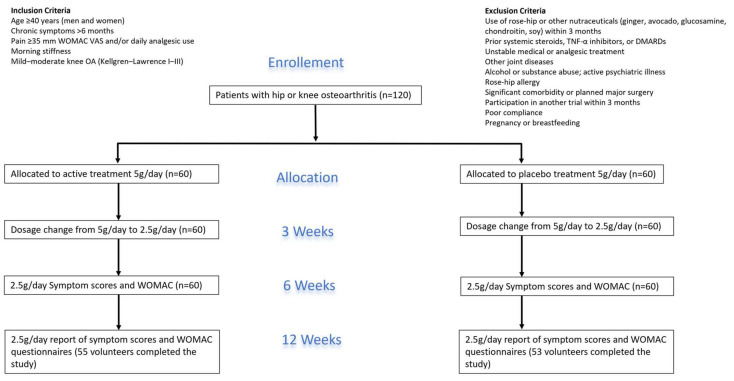 Figure 1
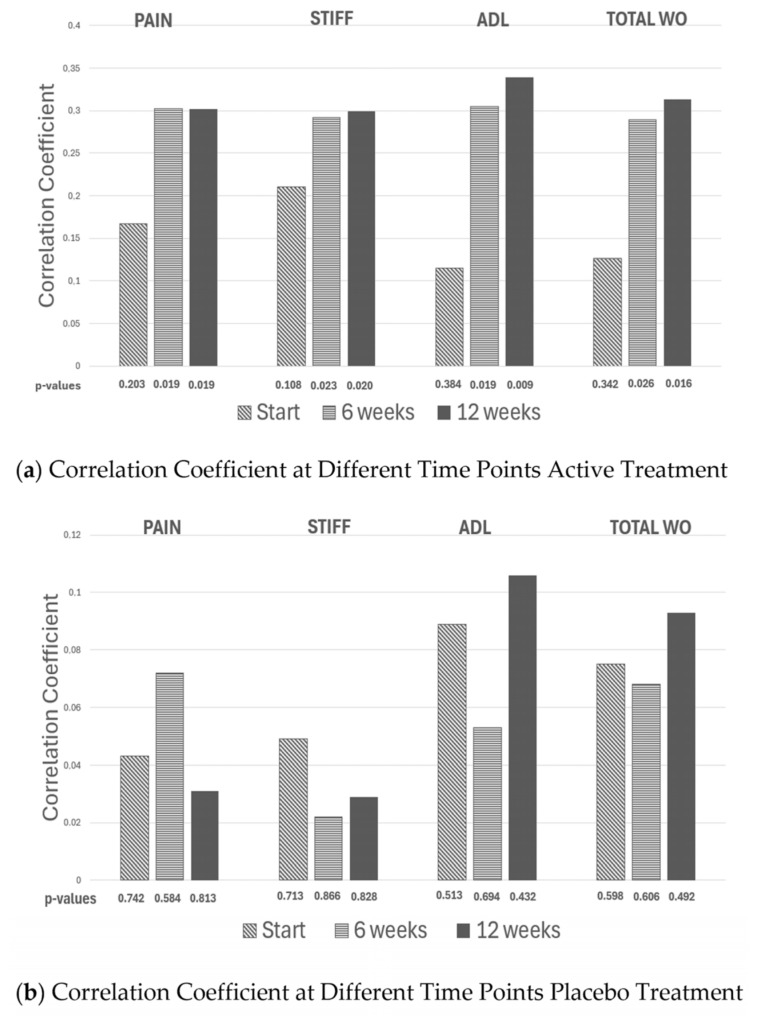 Figure 2
Peer Reviews
No public reviews on file for this paper yet. If you reviewed it on a platform where reviews are public (OpenReview, ICLR, NeurIPS, ICML), you can paste yours below so the community can read it here.
Videos
No videos yet. Explain this paper in a talk, walkthrough, or lecture? Add one.
Taxonomy
TopicsPain Management and Placebo Effect · Cannabis and Cannabinoid Research · Phytochemistry and biological activity of medicinal plants