Rapid and Simple Detection of Mycobacterium avium subsp. paratuberculosis Using a Lateral Flow Assay Based on CRISPR-Cas12a Combined with Recombinase Polymerase Amplification or Nested PCR
Yue-Rong Lv, Yi-Yang Liu, Rong Zhang, Bo Yang, Shi-Yuan Xue, Yu-Lin Ding, Jun-Tao Jia, Hasi Bayaer, Alateng Bagen, Rui-Bin Chen, Siqin Tunala, Li Zhao, Yong-Hong Liu

TL;DR
This paper introduces a new rapid and sensitive method for detecting Mycobacterium avium subsp. paratuberculosis using CRISPR-Cas12a combined with amplification techniques.
Contribution
The first integration of RPA or nested PCR with CRISPR-Cas12a for MAP detection is presented.
Findings
The RPA–CRISPR-Cas12a and nested PCR–CRISPR-Cas12a assays achieved high sensitivity with detection limits of 1 × 10⁻¹⁰ μg/μL and 1 × 10⁻¹⁴ μg/μL, respectively.
The methods showed perfect agreement with reference assays on clinical samples and MAP cultures.
Flexible detection options using qPCR, fluorescence, or lateral flow strips were validated.
Abstract
Paratuberculosis (PTB), caused by Mycobacterium avium subsp. paratuberculosis (MAP), is a chronic intestinal disease in ruminants. PTB is difficult to diagnose, control, and eradicate, leading to substantial economic losses. Thus, sensitive and specific detection methods are urgently required. crRNA and primers targeting the MAP ATPase FtsK gene were designed for recombinase polymerase amplification (RPA) and nested PCR. Fecal DNA was amplified using RPA or nested PCR, purified with Tris-saturated phenol-chloroform-isoamyl alcohol, and detected via CRISPR-Cas12a. Moreover, signals were read using a qPCR instrument, fluorescence reader, or lateral flow strips. RPA–CRISPR-Cas12a and nested PCR–CRISPR-Cas12a assays were optimized and validated on 50 clinical samples and 7 MAP cultures. The limits of detection were 1 × 10⁻¹⁰ μg/μL for RPA–CRISPR-Cas12a and 1 × 10⁻¹⁴ μg/μL for nested…
Genes, proteins, chemicals, diseases, species, mutations and cell lines named across the full text — each resolved to its canonical identifier and authoritative record.
Click any figure to enlarge with its caption.
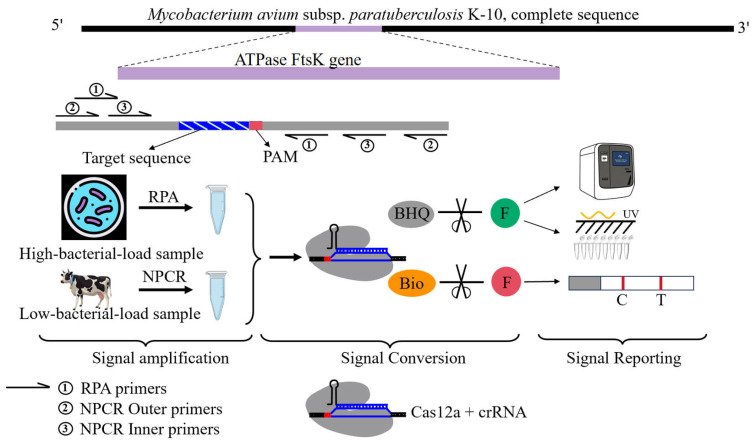 Figure 1
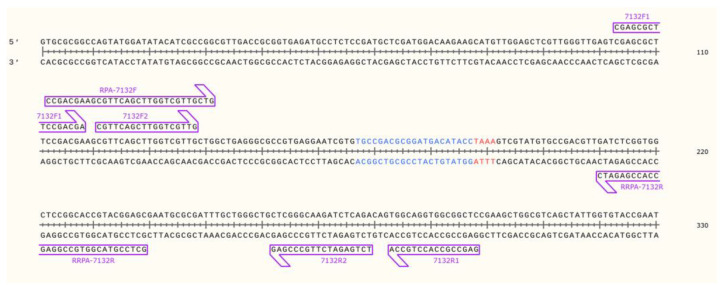 Figure 2
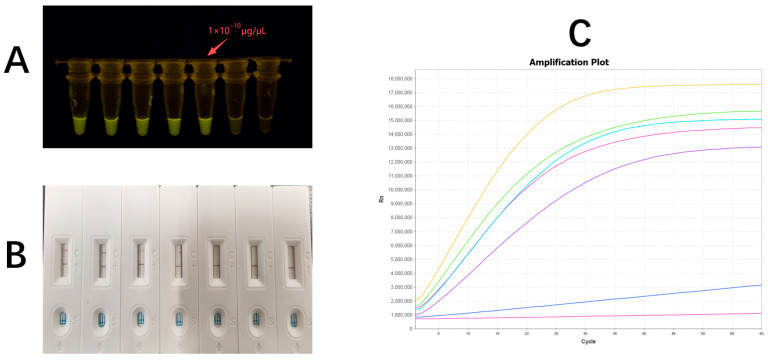 Figure 3
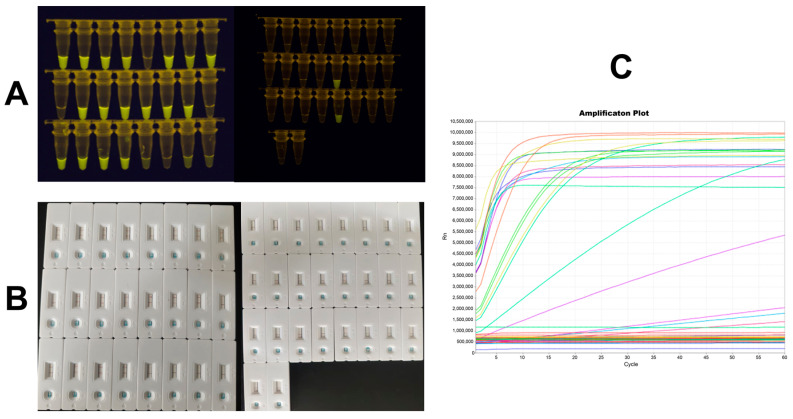 Figure 4
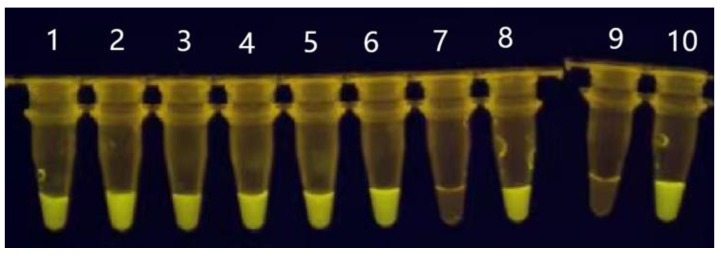 Figure 5
Peer Reviews
No public reviews on file for this paper yet. If you reviewed it on a platform where reviews are public (OpenReview, ICLR, NeurIPS, ICML), you can paste yours below so the community can read it here.
Videos
No videos yet. Explain this paper in a talk, walkthrough, or lecture? Add one.
Taxonomy
TopicsMycobacterium research and diagnosis · Tuberculosis Research and Epidemiology · Veterinary medicine and infectious diseases