From Nature to Synthesis and Vice Versa: Costic Acid Analogs with Acaricidal Activity Against the Bee Parasite Varroa destructor
Eugenia Papastefanaki, Apostolos Spyros, Demosthenis Isaakidis, Maria Kallivretaki, Despoina Moraiti, Napoleon C. Stratigakis, Demetrios Ghanotakis, Haralambos E. Katerinopoulos

TL;DR
This study explores natural and synthetic compounds from Inula helenium that show acaricidal activity against the bee parasite Varroa destructor.
Contribution
The paper introduces new synthetic analogs of costic acid with acaricidal activity and identifies key pharmacophore groups.
Findings
Natural eudesmanolides from Inula helenium showed strong antioxidant activity in the methanolic extract.
Synthetic analogs of costic acid demonstrated acaricidal activity against Varroa destructor.
Structure–activity relationship studies identified important pharmacophore groups for acaricidal activity.
Abstract
The species Inula helenium belongs to the genus Inula (Asteraceae) and exhibits antibacterial and anti-inflammatory properties. It is used in respiratory and skin diseases. Its bioactivity is attributed to its eudesmanolide components, mainly to alantolactone and isoalantolactone. These components were isolated in high purity from the plant’s dried roots, either via multiple column chromatography separations or via repeated recrystallization. Two more eudesmanolides structurally similar to their parent compounds were isolated, namely 11,13-dihydro-alantolactone and 11,13-dihydro-isoalantolactone. The secondary metabolites and their derivatives were characterized in detail, for the first time, via NMR spectroscopy, GC-MS, and HRMS. Synthetic modification of the natural component structure was considered necessary for structure–activity relationship studies and biological tests. Thus,…
Genes, proteins, chemicals, diseases, species, mutations and cell lines named across the full text — each resolved to its canonical identifier and authoritative record.
Click any figure to enlarge with its caption.
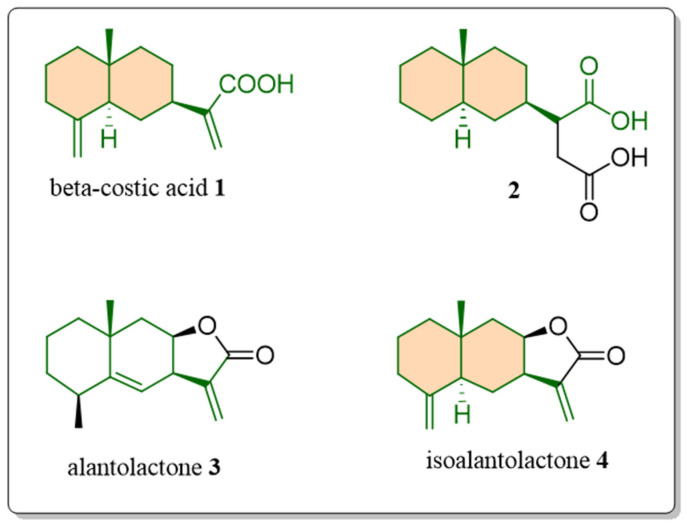 Figure 1
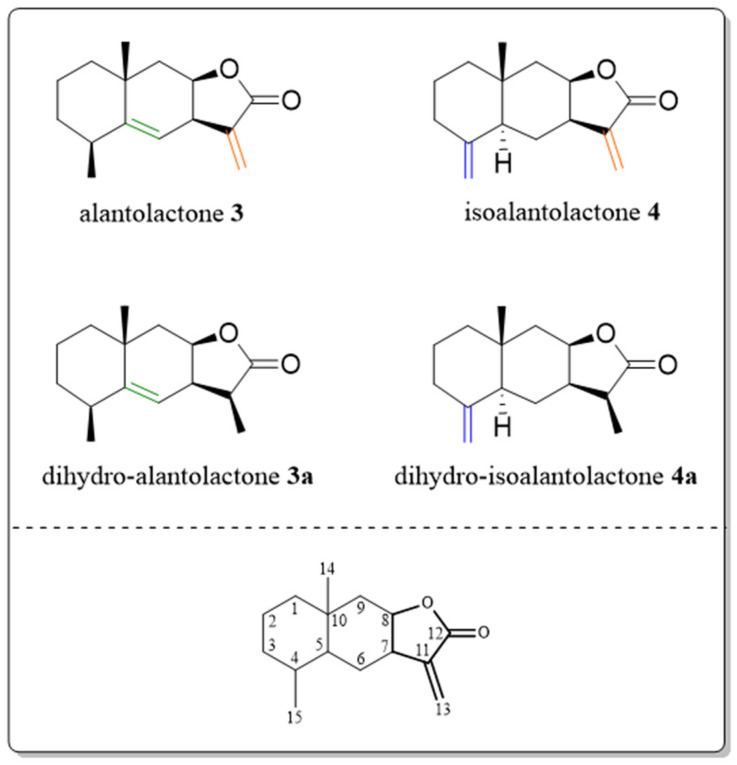 Figure 2
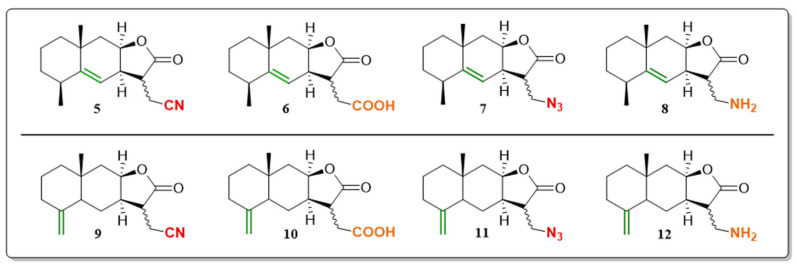 Figure 3
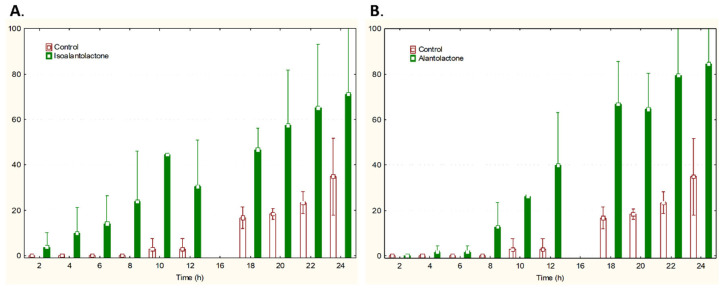 Figure 4
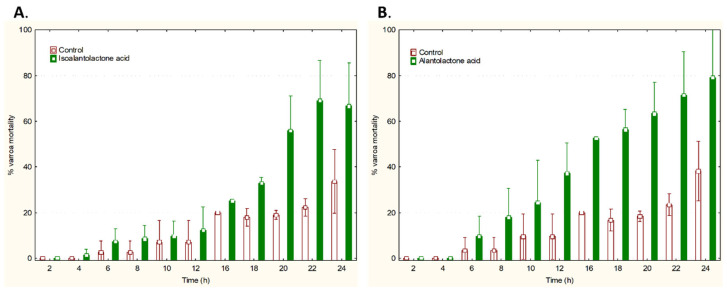 Figure 5
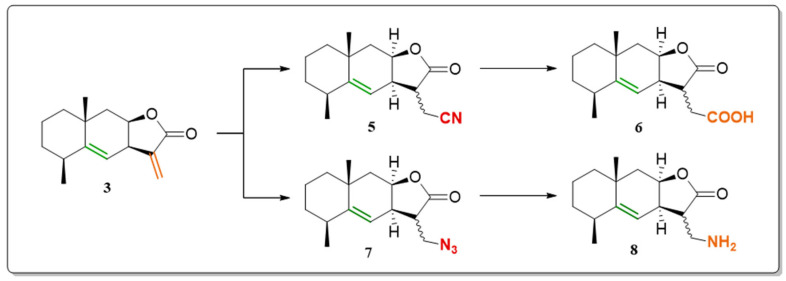 Figure 6
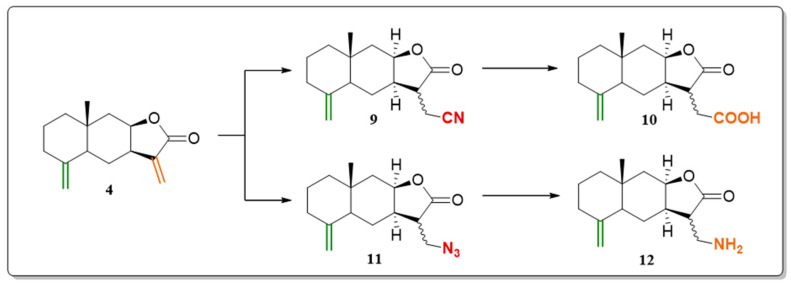 Figure 7
Peer Reviews
No public reviews on file for this paper yet. If you reviewed it on a platform where reviews are public (OpenReview, ICLR, NeurIPS, ICML), you can paste yours below so the community can read it here.
Videos
No videos yet. Explain this paper in a talk, walkthrough, or lecture? Add one.
Taxonomy
TopicsSesquiterpenes and Asteraceae Studies · Plant Toxicity and Pharmacological Properties · Insect and Pesticide Research