Residual Dynamics of Fluopyram and Its Compound Formulations in Pinus massoniana and Their Efficacy in Preventing Pine Wilt Disease
Wanjun Zhang, Anshun Ni, Jiao Zhang, Guohong Sun, Fan Xiang, Hao Cheng, Tingting Chen, Jianren Ye

TL;DR
This study evaluates fluopyram and its formulations as effective and long-lasting alternatives to traditional chemicals for preventing pine wilt disease in pine trees.
Contribution
The study introduces fluopyram and its compound formulations as novel, long-lasting alternatives to conventional nematicides for pine wilt disease prevention.
Findings
Fluopyram showed stronger translocation and higher residual levels in pine trees compared to emamectin benzoate and avermectin.
Fluopyram and its compound formulation provided nearly 100% disease prevention at 90 days and 50% efficacy at 480 days post-injection.
Fluopyram-based treatments outperformed conventional agents in both short- and long-term disease prevention.
Abstract
Injecting chemical agents into tree trunks is a key method for preventing pine wilt disease (PWD). However, the long-term use of conventional trunk injection agents such as emamectin benzoate (EB) and avermectin (AVM) may lead to nematode resistance. Therefore, it is crucial to evaluate the potential of new-generation nematicides, including fluopyram (FLU) and its compound formulations, as alternatives to EB and AVM in PWD prevention. In this study, four trunk injection agents, i.e., 5% FLU microemulsion (ME), 2% AVM + 6% FLU ME, 5% EB ME, and 5% AVM emulsifiable concentrate (EC), were injected into Pinus massoniana trunks, and their residual dynamics over time and preventive effects on PWD were compared. Results showed that all agents were transported to various parts of the trees within 90 days post-injection, with FLU showing significantly stronger translocation compared with EB and…
Genes, proteins, chemicals, diseases, species, mutations and cell lines named across the full text — each resolved to its canonical identifier and authoritative record.
Click any figure to enlarge with its caption.
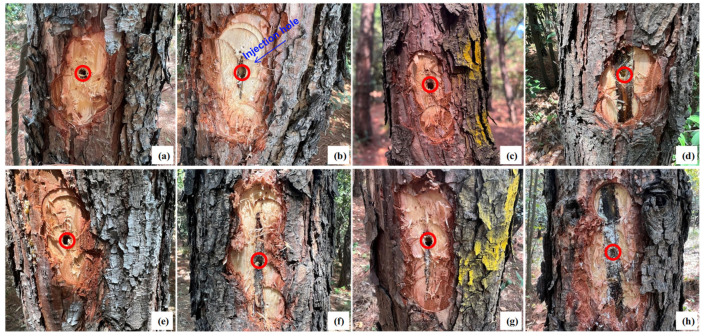 Figure 1
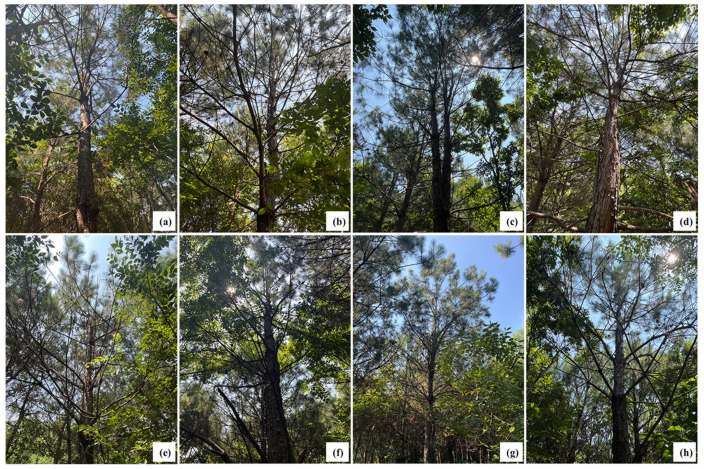 Figure 2
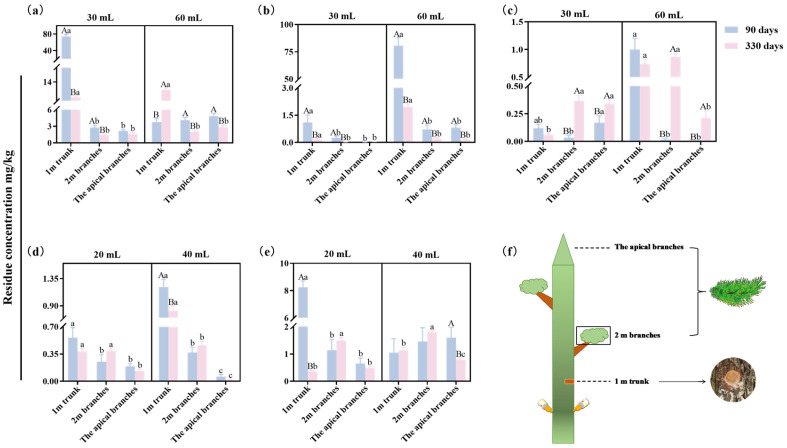 Figure 3
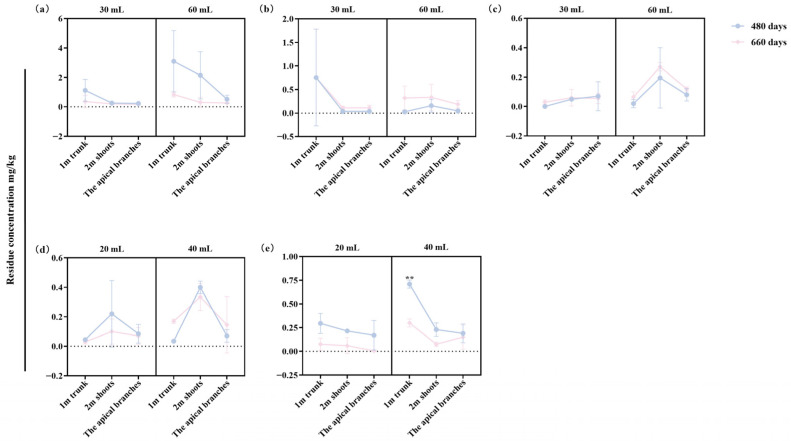 Figure 4
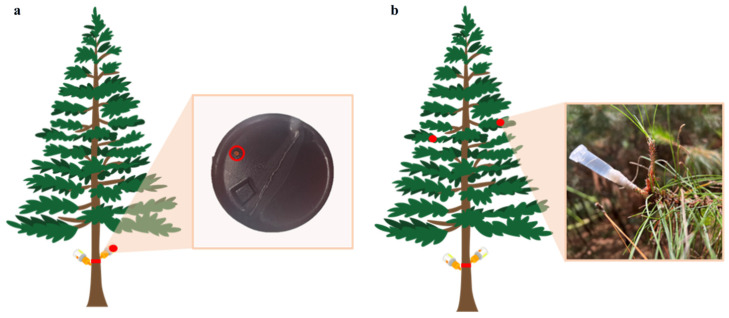 Figure 5
Peer Reviews
No public reviews on file for this paper yet. If you reviewed it on a platform where reviews are public (OpenReview, ICLR, NeurIPS, ICML), you can paste yours below so the community can read it here.
Videos
No videos yet. Explain this paper in a talk, walkthrough, or lecture? Add one.
Taxonomy
TopicsNematode management and characterization studies · Fungal Plant Pathogen Control · Forest Insect Ecology and Management