Integrated Evaluation of Alkaline Tolerance in Soybean: Linking Germplasm Screening with Physiological, Biochemical, and Molecular Responses
Yongguo Xue, Zichun Wei, Chengbo Zhang, Yudan Wang, Dan Cao, Xiaofei Tang, Yubo Yao, Wenjin He, Chao Chen, Zaib_un Nisa, Xinlei Liu

TL;DR
This study explores how soybean varieties tolerate alkaline stress by combining germplasm screening with physiological, biochemical, and molecular analyses to identify key mechanisms for breeding stress-resistant crops.
Contribution
The study identifies specific physiological and molecular pathways linked to alkali tolerance in soybean, offering insights for breeding stress-tolerant varieties.
Findings
Alkali-tolerant soybean varieties reduced ROS generation by 55–63% and increased photosynthetic efficiency by 18.3% under stress.
Transcriptome analysis revealed cultivar-specific enrichment of cytochrome P450, estrogen signaling, and GnRH pathways in tolerant varieties.
Tolerant varieties showed higher osmoprotectant accumulation and activation of antioxidant enzymes like SOD and CAT.
Abstract
Soybean (Glycine max L.) is an essential food and economic crop in China, yet its growth and yield are severely constrained by saline–alkali stress. A saline–alkali soil exacerbates root absorption barriers, leading to 30–50% yield losses. Understanding the mechanisms underlying alkali tolerance is therefore crucial for developing stress-resilient soybean varieties and improving the productivity of saline–alkali land. In our previous study, we evaluated 99 soybean germplasms from Northeast China and obtained the alkali-tolerant varieties HN48 and HN69, along with the alkali-sensitive varieties HNWD4 and HN83. In this study, fifteen-day-old soybean seedlings were subjected to (30 mM NaHCO3) alkali stress for 72 h, and whole plants were sampled to assess their morphology and physiology, while leaf tissues were harvested for biochemical analysis. For transcriptomic analysis, soybean…
Genes, proteins, chemicals, diseases, species, mutations and cell lines named across the full text — each resolved to its canonical identifier and authoritative record.
Click any figure to enlarge with its caption.
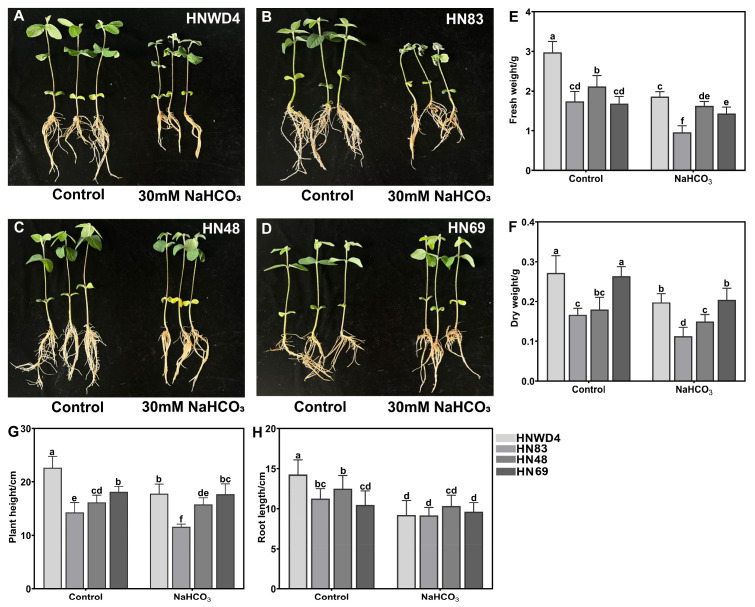 Figure 1
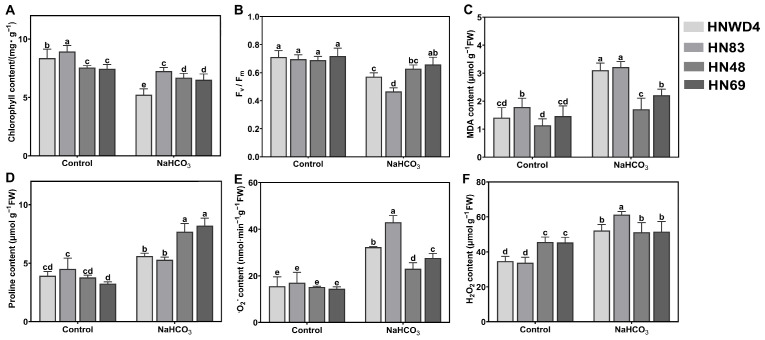 Figure 2
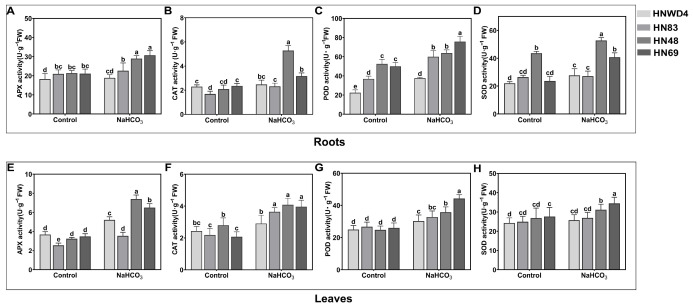 Figure 3
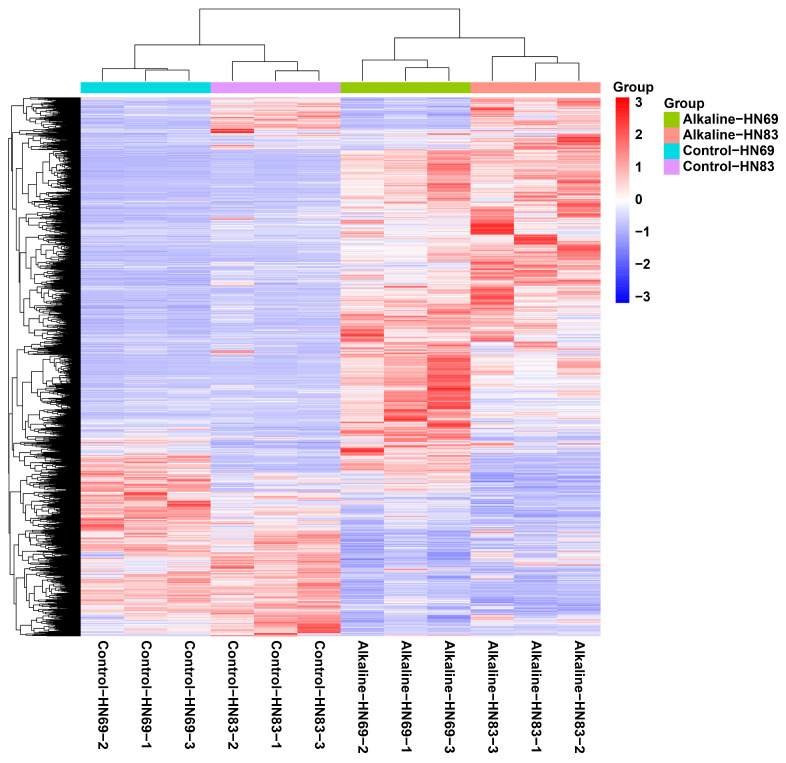 Figure 4
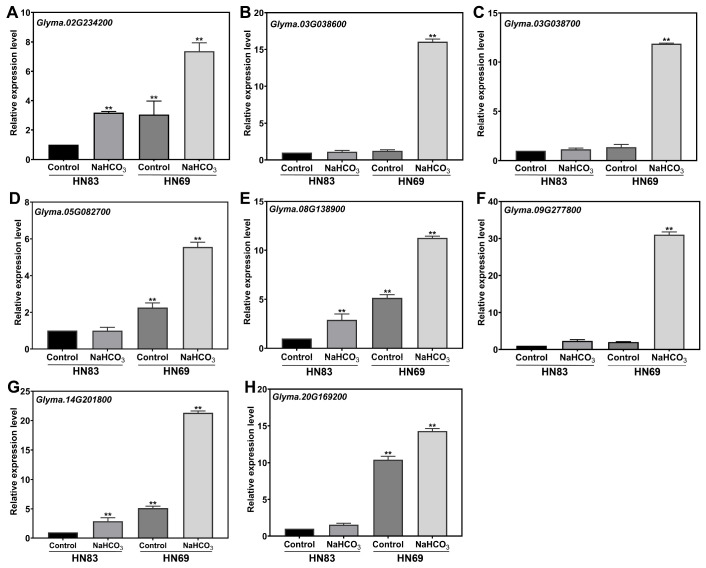 Figure 5
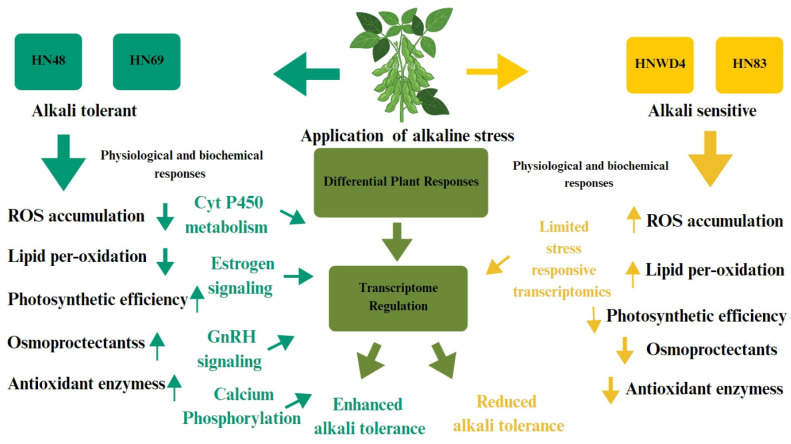 Figure 6
Peer Reviews
No public reviews on file for this paper yet. If you reviewed it on a platform where reviews are public (OpenReview, ICLR, NeurIPS, ICML), you can paste yours below so the community can read it here.
Videos
No videos yet. Explain this paper in a talk, walkthrough, or lecture? Add one.
Taxonomy
TopicsPlant Stress Responses and Tolerance · Plant responses to water stress · Plant nutrient uptake and metabolism