Antifungal Activity of Acorus calamus Essential Oil Against Rice Blast Fungus Magnaporthe oryzae and Its Composition Characterization
Shuzhen Deng, Ziyi Wang, Yusi Li, Yiming Liu, Zhiyi Kong, Ge Meng, Saige Jin, Anqi Zeng, Huan Liu, Shengming Liu

TL;DR
This study shows that Acorus calamus essential oil strongly inhibits the rice blast fungus, making it a promising natural fungicide.
Contribution
The study identifies Acorus calamus essential oil as a potent antifungal agent against Magnaporthe oryzae with detailed composition and mechanism analysis.
Findings
Acorus calamus essential oil (ACEO) had the strongest antifungal effect with an EC50 of 0.37 μL/mL.
ACEO disrupted fungal hyphal morphology and cellular integrity, reducing pathogenicity significantly.
GC-MS analysis revealed β-asarone and isoshyobunone as the major active components of ACEO.
Abstract
Rice blast, caused by the fungal pathogen Magnaporthe oryzae, is one of the most devastating diseases affecting global rice production. Plant essential oils (EOs) have been considered as a promising green alternative to synthetic fungicides. In this study, the antifungal activities of five plant EOs—Acorus calamus, Citrus reticulata, Syzygium aromaticum, Paeonia suffruticosa, and Melaleuca viridiflora—against M. oryzae were evaluated using the mycelial growth rate method. Among them, A. calamus EO (ACEO) exhibited the most pronounced inhibitory effect, with an EC50 value of 0.37 μL/mL. It significantly delayed or inhibited conidial germination and appressorium formation. At higher concentrations (≥1 μL/mL), it also caused morphological abnormalities in appressoria. Observations by scanning electron microscopy (SEM) and transmission electron microscopy (TEM) revealed that the EO…
Genes, proteins, chemicals, diseases, species, mutations and cell lines named across the full text — each resolved to its canonical identifier and authoritative record.
Click any figure to enlarge with its caption.
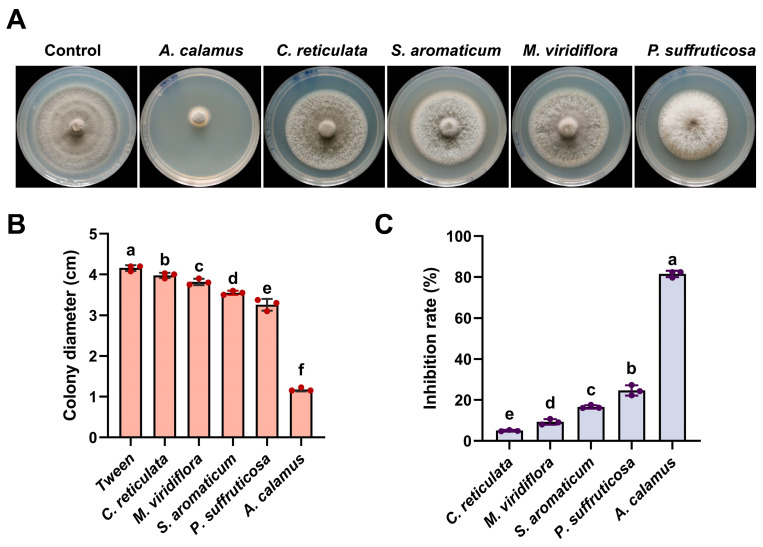 Figure 1
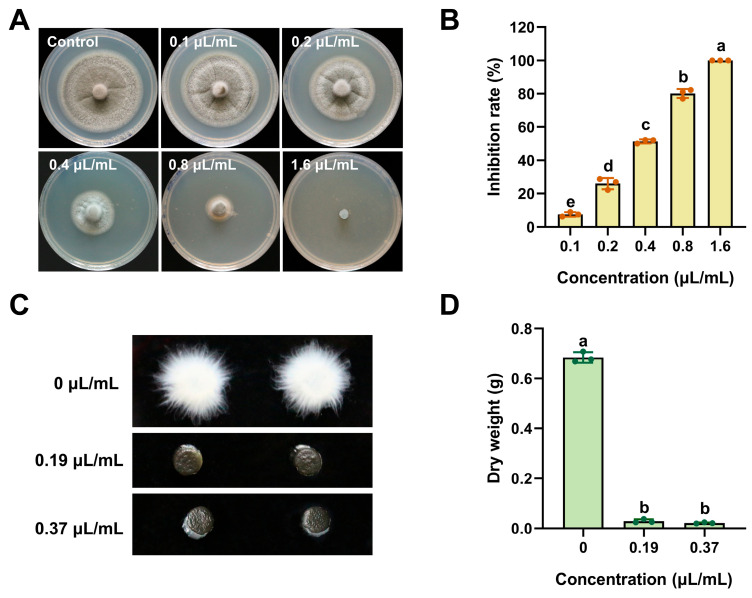 Figure 2
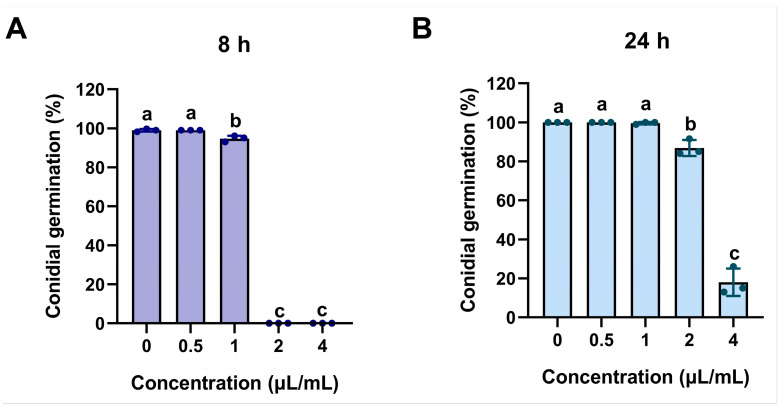 Figure 3
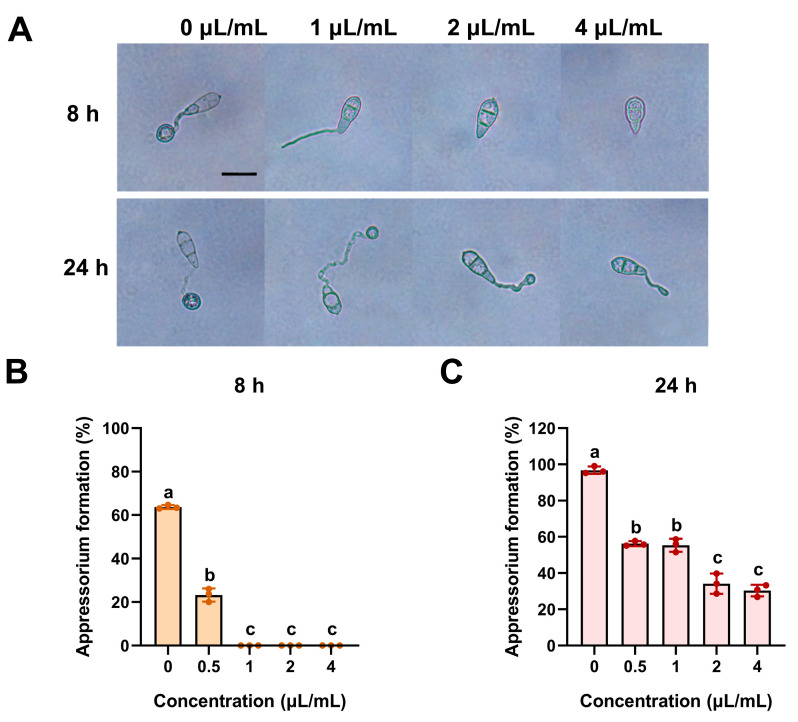 Figure 4
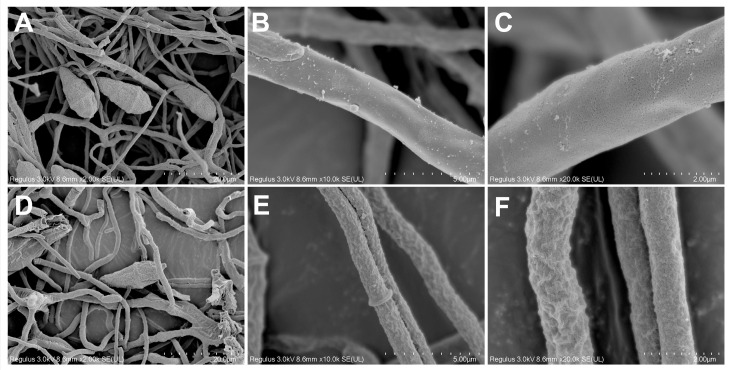 Figure 5
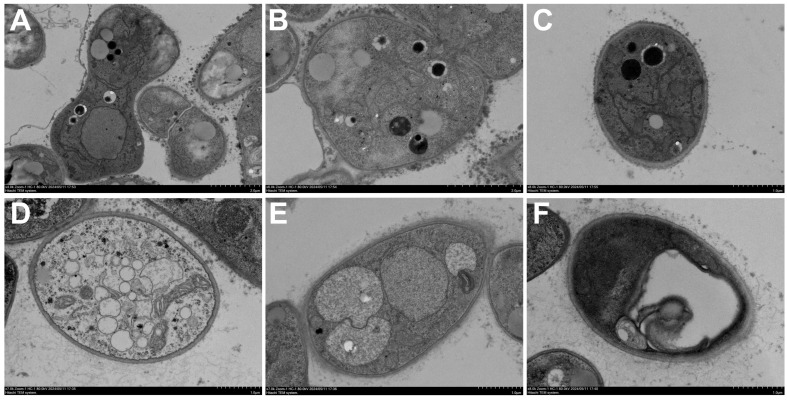 Figure 6
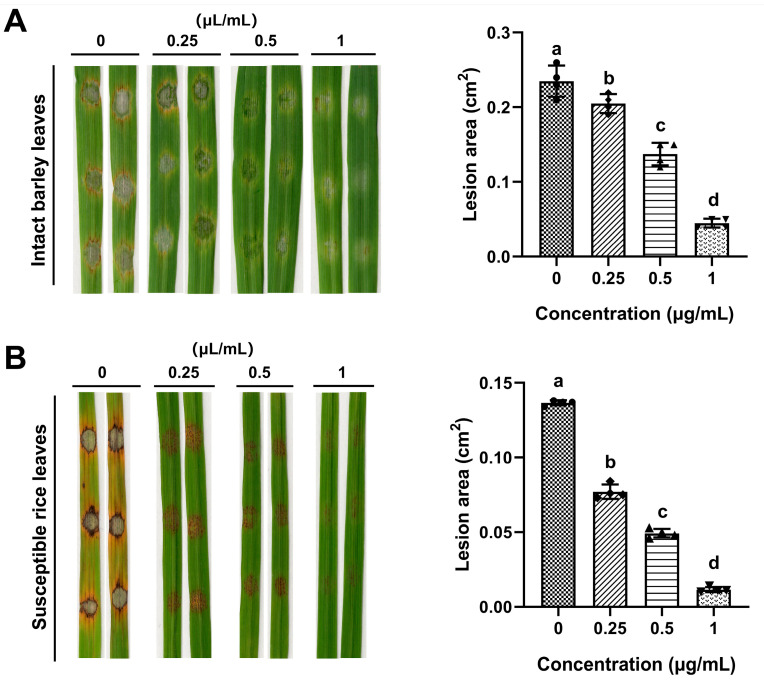 Figure 7
Peer Reviews
No public reviews on file for this paper yet. If you reviewed it on a platform where reviews are public (OpenReview, ICLR, NeurIPS, ICML), you can paste yours below so the community can read it here.
Videos
No videos yet. Explain this paper in a talk, walkthrough, or lecture? Add one.
Taxonomy
TopicsMedicinal Plants and Neuroprotection · Nanoparticles: synthesis and applications · Essential Oils and Antimicrobial Activity