Evolution of Plant AIG1-like Proteins: Different Modes of Sequence Divergence and Their Contributions to Functional Diversification
Jiajing Peng, Liying Xia, Jing Wang, Chunce Guo

TL;DR
This study explores how plant AIG1-like proteins evolved through different genetic mechanisms, leading to their diverse functions in chloroplast import and disease resistance.
Contribution
The study reveals a novel recombination-based mechanism for head-to-head tandem duplication in the IAN subfamily and establishes an evolutionary framework for functional diversification.
Findings
Plant AIG1-like proteins are divided into three subfamilies (Toc34, Toc159, IAN) with distinct evolutionary patterns.
The IAN subfamily uses inverted repeats to generate head-to-head tandem duplicates through recombination.
Functional diversification is driven by C-terminal domain acquisitions and differences in duplication modes and evolutionary rates.
Abstract
AIG1 (avrRpt2-induced gene 1)-like proteins are a class of GTPases that play crucial roles in plants, functioning both in chloroplast protein import and disease resistance. However, their evolutionary history and the mechanisms driving this functional diversification remain poorly understood. Here, we performed a comprehensive genomic and evolutionary analysis of this gene family across the plant kingdom. We identified 90 AIG1-like genes from 11 sequenced plant species, representing major lineages from green algae to angiosperms. Phylogenetic analysis revealed that plant AIG1-like proteins form three monophyletic lineages corresponding to the Toc34, Toc159, and IAN subfamilies, which originated via two ancient duplications predating the divergence of green algae and land plants. These lineages exhibit dramatically divergent evolutionary patterns. The Toc34 subfamily is evolutionarily…
Genes, proteins, chemicals, diseases, species, mutations and cell lines named across the full text — each resolved to its canonical identifier and authoritative record.
Click any figure to enlarge with its caption.
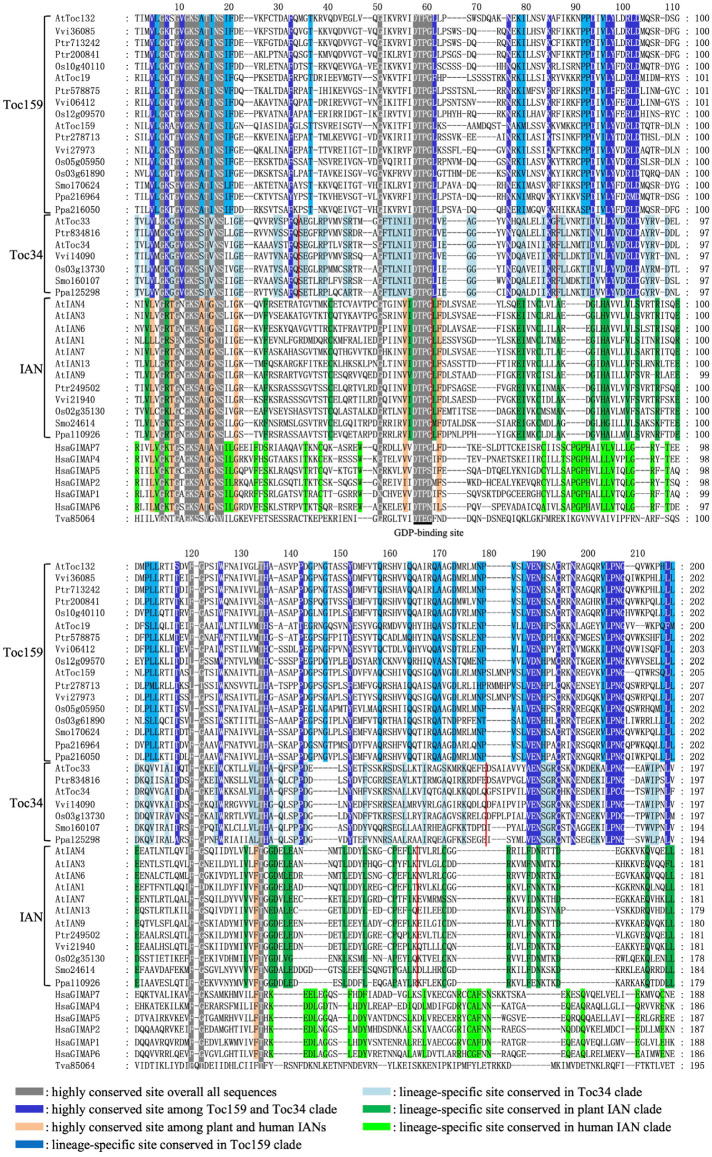 Figure 1
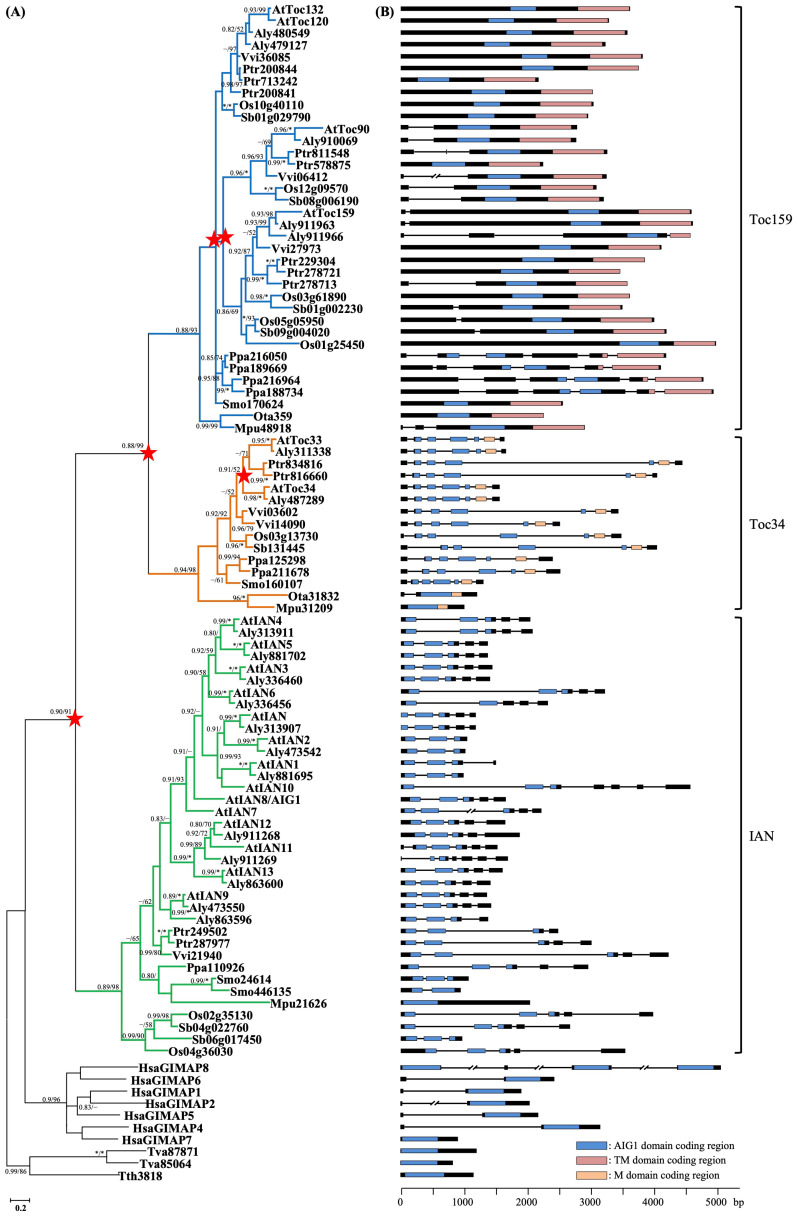 Figure 2
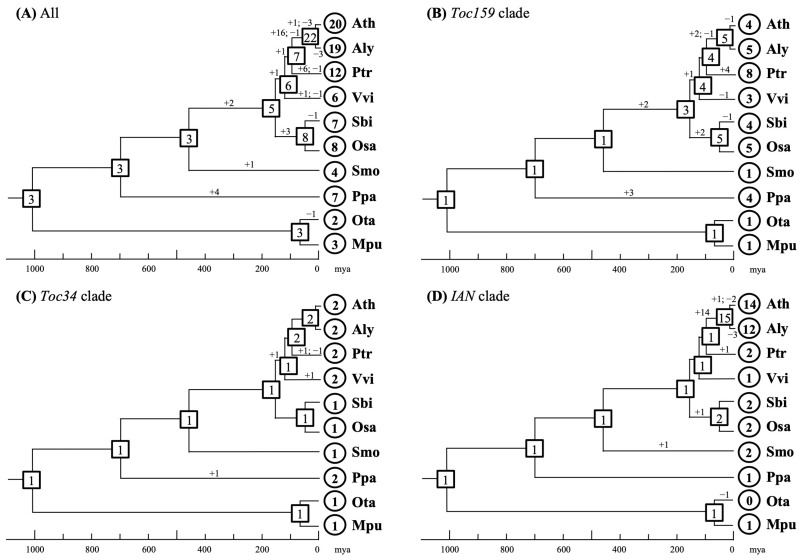 Figure 3
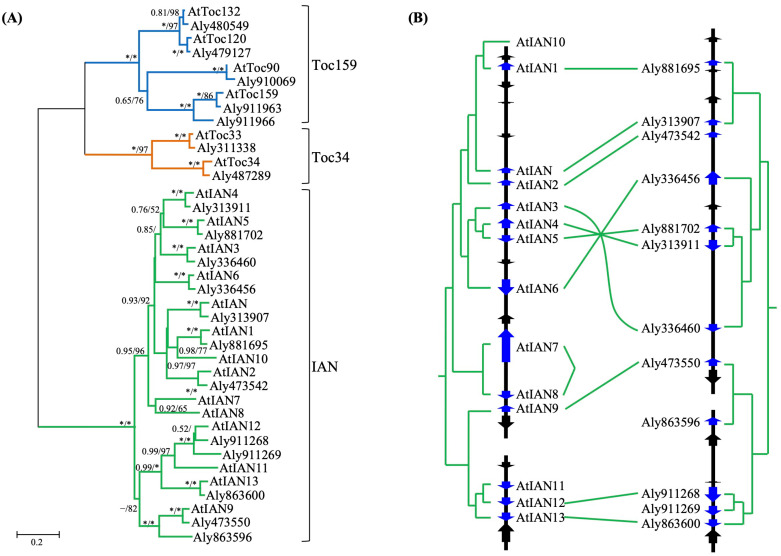 Figure 4
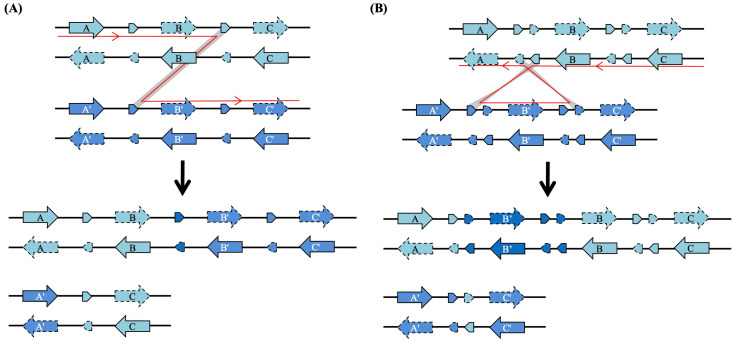 Figure 5
Peer Reviews
No public reviews on file for this paper yet. If you reviewed it on a platform where reviews are public (OpenReview, ICLR, NeurIPS, ICML), you can paste yours below so the community can read it here.
Videos
No videos yet. Explain this paper in a talk, walkthrough, or lecture? Add one.
Taxonomy
TopicsPhotosynthetic Processes and Mechanisms · Plant Molecular Biology Research · Plant Gene Expression Analysis