Seasonal Turnover in Bat Skin Mycobiota: Contrasting Fungal Communities Between Hibernation and Reproduction in Greater Mouse-Eared Bats (Myotis myotis)
Rafał Ogórek, Jakub Suchodolski, Justyna Borzęcka, Tomasz Kokurewicz

TL;DR
This study compares the skin fungi of greater mouse-eared bats during hibernation and reproduction, revealing seasonal changes and a core set of fungi.
Contribution
The first direct comparison of culturable skin mycobiota in Myotis myotis across hibernation and reproductive seasons.
Findings
Winter mycobiota was dominated by Penicillium, while summer communities were more diverse and included plant-associated fungi.
A limited core mycobiota, including Aspergillus fumigatus and Pseudogymnoascus pannorum, persisted across both seasons.
Fungal richness was higher on wing membranes than on tail membranes, with weak associations to biometric variables.
Abstract
The skin of bats hosts diverse microbial communities, yet most research has focused on bacteria or single fungal pathogens such as Pseudogymnoascus destructans. Here, we present the first direct comparison of culturable skin mycobiota in the greater mouse-eared bat (Myotis myotis) between hibernation and the reproductive season. Swabs collected from hibernating bats in the Nietoperek reserve and from maternity colonies in Lipy yielded 41 fungal species, including 27 that represent new records for M. myotis. Winter assemblages were less diverse but strongly dominated by Penicillium (>90% of isolates), while summer maternity roosts supported broader communities shaped by environmental exposure and plant-associated fungi. Despite seasonal turnover, a small set of taxa, including Aspergillus fumigatus, Mucor fragilis, and Pseudogymnoascus pannorum, persisted across both seasons, indicating…
Genes, proteins, chemicals, diseases, species, mutations and cell lines named across the full text — each resolved to its canonical identifier and authoritative record.
Click any figure to enlarge with its caption.
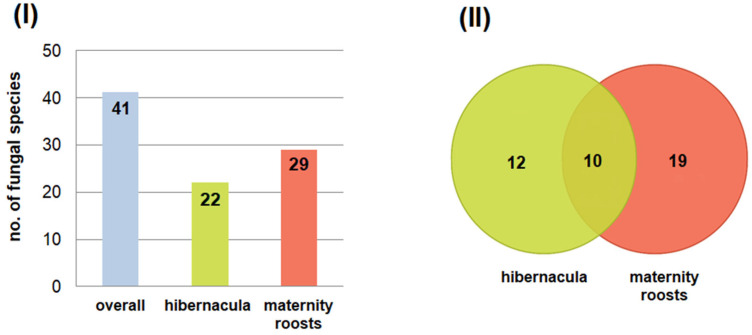 Figure 1
 Figure 2
 Figure 3
 Figure 4
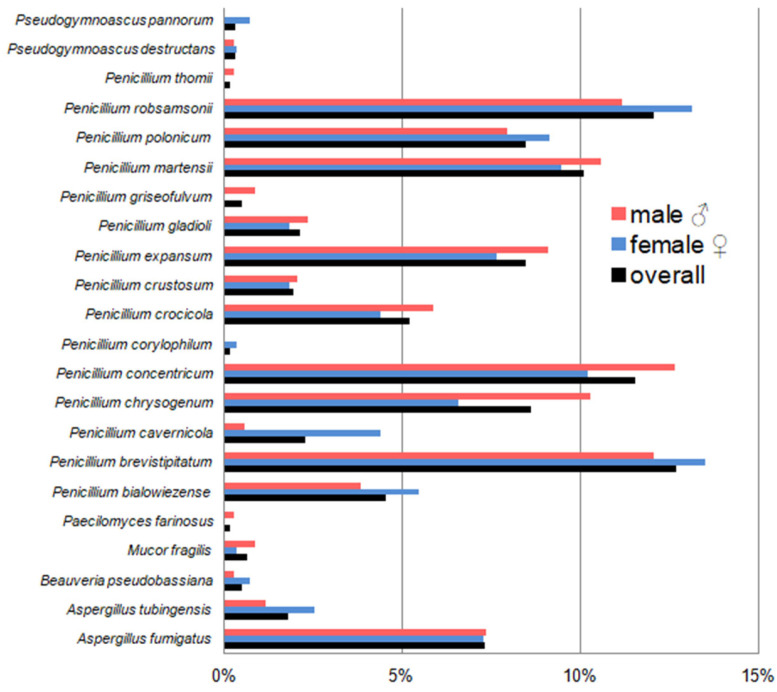 Figure 5
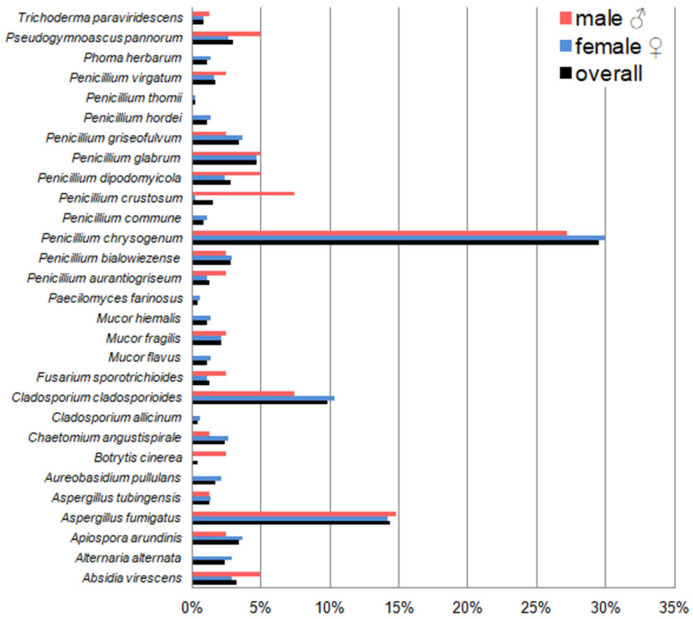 Figure 6
Peer Reviews
No public reviews on file for this paper yet. If you reviewed it on a platform where reviews are public (OpenReview, ICLR, NeurIPS, ICML), you can paste yours below so the community can read it here.
Videos
No videos yet. Explain this paper in a talk, walkthrough, or lecture? Add one.
Taxonomy
TopicsBat Biology and Ecology Studies · Amphibian and Reptile Biology · Rabies epidemiology and control