Alpha Therapy Beyond TOC and TATE—Production, Quality Control, and In-Human Results for the SSTR2 Antagonist DOTA-LM3
Lukas Greifenstein, Marcel Martin, Sarah Stephan, Aleksandr Eismant, Carsten S. Kramer, Christian Landvogt, Corinna Mueller, Frank Rösch, Richard P. Baum

TL;DR
This paper presents a new radiopharmaceutical, [225Ac]Ac-DOTA-LM3, for treating neuroendocrine tumors with improved targeting and promising clinical results.
Contribution
The study introduces a novel Actinium-225-labeled SSTR2 antagonist for targeted alpha therapy with validated production and clinical application.
Findings
Radiolabeling achieved high purity (>97%) and yields over 80%.
The radiopharmaceutical showed high in vitro stability for five days.
Clinical use resulted in partial remission and no major toxicity in a patient.
Abstract
Objectives: Peptide receptor radionuclide therapy (PRRT) of neuroendocrine tumors (NETs) commonly relies on somatostatin receptor subtype 2 (SSTR2) agonists such as DOTA-TOC/TATE, which may show limited efficacy due to high hepatic uptake and therapy resistance in some patients. SSTR2 antagonists have demonstrated superior tumor targeting. This study aimed to establish the production and quality control of the Actinium-225-labeled SSTR2 antagonist [225Ac]Ac-DOTA-LM3 and to report in-human clinical experience with targeted alpha therapy (TAT). Methods: [225Ac]Ac-DOTA-LM3 was produced by radiolabeling DOTA-LM3 with Actinium-225 under validated conditions. Radiochemical conversion, purity, yield, and stability were assessed using radio-TLC, fractionated radio-HPLC combined with gamma spectroscopy, and in vitro serum stability testing. Clinical feasibility and therapeutic response were…
Genes, proteins, chemicals, diseases, species, mutations and cell lines named across the full text — each resolved to its canonical identifier and authoritative record.
Click any figure to enlarge with its caption.
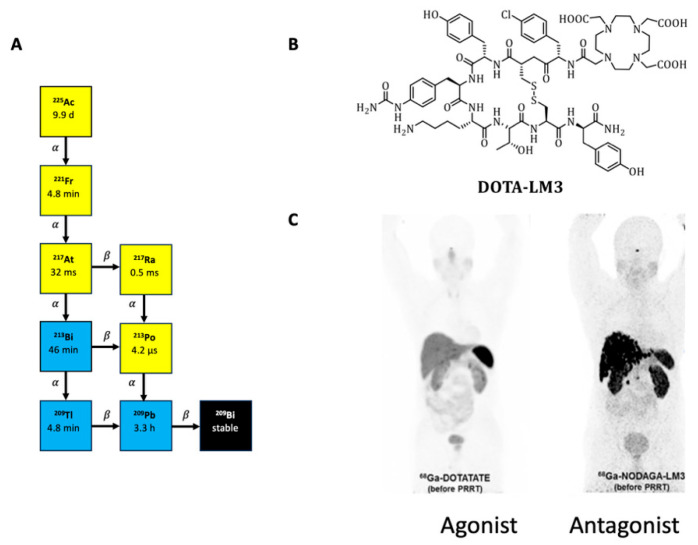 Figure 1
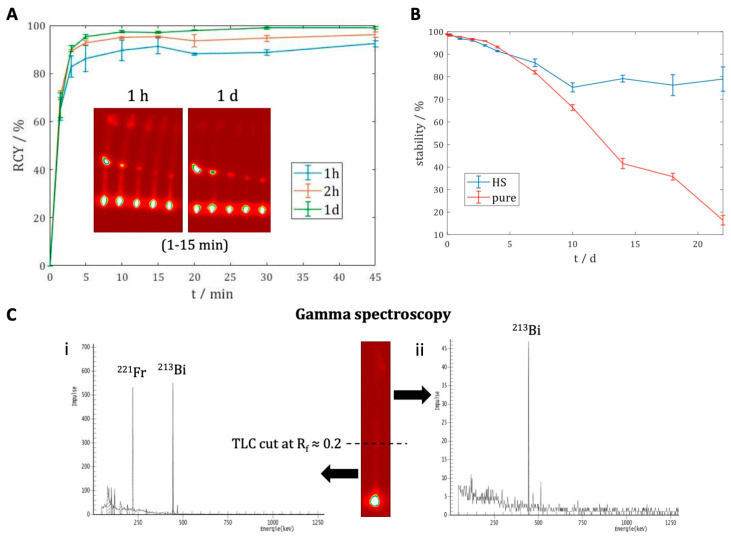 Figure 2
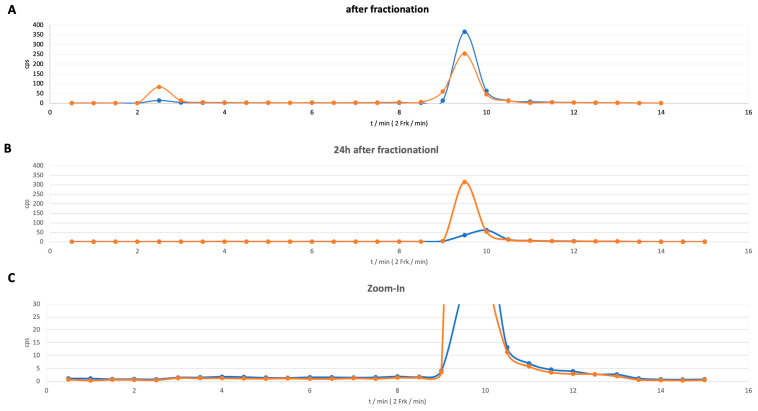 Figure 3
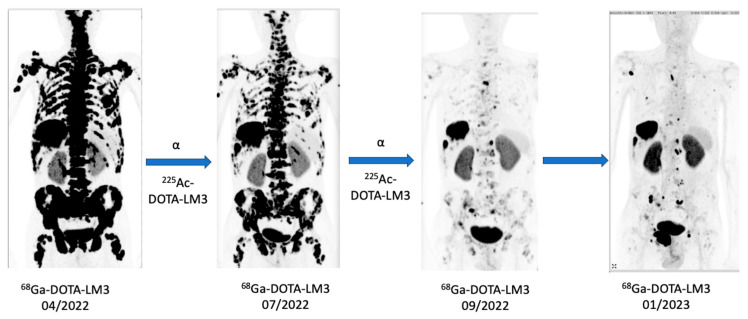 Figure 4
Peer Reviews
No public reviews on file for this paper yet. If you reviewed it on a platform where reviews are public (OpenReview, ICLR, NeurIPS, ICML), you can paste yours below so the community can read it here.
Videos
No videos yet. Explain this paper in a talk, walkthrough, or lecture? Add one.
Taxonomy
TopicsNeuroendocrine Tumor Research Advances · Radiopharmaceutical Chemistry and Applications · Lung Cancer Research Studies