Real-World Data on Severe Cutaneous Adverse Reactions to Drugs
Sergey Zyryanov, Elizaveta Terehina, Olga Butranova, Irina Asetskaya, Vitaly Polivanov, Alexander Yudin

TL;DR
This study identifies drugs commonly linked to severe skin reactions using real-world data from a Russian pharmacovigilance database.
Contribution
The study provides real-world evidence of drug-induced severe cutaneous adverse reactions using Russian spontaneous reporting data.
Findings
Antibacterial drugs, antineoplastic agents, and antiepileptics were the most frequently reported drug classes linked to SCARs.
Linagliptin, clindamycin, and piperacillin with beta-lactamase inhibitor showed the strongest signals for causing SCARs.
Pharmacovigilance databases are effective in identifying SCARs and their associated drugs to improve clinical outcomes.
Abstract
Background/Objectives: Cutaneous adverse drug reactions (CADRs) represent the most common manifestations of drug-induced allergy, with most unfavorable clinical outcomes seen in severe cutaneous adverse reactions (SCARs). To manage SCARs immediate cessation of the offending drug is needed; therefore, it is crucial to identify the list of medications associated with SCARs in real-world clinical practice. The objective of this study was to evaluate the structure of drugs associated with SCARs and to analyze drug-induced SCAR signals by calculating the reporting odds ratio (ROR) and proportional reporting ratio (PRR) based on spontaneous reports extracted from the Russian national pharmacovigilance database. Methods: A retrospective, descriptive pharmacoepidemiological analysis of spontaneous reports (SRs) registered in the pharmacovigilance database from 1 April 2019 to 31 March 2025.…
Genes, proteins, chemicals, diseases, species, mutations and cell lines named across the full text — each resolved to its canonical identifier and authoritative record.
Click any figure to enlarge with its caption.
 Figure 1
 Figure 2
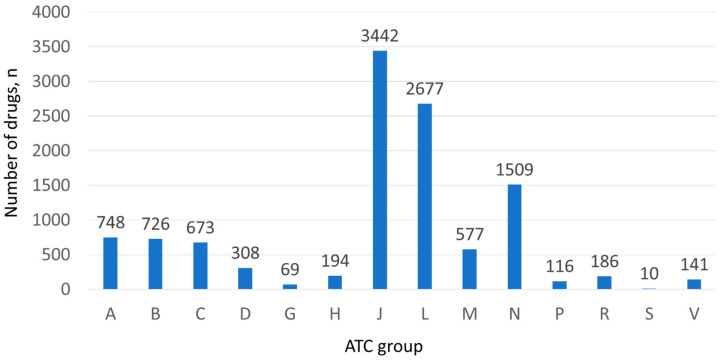 Figure 3
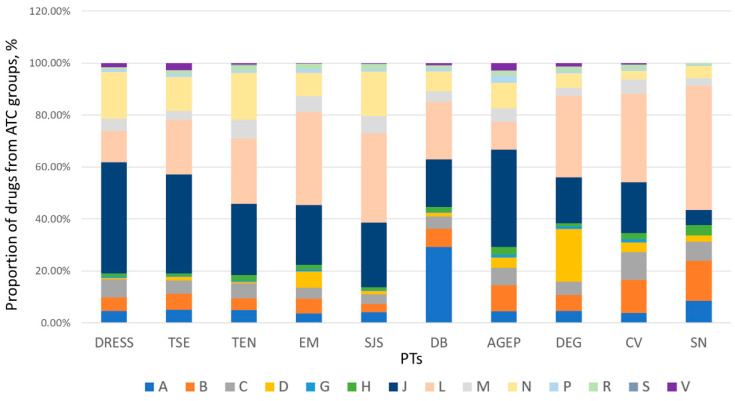 Figure 4
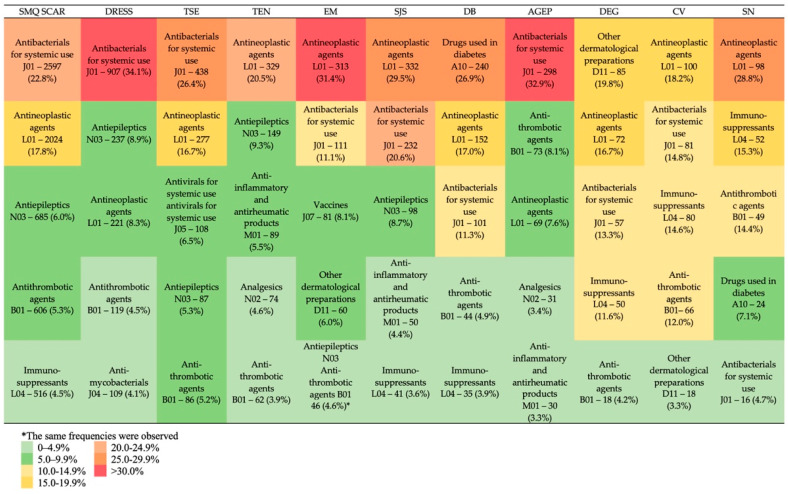 Figure 5
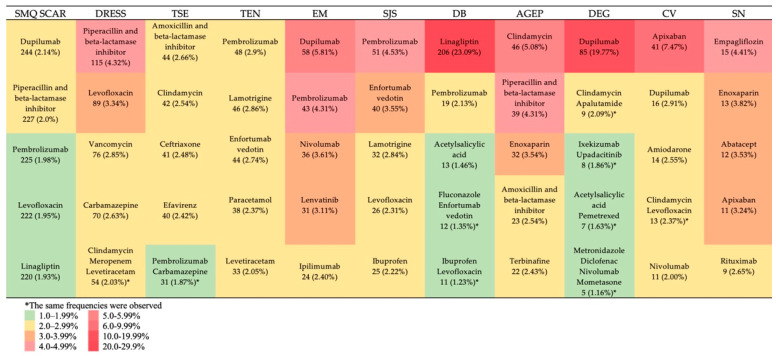 Figure 6
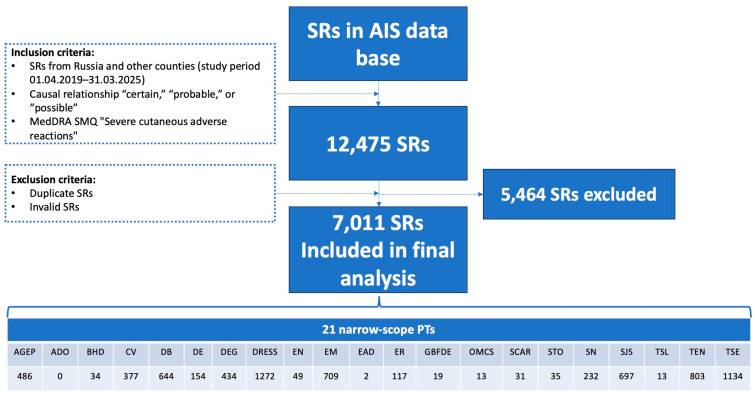 Figure 7
Peer Reviews
No public reviews on file for this paper yet. If you reviewed it on a platform where reviews are public (OpenReview, ICLR, NeurIPS, ICML), you can paste yours below so the community can read it here.
Videos
No videos yet. Explain this paper in a talk, walkthrough, or lecture? Add one.
Taxonomy
TopicsDrug-Induced Adverse Reactions · Pharmacovigilance and Adverse Drug Reactions · Contact Dermatitis and Allergies