Screening Various Bacterial-Produced Double-Stranded RNAs for Managing Asian Soybean Rust Disease Caused by Phakopsora pachyrhizi
Yenjit R. Thibodeaux, Sunira Marahatta, Dongfang Hu, Maria Izabel Costa de Novaes, Isabel Hau, Tong Wang, Zhi-Yuan Chen

TL;DR
This study explores using bacterial-produced double-stranded RNA to manage soybean rust disease by targeting fungal genes, offering a sustainable alternative to fungicides.
Contribution
The novel contribution is the large-scale production and screening of twelve dsRNAs targeting P. pachyrhizi genes, demonstrating significant disease suppression in controlled and greenhouse settings.
Findings
Nine dsRNAs reduced ASR severity by 24.0% to 81.1% and fungal biomass by 50.5% to 83.1% in growth chamber studies.
Three dsRNAs targeting ACE, CYTB1, and S12 reduced disease severity by 78.2–82.3% and fungal growth by 79.8–85.4% in greenhouse trials.
dsRNA targeting S12 reduced spore germination to 0.0–26.6% and hyphal growth to 2.7–40.5 µm in vitro.
Abstract
Asian soybean rust (ASR), caused by Phakopsora pachyrhizi (Syd.), poses a serious threat to global soybean production. The main approach to managing this disease has been through repeated fungicide applications which have reduced efficacy due to fungicide resistance. Recently, spray-induced gene silencing (SIGS) through exogenous application of double-stranded RNA (dsRNA) has emerged as a promising approach for plant disease management. In the present study, twelve different dsRNAs targeting genes important for P. pachyrhizi urediniospore germination, infection of the host plant or resistant to commonly used fungicides were produced in Escherichia coli on a large scale. Nine of these dsRNAs significantly reduced ASR severity (by 24.0% to 81.1%) and fungal biomass (50.5% to 83.1%) compared to the control when applied as a foliar spray in our growth chamber studies. Three of the most…
Genes, proteins, chemicals, diseases, species, mutations and cell lines named across the full text — each resolved to its canonical identifier and authoritative record.
Click any figure to enlarge with its caption.
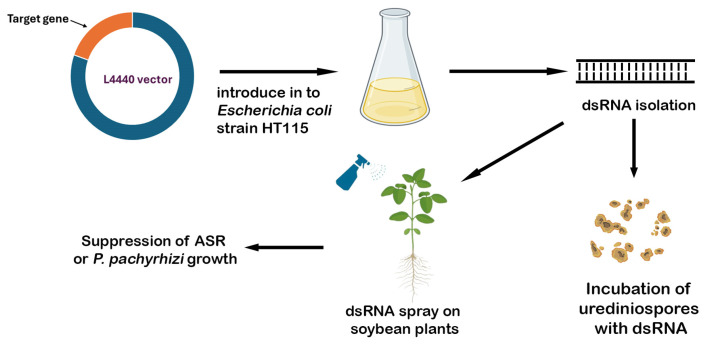 Figure 1
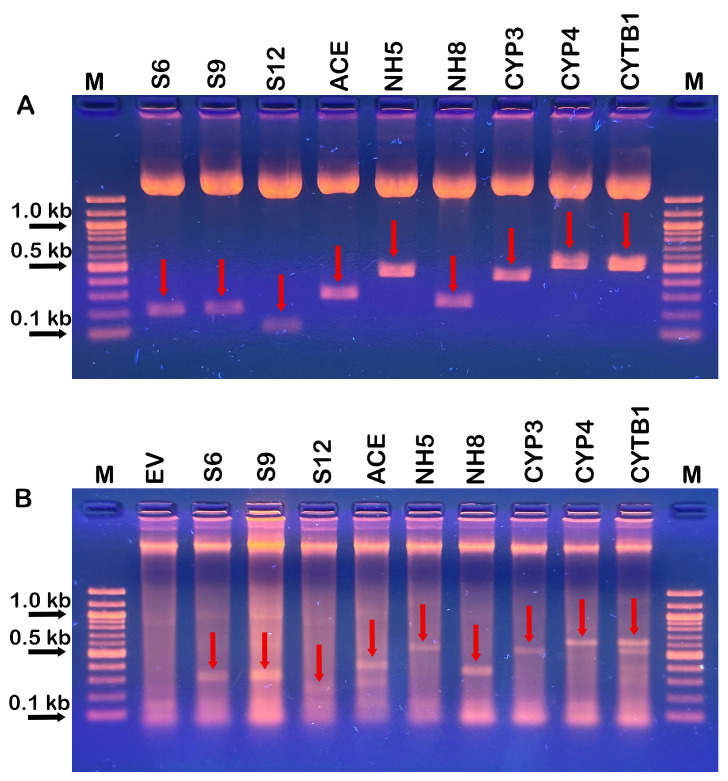 Figure 2
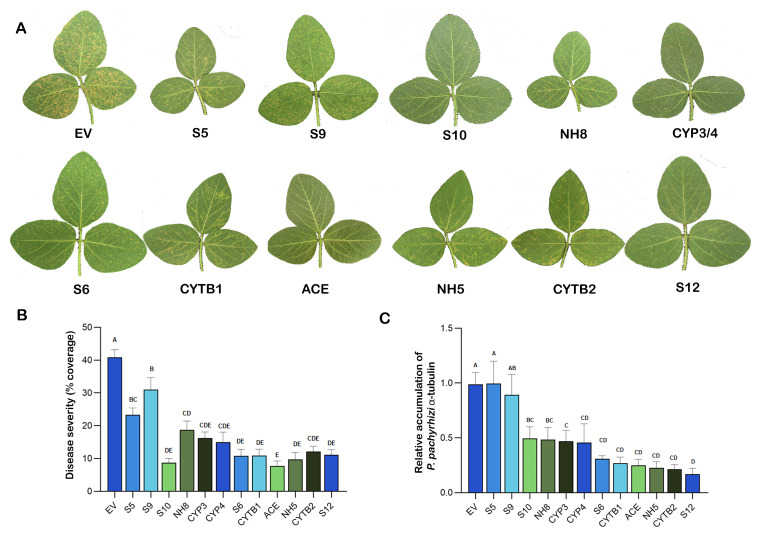 Figure 3
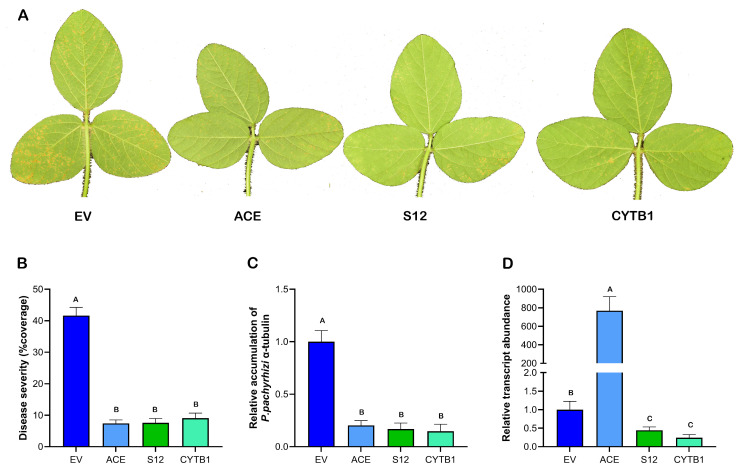 Figure 4
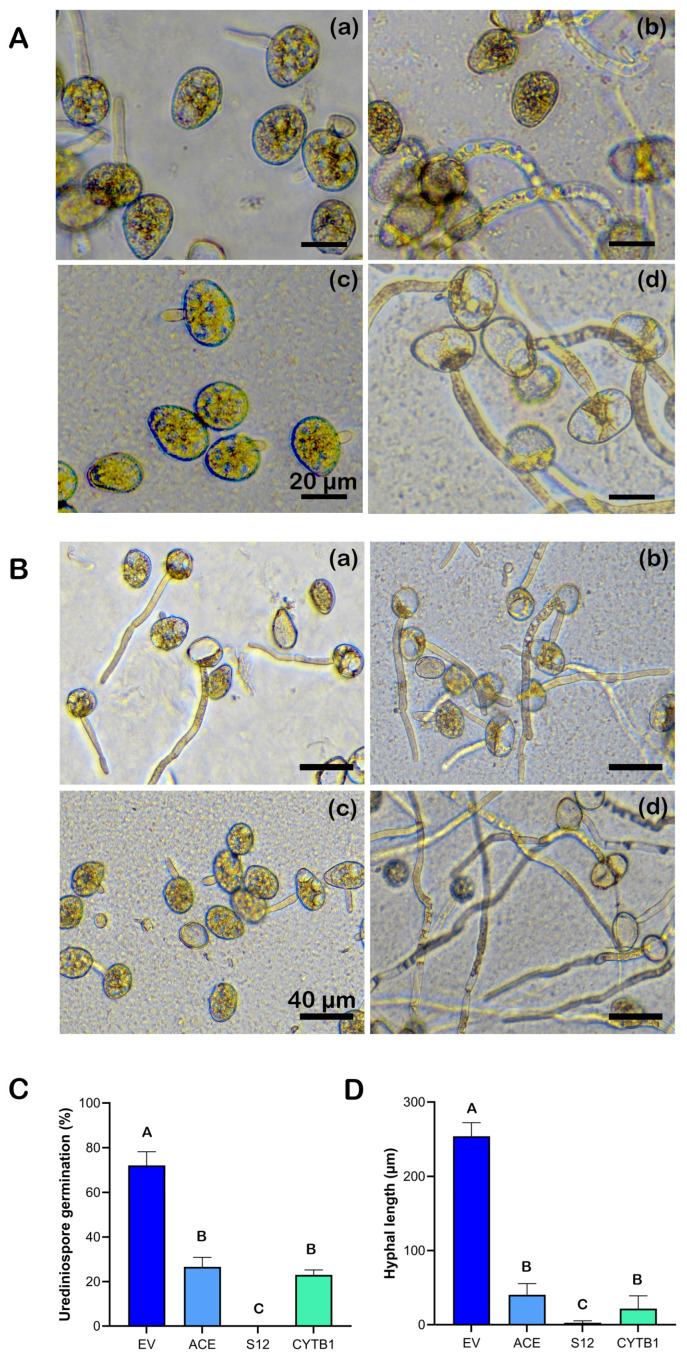 Figure 5
Peer Reviews
No public reviews on file for this paper yet. If you reviewed it on a platform where reviews are public (OpenReview, ICLR, NeurIPS, ICML), you can paste yours below so the community can read it here.
Videos
No videos yet. Explain this paper in a talk, walkthrough, or lecture? Add one.
Taxonomy
TopicsPlant Molecular Biology Research · Yeasts and Rust Fungi Studies · Insect Resistance and Genetics