Structure-Guided Design of Peptide Inhibitors Targeting Class I Viral Fusion Proteins
Narendra Kumar Gonepudi, Harry Baffour Awuah, Wang Xu, Revansiddha H. Katte, Maolin Lu

TL;DR
This paper reviews how to design peptides that block viruses from entering cells by targeting their fusion proteins, using structural insights to improve effectiveness.
Contribution
The paper provides a comprehensive overview of structure-guided strategies for optimizing peptide inhibitors targeting viral fusion proteins.
Findings
Peptide inhibitors mimicking heptad repeat motifs are effective in blocking viral fusion.
Strategies like α-helical stabilization and hydrocarbon stapling improve peptide potency and stability.
These approaches have led to the development of broad-spectrum antiviral peptides.
Abstract
Viral fusion proteins are indispensable mediators of viral entry that orchestrate the fusion of viral and host membranes, making them primary targets for antiviral interventions. Class I fusion proteins, displayed on the surface of enveloped viruses (such as HIV-1, RSV, SARS-CoV-2, Nipah, influenza, and Ebola viruses), share conserved structural features, including the fusion peptide or loop and heptad repeat regions. These elements are essential for the formation of the post-fusion six-helix bundle during membrane fusion. Peptide inhibitors that mimic heptad repeat motifs have consequently emerged as an effective strategy for blocking the fusion process. This review summarizes design strategies for such inhibitors and highlights how sequence and structural insights have enabled their optimization via α-helical stabilization, hydrocarbon stapling, lactam bridges, lipid conjugation,…
Genes, proteins, chemicals, diseases, species, mutations and cell lines named across the full text — each resolved to its canonical identifier and authoritative record.
Click any figure to enlarge with its caption.
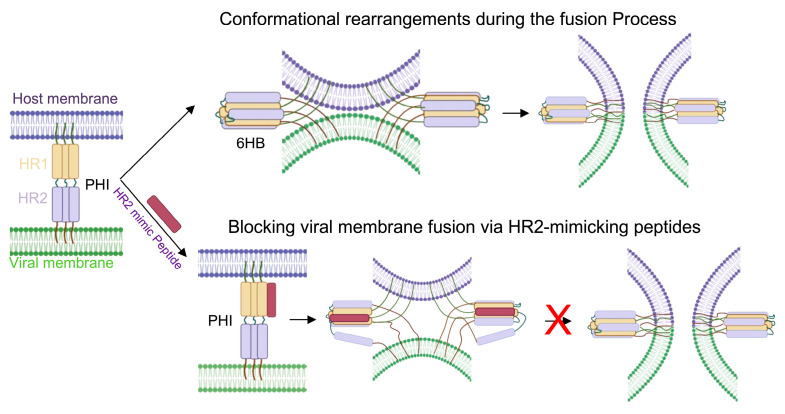 Figure 1
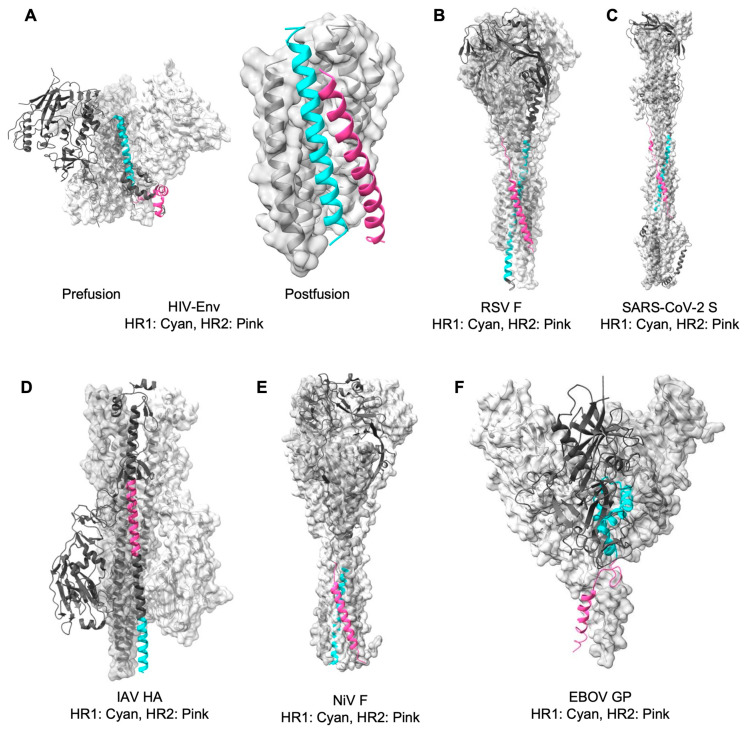 Figure 2
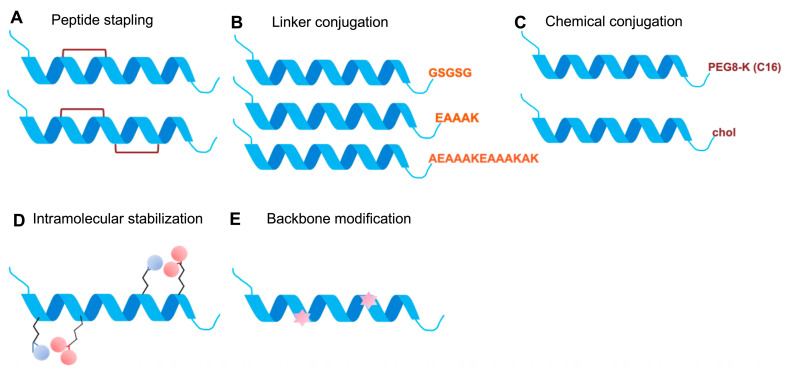 Figure 3
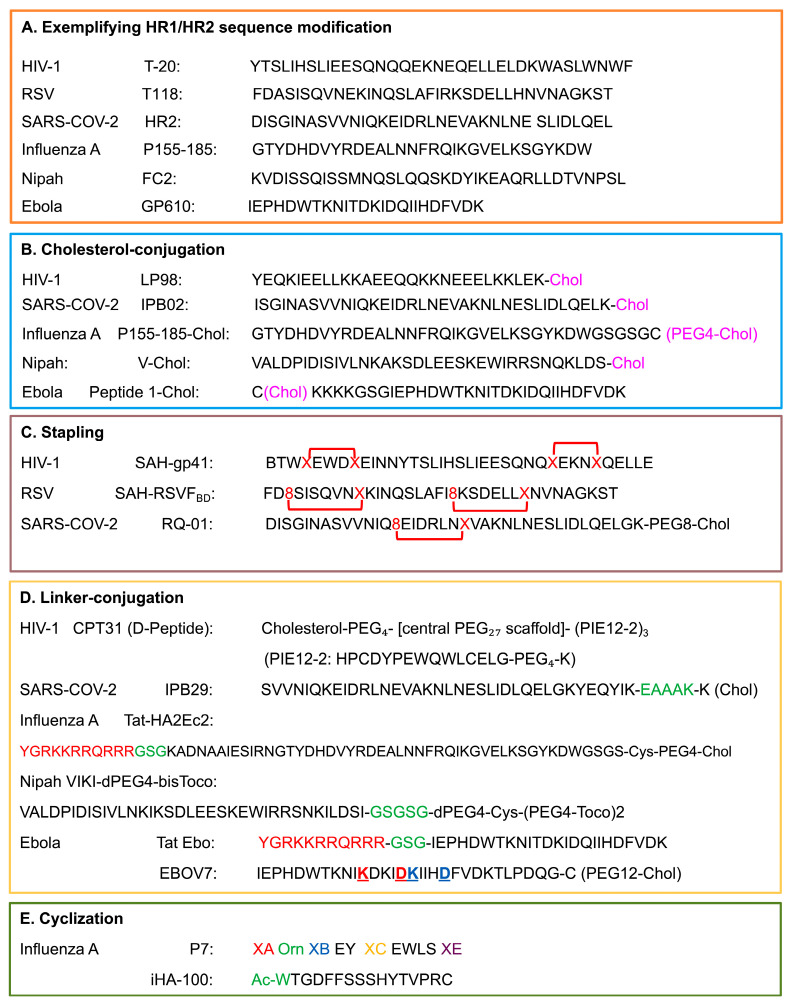 Figure 4
Peer Reviews
No public reviews on file for this paper yet. If you reviewed it on a platform where reviews are public (OpenReview, ICLR, NeurIPS, ICML), you can paste yours below so the community can read it here.
Videos
No videos yet. Explain this paper in a talk, walkthrough, or lecture? Add one.
Taxonomy
TopicsChemical Synthesis and Analysis · RNA and protein synthesis mechanisms · Carbohydrate Chemistry and Synthesis