Extracellular Vesicles in Alzheimer’s Disease: Dual Roles in Pathogenesis, Promising Avenues for Diagnosis and Therapy
Feng Li, Liyang Wu, Xin Feng, Yihong Li, Huadong Fan

TL;DR
Extracellular vesicles (EVs) play both harmful and helpful roles in Alzheimer’s disease, offering potential for new diagnostics and therapies.
Contribution
This review highlights the dual roles of EVs in AD pathogenesis and their potential as diagnostic biomarkers and therapeutic tools.
Findings
EVs can spread toxic proteins like Aβ and tau, contributing to Alzheimer’s progression.
EVs from stem cells may protect neurons by clearing toxic proteins and reducing inflammation.
Engineered EVs and new technologies like microfluidic chips could improve AD diagnosis and treatment.
Abstract
Alzheimer’s disease (AD) is a progressive neurodegenerative disorder characterized by the accumulation of amyloid-β (Aβ) plaques, neurofibrillary tau tangles, chronic neuroinflammation, and synaptic loss, leading to cognitive decline. Extracellular vesicles (EVs)—lipid bilayer nanoparticles secreted by nearly all cell types—have emerged as critical mediators of intercellular communication, playing a complex dual role in both the pathogenesis and potential treatment of AD. This review generally delineates two opposite roles of EVs in pathogenesis and potential treatment of AD. On one hand, EVs derived from neurons, astrocytes, microglia and oligodendrocytes can propagate toxic proteins (Aβ, tau) and inflammatory signals, thereby accelerating disease progression. On the other hand, EVs—especially those from mesenchymal stem cells (MSCs)—exert neuroprotective effects by facilitating toxic…
Genes, proteins, chemicals, diseases, species, mutations and cell lines named across the full text — each resolved to its canonical identifier and authoritative record.
Click any figure to enlarge with its caption.
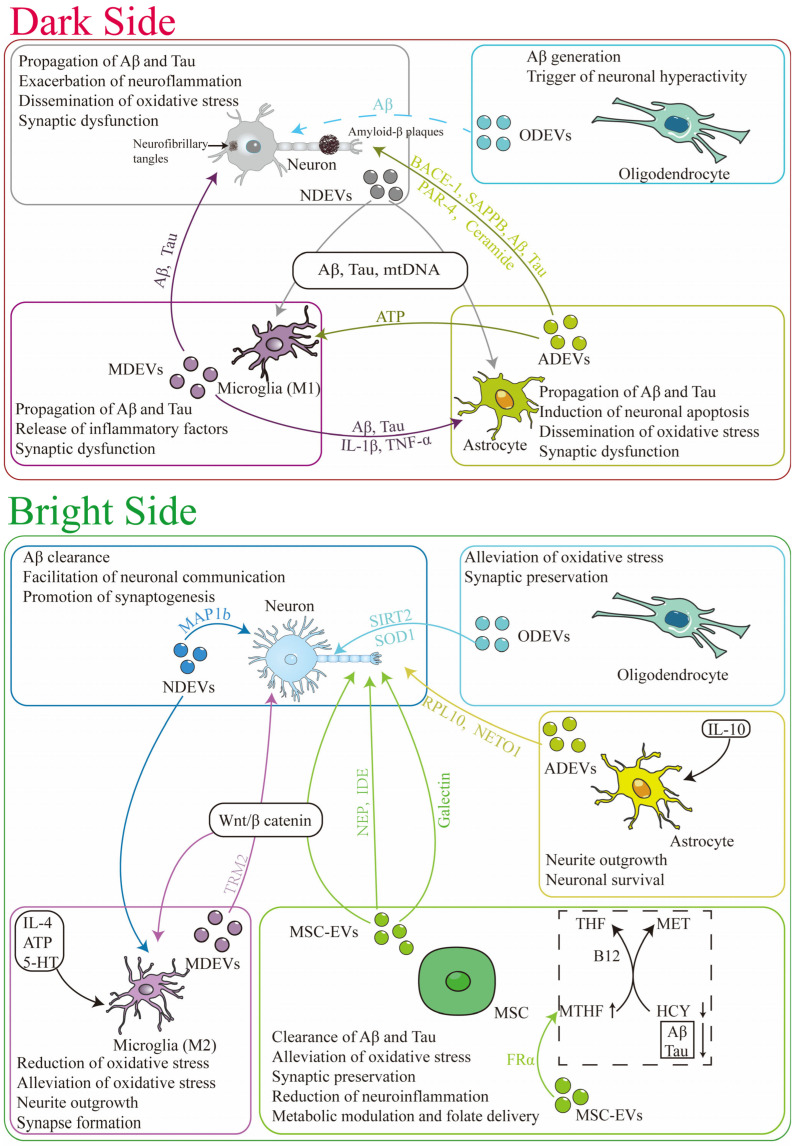 Figure 1
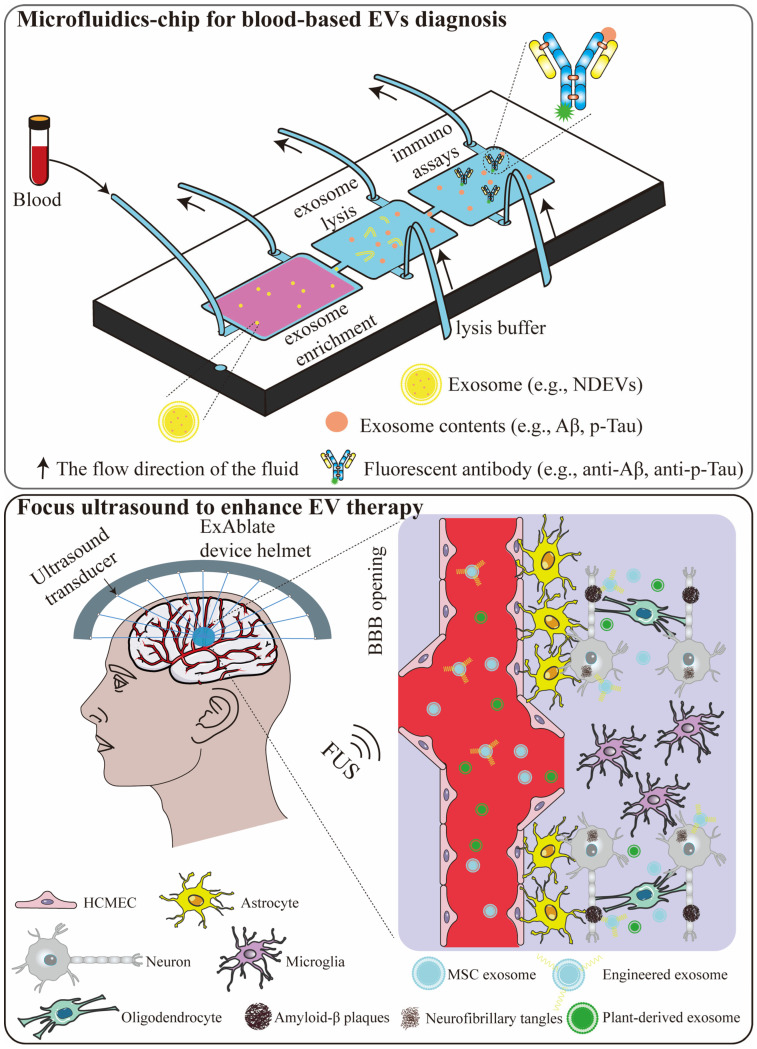 Figure 2
Peer Reviews
No public reviews on file for this paper yet. If you reviewed it on a platform where reviews are public (OpenReview, ICLR, NeurIPS, ICML), you can paste yours below so the community can read it here.
Videos
No videos yet. Explain this paper in a talk, walkthrough, or lecture? Add one.
Taxonomy
TopicsExtracellular vesicles in disease · Neuroinflammation and Neurodegeneration Mechanisms · Alzheimer's disease research and treatments