Optimal Nitrogen Application Strategies for Alfalfa Under Different Precipitation Patterns: Balancing Yield, Nitrogen Fertilizer Use Efficiency, and Soil Nitrogen Residue
Yanbiao Wang, Yuanbo Jiang, Haiyan Li, Boda Li, Jinxi Chen, Minhua Yin, Yanxia Kang, Guangping Qi, Yanlin Ma, Bojie Xie, Haoxiang Jin, Tongjin Wu, Shan Li

TL;DR
This study finds optimal nitrogen application rates for alfalfa under different weather conditions to maximize yield and efficiency while minimizing environmental impact.
Contribution
The study identifies specific nitrogen thresholds for dry, normal, and wet years using a calibrated APSIM–Lucerne model.
Findings
The APSIM–Lucerne model accurately simulated alfalfa yield and soil nitrogen residuals with R2 values between 0.67 and 0.91.
Higher nitrogen application increases soil nitrogen residue but decreases fertilizer use efficiency after a certain point.
Optimal nitrogen thresholds for dry, normal, and wet years are 107–140 kg/ha, 135–160 kg/ha, and 150–183 kg/ha, respectively.
Abstract
Rational nitrogen applications can not only improve nutrient use efficiency, but also reduce environmental pollution caused by nitrogen leaching. To explore reasonable nitrogen application strategies for synergistically enhancing alfalfa production and ecological benefits, this study calibrated and validated the APSIM–Lucerne model based on field experiments conducted from 2021 to 2023. The effects of nitrogen application levels of 0, 80, 120, 140, 160, 180, 200, and 240 kg/ha on alfalfa yield, soil NO3−–N and NH4+–N residues, and nitrogen use efficiency under dry, normal, and wet years were simulated. The results indicate: (1) The calibrated APSIM–Lucerne model effectively simulates alfalfa yield and soil nitrogen residuals (R2 ranging from 0.67 to 0.91, NRMSE between 6.55% and 24.03%). (2) Increased nitrogen application significantly elevates soil nitrogen residue, yet alfalfa yield…
Genes, proteins, chemicals, diseases, species, mutations and cell lines named across the full text — each resolved to its canonical identifier and authoritative record.
Click any figure to enlarge with its caption.
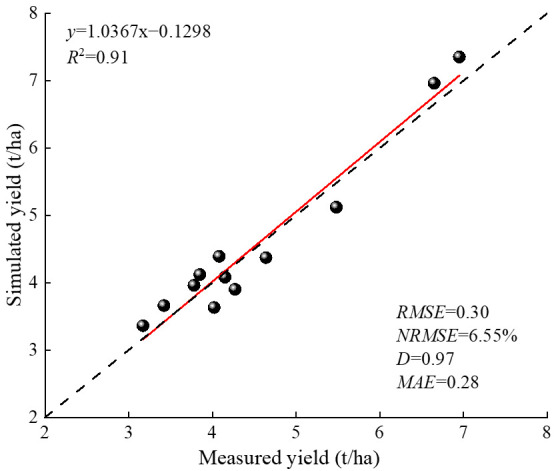 Figure 1
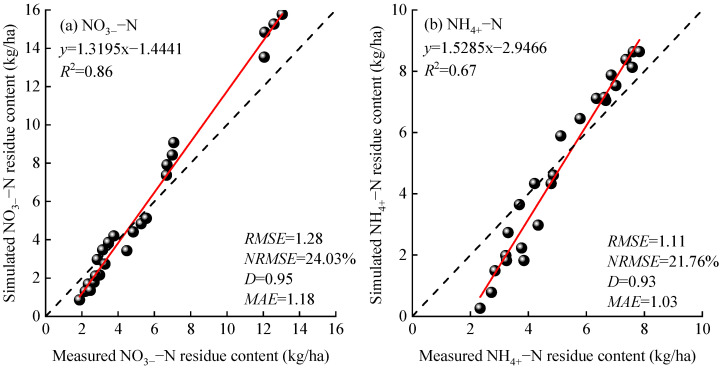 Figure 2
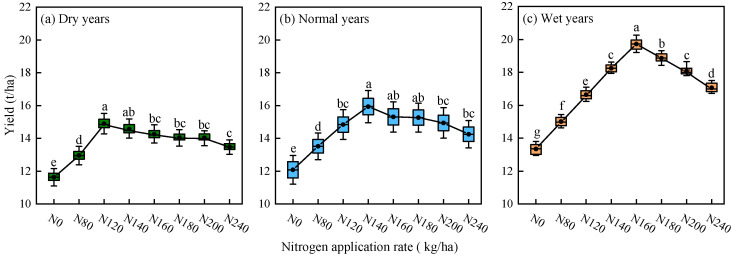 Figure 3
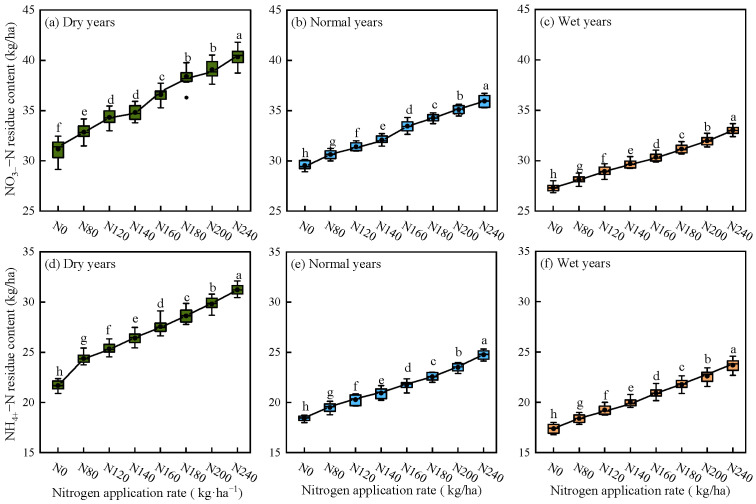 Figure 4
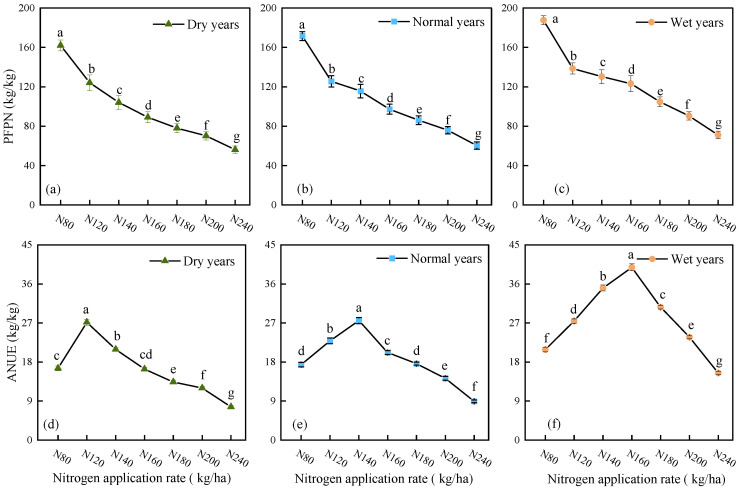 Figure 5
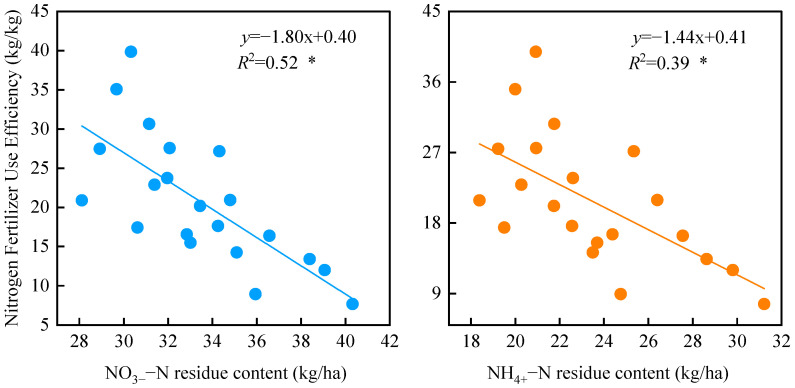 Figure 6
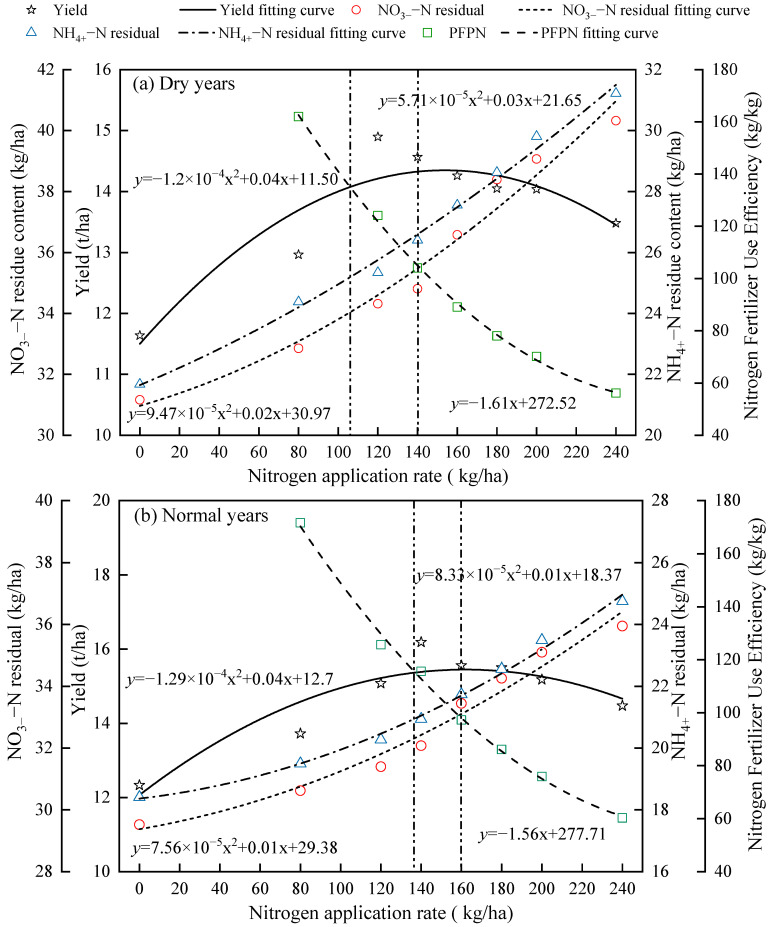 Figure 7
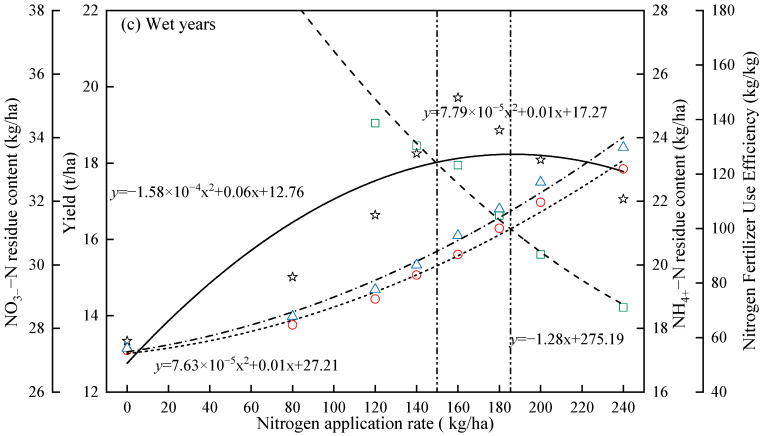 Figure 8
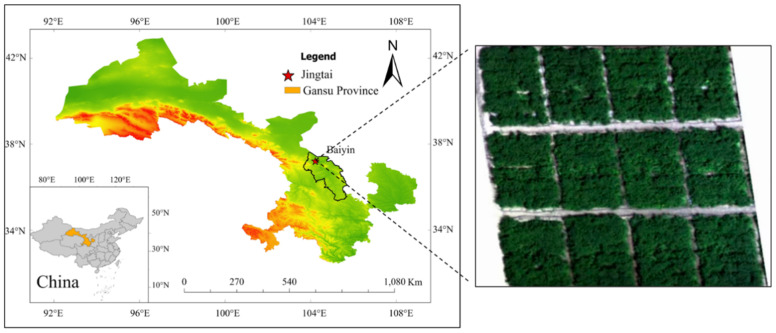 Figure 9
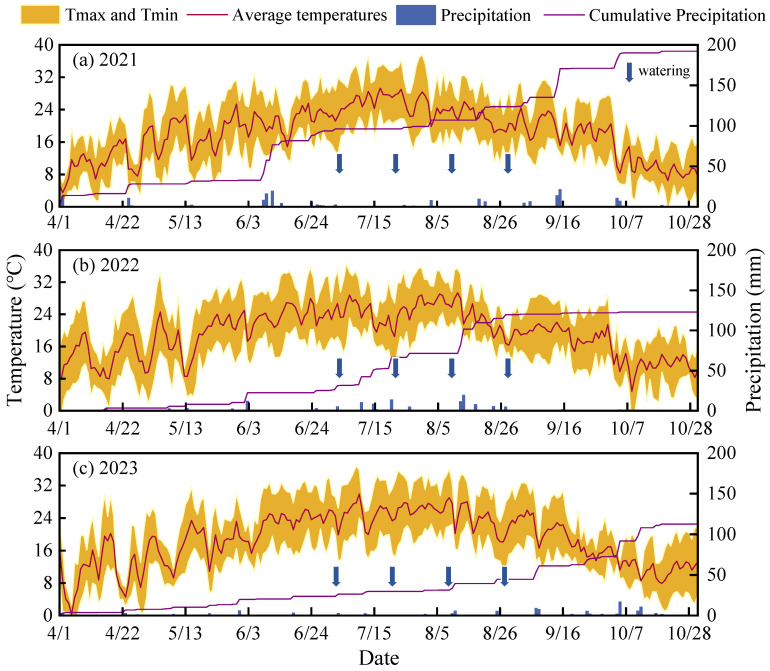 Figure 10
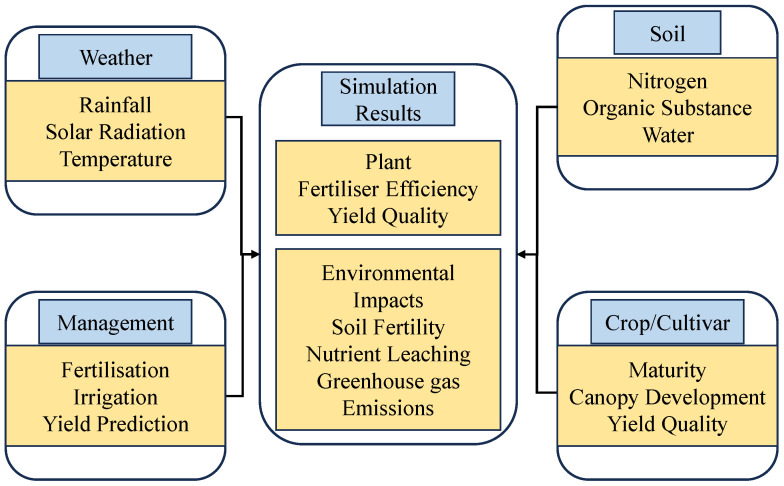 Figure 11
Peer Reviews
No public reviews on file for this paper yet. If you reviewed it on a platform where reviews are public (OpenReview, ICLR, NeurIPS, ICML), you can paste yours below so the community can read it here.
Videos
No videos yet. Explain this paper in a talk, walkthrough, or lecture? Add one.
Taxonomy
TopicsSoil Carbon and Nitrogen Dynamics · Soil and Water Nutrient Dynamics · Plant nutrient uptake and metabolism