Tropical Almond Tree (Terminalia catappa L.): A Comprehensive Review of the Phytochemical Composition, Bioactivities and Economic Potential
Oscar Zannou, Nour M. H. Awad, Vénérande Y. Ballogou, Sarhan Mohammed, Yann Emmanuel Miassi, Marcel Houngbédji, Kossivi Fabrice Dossa, Adam Abdoulaye, Mohamed Ghellam, Yénoukounmè E. Kpoclou, Midimahu V. Aïssi, Gulden Goksen, Ilkay Koca, Reza Tahergorabi

TL;DR
This paper reviews the Terminalia catappa tree's nutritional content, medicinal uses, bioactive compounds, and economic potential.
Contribution
The paper provides a comprehensive overview of T. catappa's phytochemical composition and bioactivities, highlighting its underutilized economic potential.
Findings
T. catappa contains bioactive compounds like phenolics, alkaloids, and diterpenes with antioxidant and anti-inflammatory effects.
The tree has ethnopharmacological uses for treating angina, asthma, and bronchitis, and shows antimicrobial and antitumor activities.
T. catappa has significant economic potential in medicine, cosmetics, and pharmaceuticals due to its diverse bioactivities.
Abstract
Tropical almond tree (Terminalia catappa L.), belonging to the Combretaceae family, is an unfurling tree with different edible parts. This review discussed the nutritional content, ethnopharmacological applications, main bioactive components, biological effects and economic potential of T. catappa. T. catappa shows essential applications in medicine, cosmetics and pharmaceutics. The nutritional values of T. catappa are associated with its contents of carbohydrates, minerals, proteins, lipids, vitamins and amino acids. It is used in many ethnopharmacological applications, including a heart stimulator, anti-diarrhoeal, bactericidal, anti-parasitic and anti-stress. T. catappa is used to treat angina pectoris, asthma attacks and bronchitis. The main reported biological activities for T. catappa were antioxidant, antidiabetic, anti-atherosclerosis, antitumor, antimicrobial, anthelmintic,…
Genes, proteins, chemicals, diseases, species, mutations and cell lines named across the full text — each resolved to its canonical identifier and authoritative record.
Click any figure to enlarge with its caption.
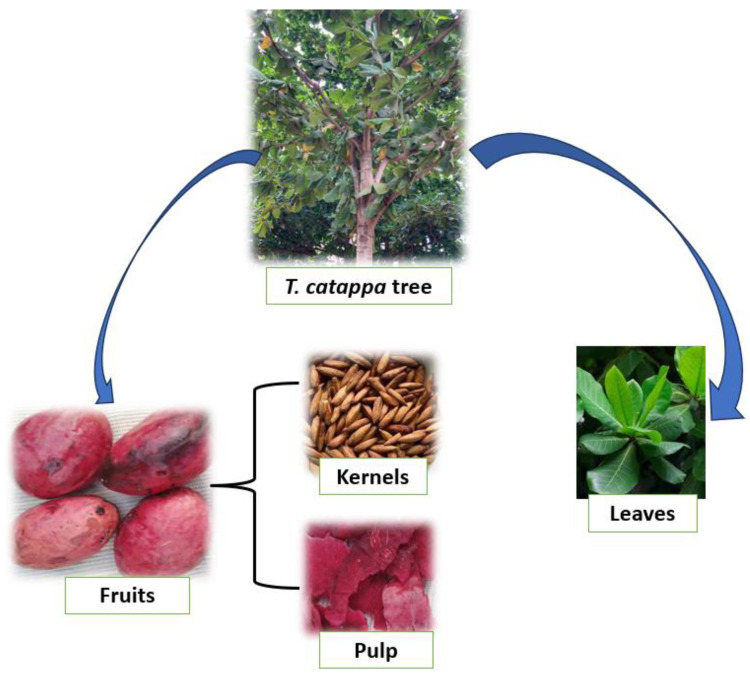 Figure 1
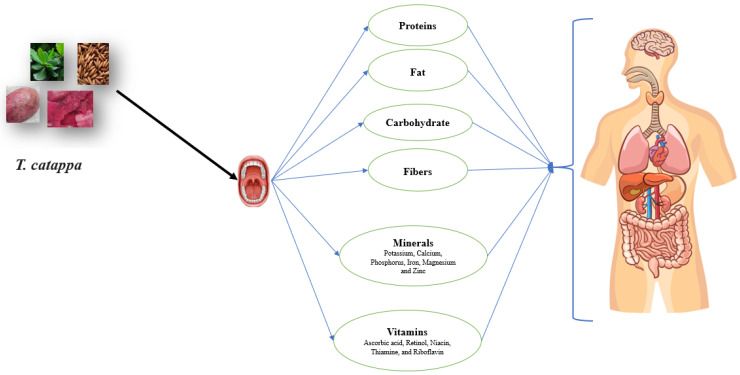 Figure 2
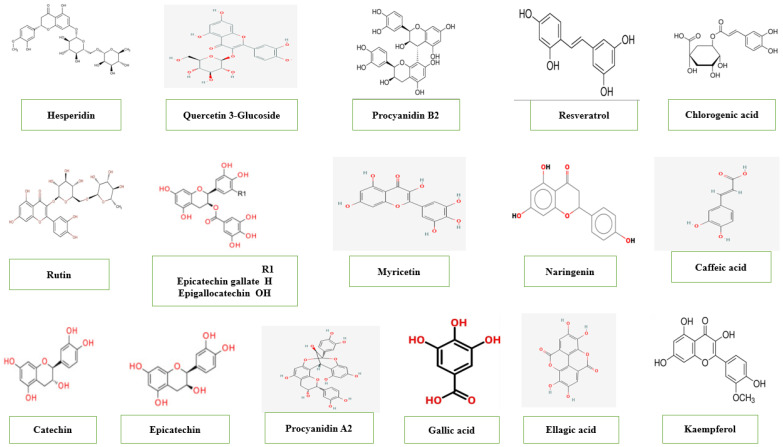 Figure 3
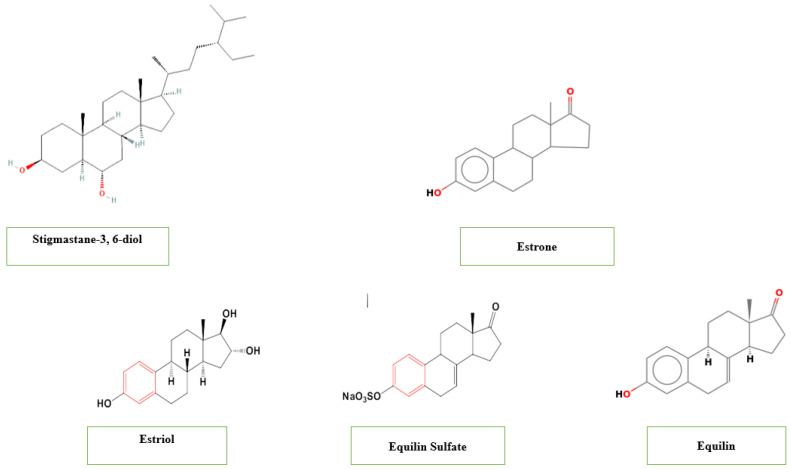 Figure 4
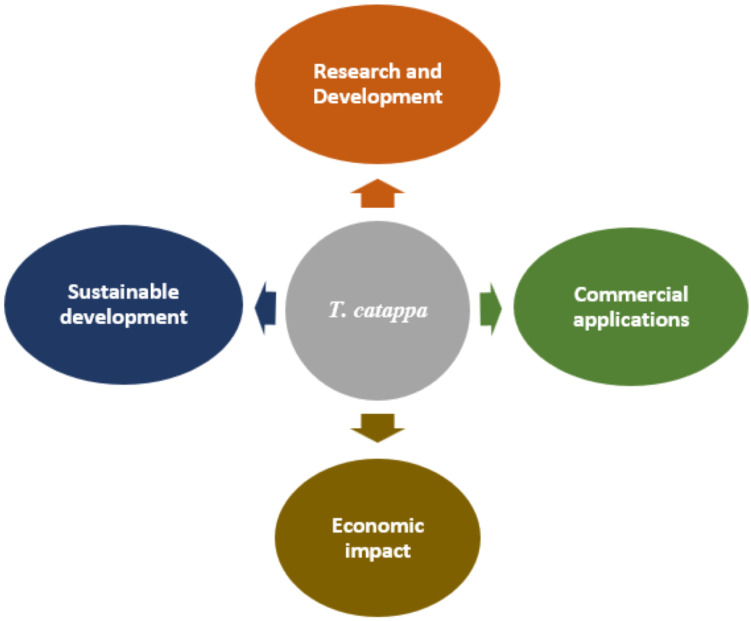 Figure 5
Peer Reviews
No public reviews on file for this paper yet. If you reviewed it on a platform where reviews are public (OpenReview, ICLR, NeurIPS, ICML), you can paste yours below so the community can read it here.
Videos
No videos yet. Explain this paper in a talk, walkthrough, or lecture? Add one.
Taxonomy
TopicsPomegranate: compositions and health benefits · Phytochemicals and Antioxidant Activities · Pineapple and bromelain studies