Mechanistic Exploration of N,N′-Disubstituted Diamines as Promising Chagas Disease Treatments
Alejandro I. Recio-Balsells, Chantal Reigada, María Gabriela Mediavilla, Esteban Panozzo-Zénere, Miguel Villarreal Parra, Patricia S. Doyle, Juan C. Engel, Claudio A. Pereira, Julia A. Cricco, Guillermo R. Labadie

TL;DR
Researchers explored diamines as potential treatments for Chagas disease, finding some compounds effective against the parasite but needing further refinement.
Contribution
The study introduces a new class of diamines with potential antiparasitic activity and investigates their mechanisms of action.
Findings
Five diamines showed potent activity against T. cruzi amastigotes with short aliphatic linkers.
Compound 3c inhibited polyamine transport in T. cruzi, suggesting a key mechanism.
Fluorescent analogs confirmed intracellular uptake but lacked antiparasitic activity.
Abstract
Introduction: Chagas disease, caused by the protozoan Trypanosoma cruzi, remains a major public health concern due to the limited effectiveness of current treatments, especially in the chronic stage. Objective: Here, we wanted to advance a library of 30 N,N′-disubstituted diamines as promising antichagasic agents and gain insight into the mechanism of action. Methods: The library was evaluated for activity against the T. cruzi amastigote stage and trypanocidal efficacy. In addition, selected compounds were tested as potential polyamine transport inhibitors, and a fluorescent analog was employed to investigate compound internalization. Results: Five compounds exhibited potent activity (pIC50 > 6.0), particularly those with short aliphatic linkers (3–6 carbon atoms), suggesting a structure–activity relationship favouring shorter chains. Mechanistic studies showed that compound 3c strongly…
Genes, proteins, chemicals, diseases, species, mutations and cell lines named across the full text — each resolved to its canonical identifier and authoritative record.
Click any figure to enlarge with its caption.
 Figure 1
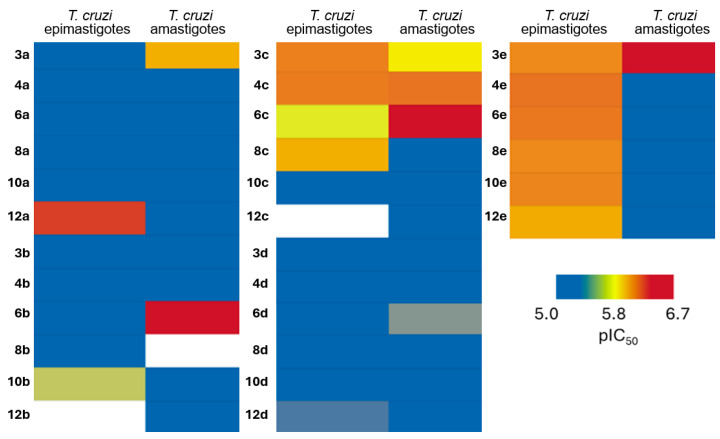 Figure 2
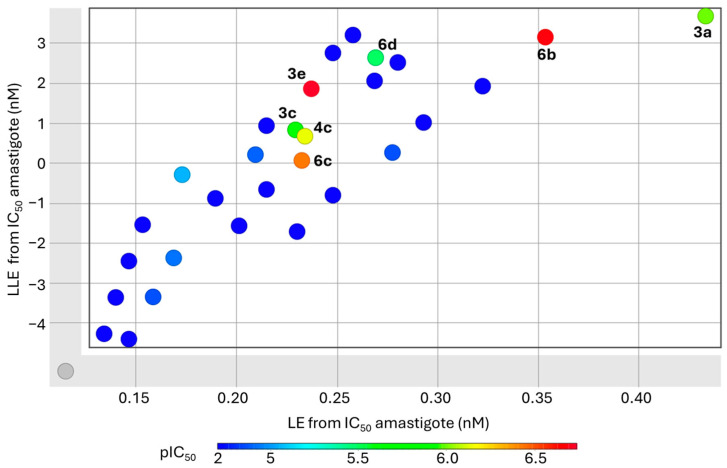 Figure 3
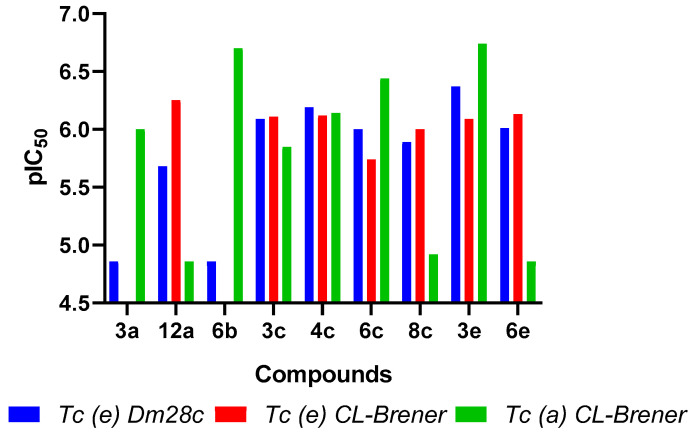 Figure 4
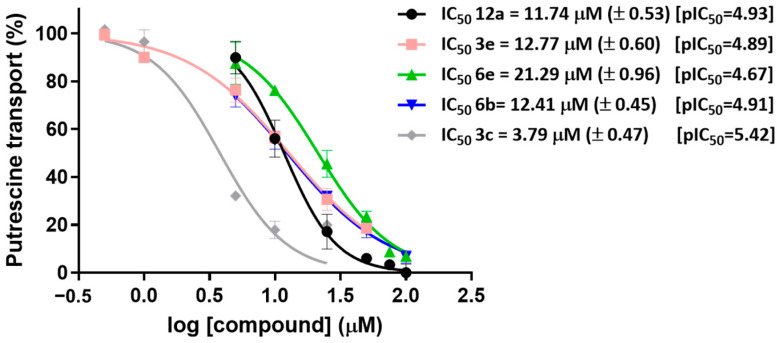 Figure 5
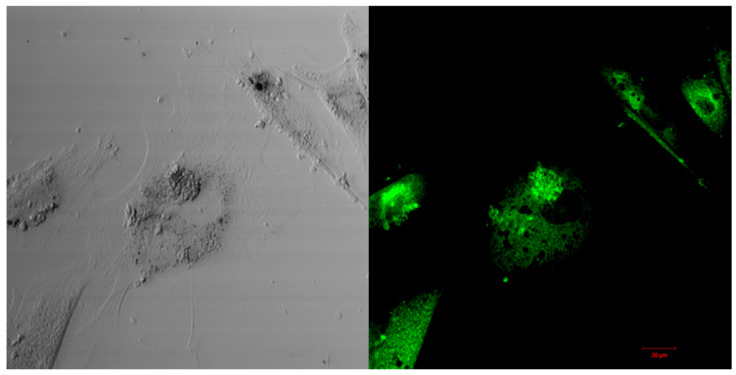 Figure 6
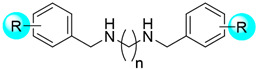 Figure 7
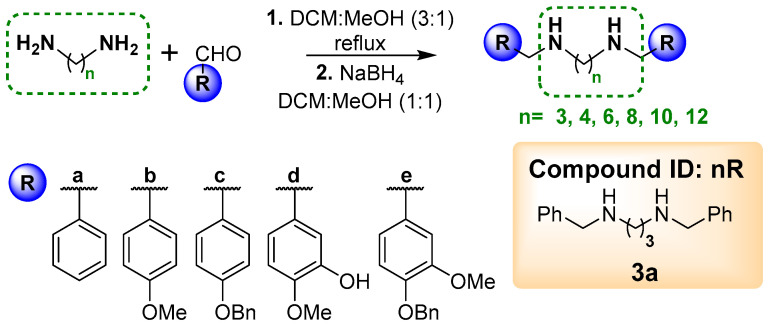 Figure 8
 Figure 9
Peer Reviews
No public reviews on file for this paper yet. If you reviewed it on a platform where reviews are public (OpenReview, ICLR, NeurIPS, ICML), you can paste yours below so the community can read it here.
Videos
No videos yet. Explain this paper in a talk, walkthrough, or lecture? Add one.
Taxonomy
TopicsTrypanosoma species research and implications · Polyamine Metabolism and Applications · Carbon dioxide utilization in catalysis