Ultrastructural Evaluation (SEM) of Ascaris lumbricoides Eggs Treated with Silver Nanoparticles Biosynthesised by Duddingtonia flagrans Using Scanning Electron Microscopy (SEM)
Carolina Magri Ferraz, João Pedro Barbosa de Assis, Eduarda Cavalini Guerini, Juliany Veloso Leal, Filippe Elias de Freitas Soares, Marcio Fronza, Jackson Victor de Araujo, Luís Madeira de Carvalho, Fabio Ribeiro Braga

TL;DR
This study shows that silver nanoparticles made by a fungus can damage the tough eggs of a common intestinal worm, potentially improving treatments.
Contribution
The novel contribution is the use of AgNPs biosynthesized by Duddingtonia flagrans to induce structural damage in A. lumbricoides eggs.
Findings
AgNPs caused pronounced structural alterations in A. lumbricoides eggs, including wrinkling, erosion, and shell collapse.
Combined treatment with AgNPs and albendazole resulted in severe degradation of the egg structure.
AgNPs showed an IC50 of 7.7 µg/mL and could serve as adjuvants to conventional anthelmintics.
Abstract
Ascaris lumbricoides is one of the most epidemiologically significant soil-transmitted helminths, and the environmental persistence of its eggs is largely attributed to their robust structural architecture. The search for ovicidal alternatives capable of overcoming this barrier has increasingly focused on metallic nanoparticles obtained through biological synthesis. Scanning electron microscopy (SEM) was employed to evaluate the ultrastructural effects of silver nanoparticles (AgNPs) biosynthesised by the nematophagous fungus Duddingtonia flagrans on A. lumbricoides eggs. Ultraviolet-visible spectroscopy and transmission electron microscopy confirmed the synthesis of AgNPs, revealing predominantly spherical, well-dispersed particles with an average diameter of 9.22 ± 4.9 nm. Cytotoxicity assays indicated an IC50 of 7.7 µg/mL. SEM analyses showed that eggs in the control group maintained…
Genes, proteins, chemicals, diseases, species, mutations and cell lines named across the full text — each resolved to its canonical identifier and authoritative record.
Click any figure to enlarge with its caption.
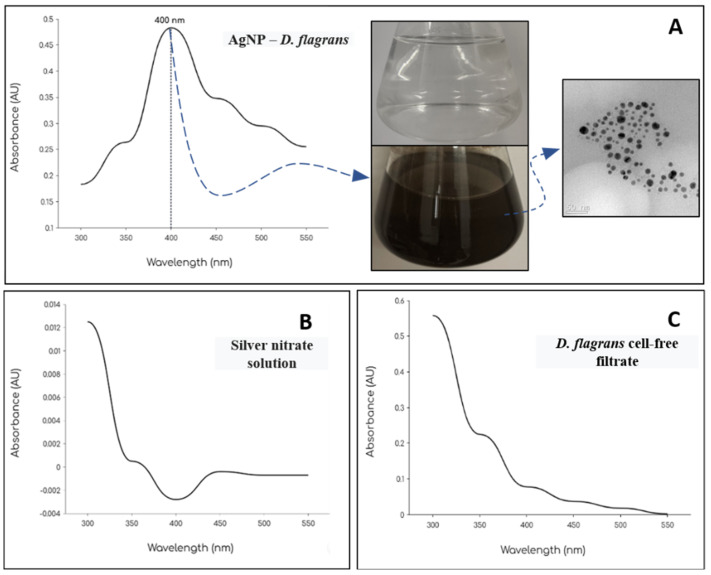 Figure 1
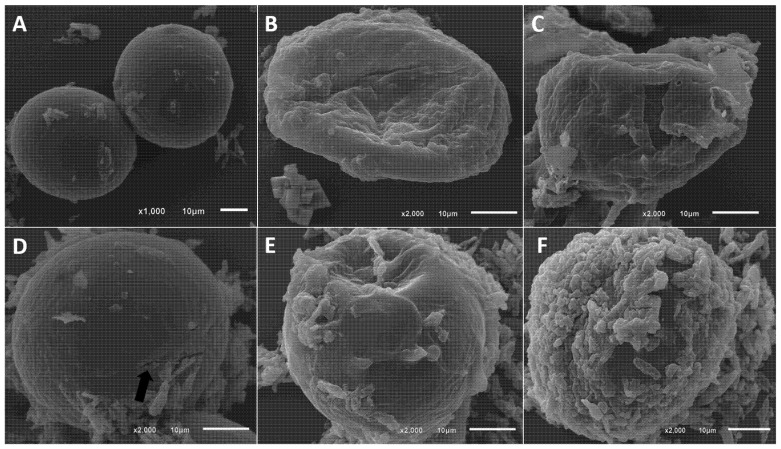 Figure 2
Peer Reviews
No public reviews on file for this paper yet. If you reviewed it on a platform where reviews are public (OpenReview, ICLR, NeurIPS, ICML), you can paste yours below so the community can read it here.
Videos
No videos yet. Explain this paper in a talk, walkthrough, or lecture? Add one.
Taxonomy
TopicsHelminth infection and control · Parasites and Host Interactions · Nanoparticles: synthesis and applications