Genome-Wide Identification and Expression Analysis of the PEBP Gene Family in Cymbidium sinense Reveals CsFTL3 as a Floral Inhibitor
Wei Zhu, Chunfeng Chen, Yonglu Wei, Yanmei Sun, Jie Gao, Jie Li, Qi Xie, Jianpeng Jin, Chuqiao Lu, Genfa Zhu, Fengxi Yang

TL;DR
This study identifies a gene in the orchid Cymbidium sinense that delays flowering, offering insights into its regulation and potential for breeding.
Contribution
The study identifies CsFTL3 as a novel floral repressor gene in Cymbidium sinense with unique regulatory features.
Findings
CsFTL3 is a floral inhibitor that delays flowering when overexpressed in Arabidopsis.
CsFTL3 contains amino acid substitutions that distinguish it from typical flowering promoters.
CsFTL3 expression is regulated by gibberellin, abscisic acid, and low temperature.
Abstract
This study comprehensively characterizes the PEBP gene family in Cymbidium sinense, an orchid with a prolonged vegetative phase that limits its industrial production. Genome-wide analysis identified six CsPEBPs, classified into FT-like, TFL1-like, and MFT-like subfamilies. Evolutionary, gene structure, and collinearity analyses revealed both conservation and lineage-specific diversification of these genes. CsFTL3, a distinctive FT-like member, displayed notably high expression during the bud undifferentiated stage, followed by a sharp downregulation upon floral initiation. Functional studies identified CsFTL3 as a key floral repressor. Heterologous overexpression in Arabidopsis delayed flowering time from 32.0 days (wild-type) to 63.0–75.3 days (transgenic) and increased rosette leaf number from 12.6 to 33.0–34.5, while its knockdown via virus-induced gene silencing (VIGS) in C. sinense…
Genes, proteins, chemicals, diseases, species, mutations and cell lines named across the full text — each resolved to its canonical identifier and authoritative record.
Click any figure to enlarge with its caption.
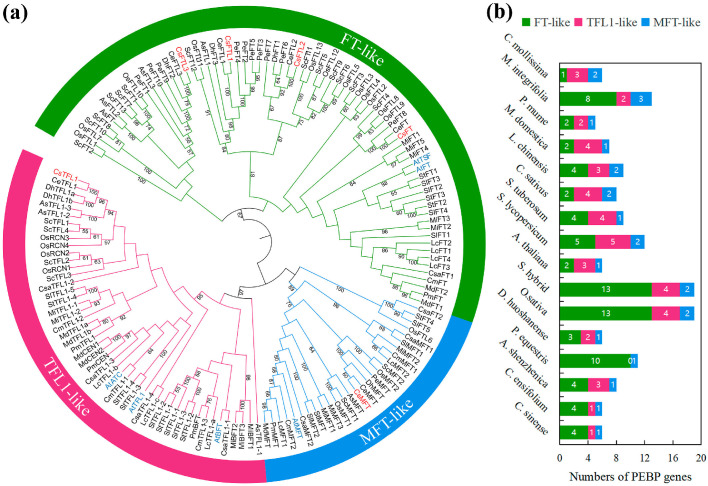 Figure 1
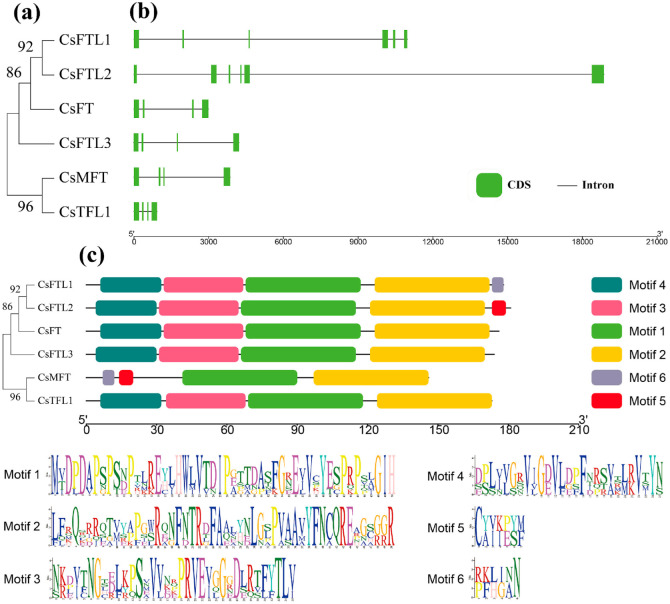 Figure 2
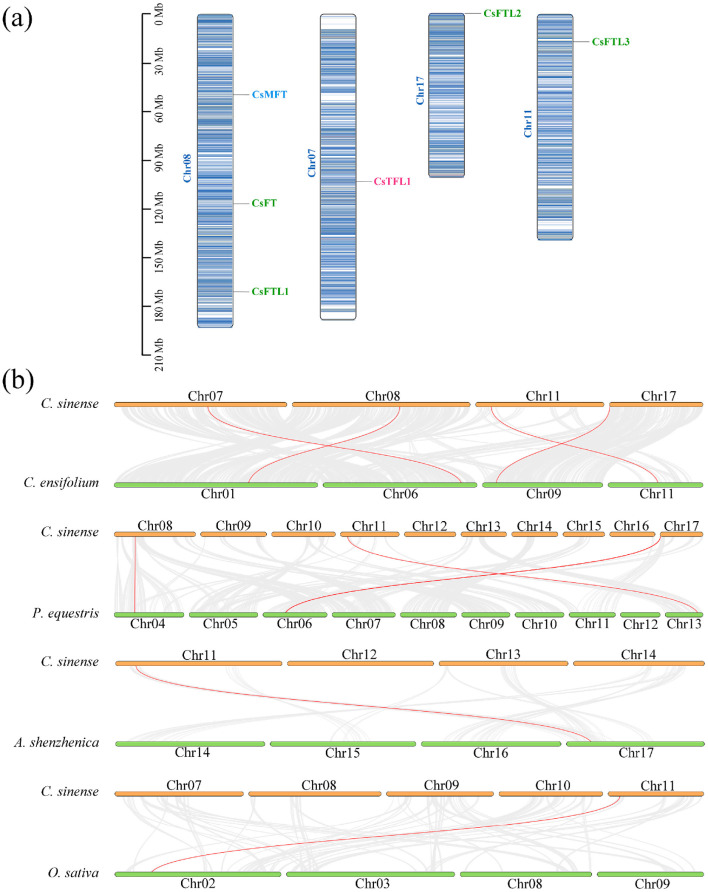 Figure 3
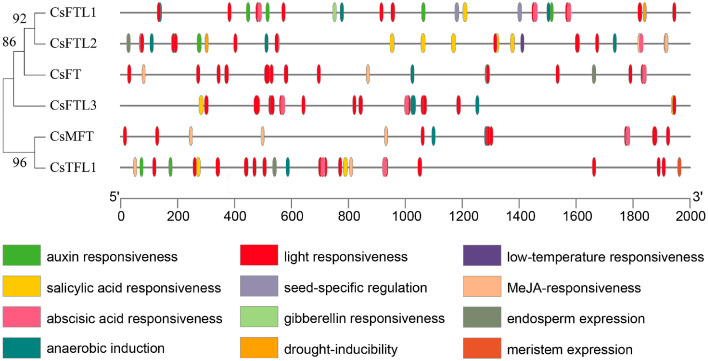 Figure 4
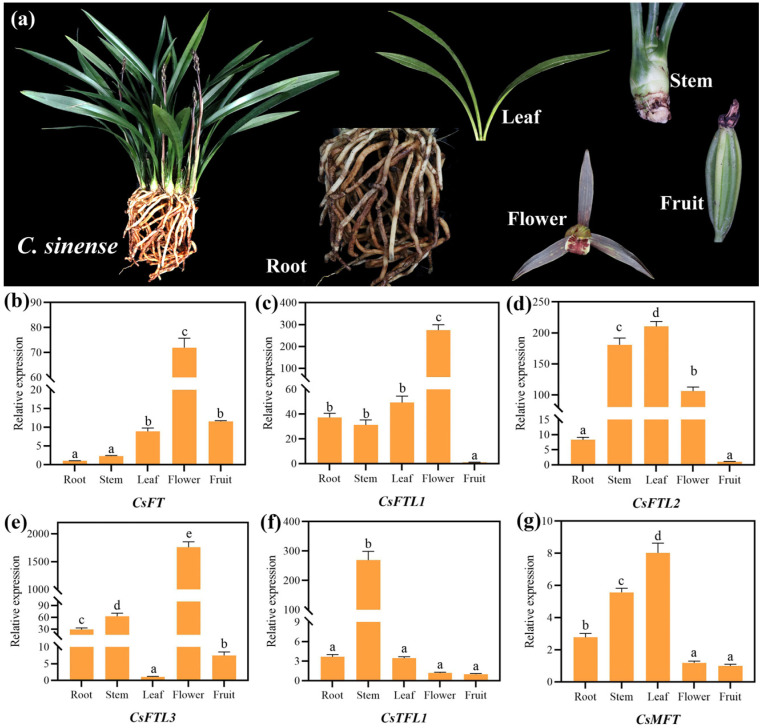 Figure 5
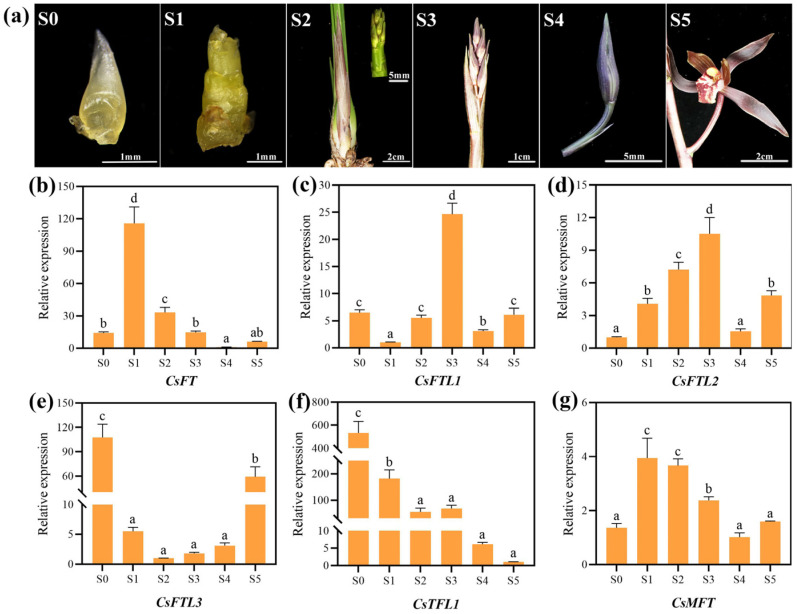 Figure 6
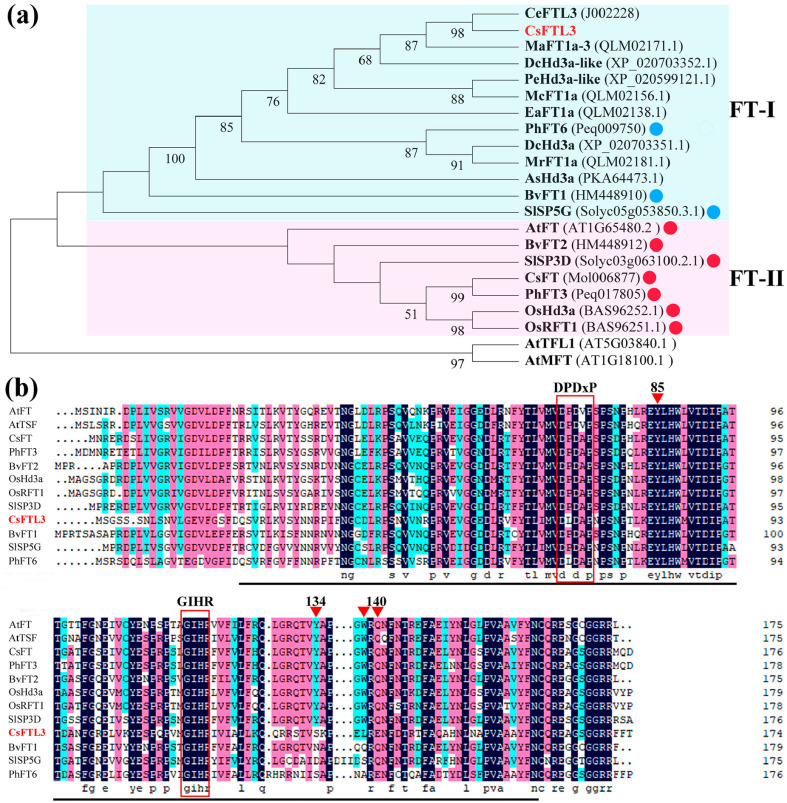 Figure 7
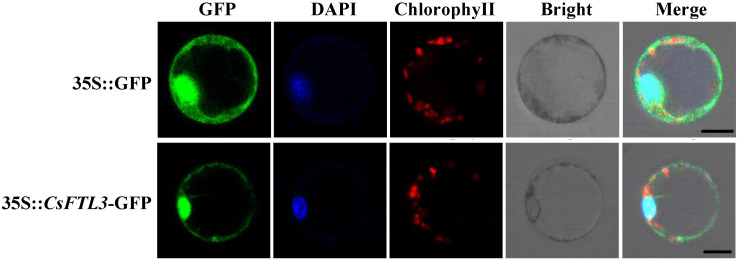 Figure 8
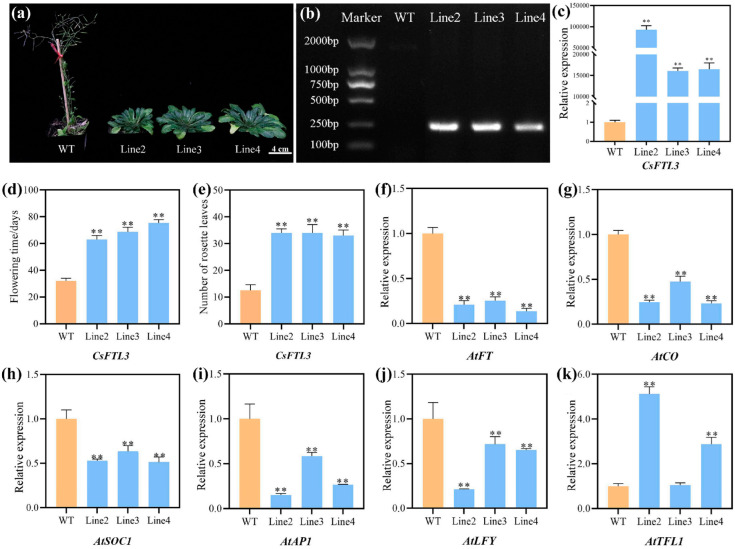 Figure 9
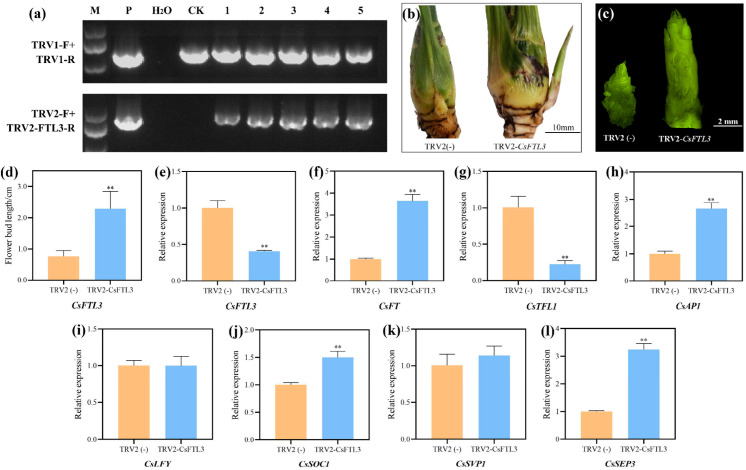 Figure 10
 Figure 11
 Figure 12
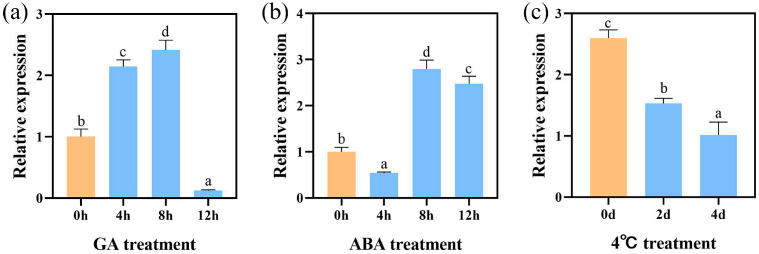 Figure 13
Peer Reviews
No public reviews on file for this paper yet. If you reviewed it on a platform where reviews are public (OpenReview, ICLR, NeurIPS, ICML), you can paste yours below so the community can read it here.
Videos
No videos yet. Explain this paper in a talk, walkthrough, or lecture? Add one.
Taxonomy
TopicsPlant Molecular Biology Research · Plant Reproductive Biology · Biological and pharmacological studies of plants