A Marine Anticancer Cinnamyloxyl Derivative with Unique Binding Sites at Carbonic Anhydrase IX (CAIX) Inhibits Adenocarcinomic A549 Cells
Shailaja Vommi Lakshmipathy, Christina Vijayaraghavan Sathyanathan, Mohanapriya Dandapani Chinambedu, Mohanraj Gopikrishnan, Abhinand Ponneri Adithavarman, Sadras Panchatcharam Thyagarajan, Mary Elizabeth Gnanambal Krishnan

TL;DR
A new marine compound from seagrass inhibits lung cancer cells by targeting a unique site on the CAIX protein, showing better effectiveness than doxorubicin.
Contribution
The compound has unique binding sites at CAIX, distinct from conventional inhibitors, offering a novel approach for treating hypoxic lung cancers.
Findings
The compound effectively kills A549 cells with an IC50 of 11.61 µM, outperforming doxorubicin.
It causes mitochondrial depolarization, S-phase arrest, and DNA fragmentation in cancer cells.
MD simulations confirm the stability of the CAIX–compound complex and strong binding affinity.
Abstract
Background: Many inhibitors have been discovered to target hypoxia-induced carbonic anhydrase IX (CAIX) due to its critical role in lung cancers. This study discovers a novel compound, 3-(E-3,4-dihydroxycinnamaoyloxyl)-2-hydroxypropyl-9Z,12Z-octadeca-9,12-dienoate, which is produced by the seagrass Cymodocea serrulata and has binding sites at CAIX that are distinct from those of current inhibitors. Methods: Compound and reference drug treatment for cell lines; Cell viability: MTT; Staining: Ao/PI/DAPI; MMP shifts and cell cycle: FACS; Gene and protein expression of CAIX, BAX, BAD: qPCR and Western blotting. Results: The compound binds to the CAIX protein, raises extracellular pH, and kills A549 cells [IC50: 11.61 µM], producing results that are lower than those of the reference drug doxorubicin [13.7 µM]. The substance depolarised the electrical potential of the mitochondrial membrane,…
Genes, proteins, chemicals, diseases, species, mutations and cell lines named across the full text — each resolved to its canonical identifier and authoritative record.
Click any figure to enlarge with its caption.
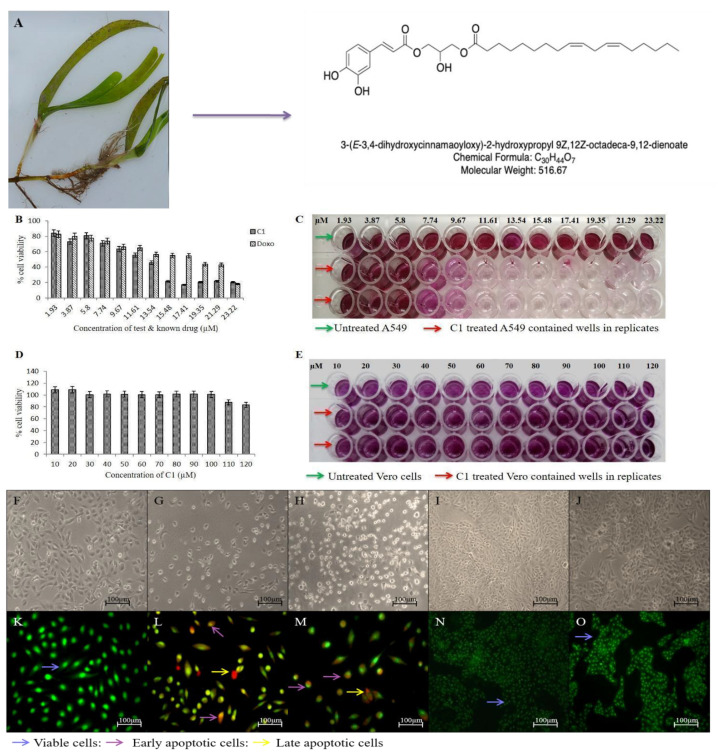 Figure 1
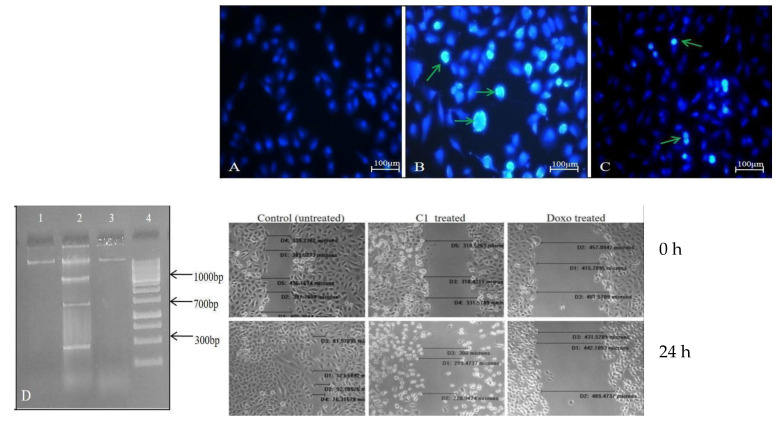 Figure 2
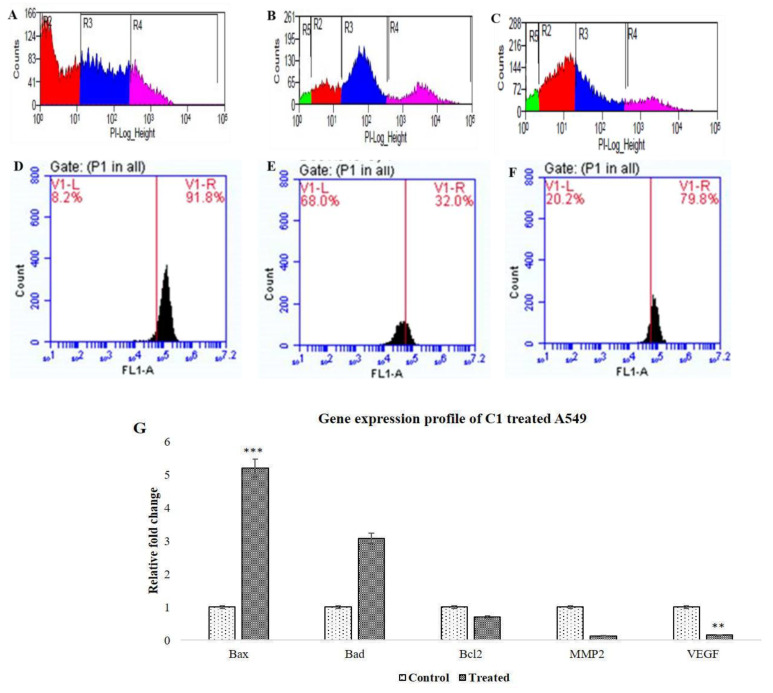 Figure 3
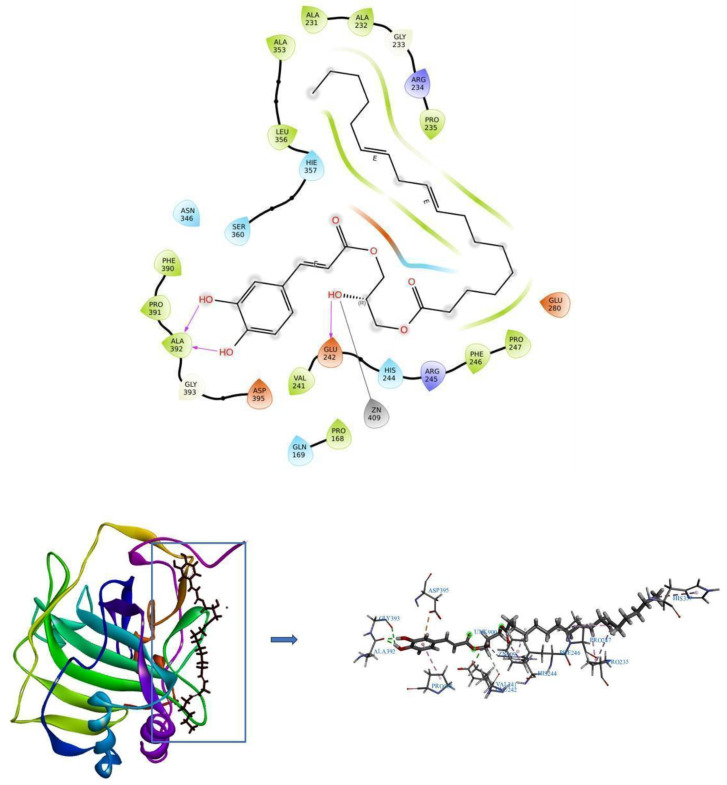 Figure 4
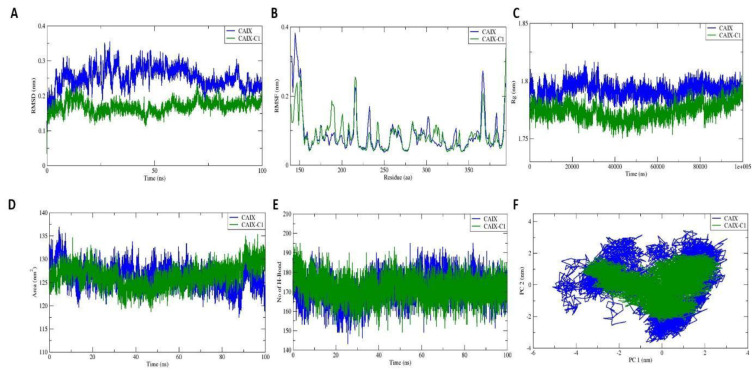 Figure 5
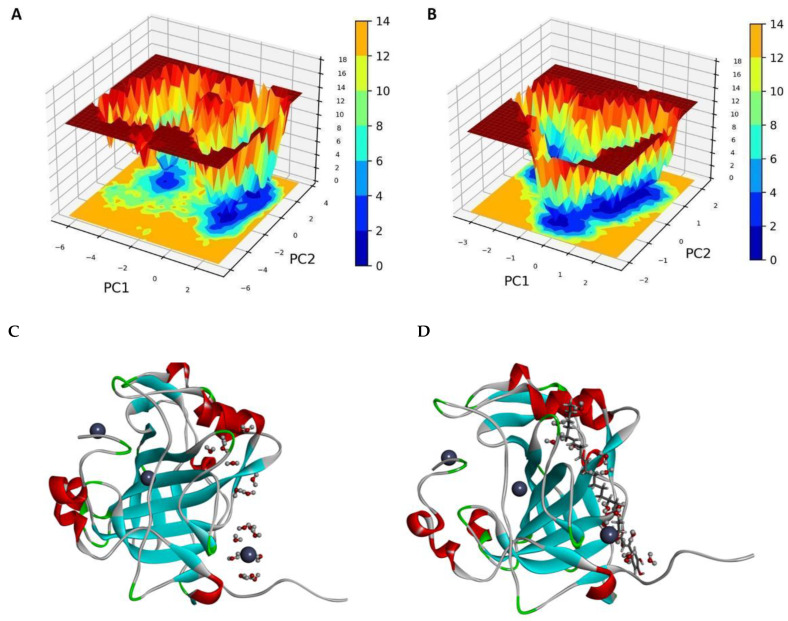 Figure 6
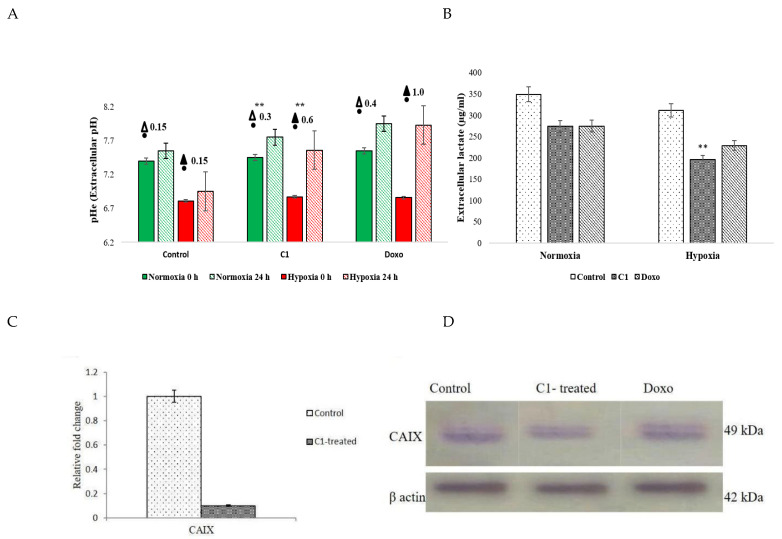 Figure 7
Peer Reviews
No public reviews on file for this paper yet. If you reviewed it on a platform where reviews are public (OpenReview, ICLR, NeurIPS, ICML), you can paste yours below so the community can read it here.
Videos
No videos yet. Explain this paper in a talk, walkthrough, or lecture? Add one.
Taxonomy
TopicsEnzyme function and inhibition · Cancer, Hypoxia, and Metabolism · Ion Transport and Channel Regulation