Off-Label Ustekinumab and Vedolizumab in Pediatric Anti-TNFα Refractory IBD: Therapeutic Drug Monitoring Insights from a Case Series
Stefania Cheli, Giulia Mosini, Vera Battini, Carla Carnovale, Sonia Radice, Marta Lebiu, Alessandro Cattoni, Giovanna Zuin, Emilio Clementi

TL;DR
This study explores the use of two drugs in children with severe IBD who don't respond to standard treatment, highlighting the value of monitoring drug levels to guide therapy.
Contribution
The study provides insights into therapeutic drug monitoring for off-label use of ustekinumab and vedolizumab in pediatric IBD patients.
Findings
Clinical improvement often correlated with drug concentrations above adult reference ranges, but this varied between patients.
One patient remained stable despite undetectable drug levels and high anti-drug antibodies, showing significant individual variability.
Therapeutic drug monitoring helped interpret pharmacokinetic and immunogenic differences, supporting personalized treatment decisions.
Abstract
Background: Vedolizumab and ustekinumab are increasingly used off-label in pediatric inflammatory bowel disease (IBD) unresponsive or refractory to anti–TNFα therapy. Despite their increasing use in clinical practice, evidence in the pediatric population remains limited, especially regarding therapeutic exposure thresholds and the clinical utility of therapeutic drug monitoring (TDM). Methods: We report a series of five pediatric cases with Crohn’s disease or ulcerative colitis treated with ustekinumab or vedolizumab after anti-TNFα failure. Trough drug concentrations, anti-drug antibodies (ADAs), clinical scores (PCDAI/PUCAI), biomarkers (fecal calprotectin, C-reactive protein), and endoscopic findings were assessed longitudinally. Results: In all cases, we observed recurrent discordance between clinical indices (PCDAI/PUCAI), biochemical markers, and endoscopic activity. Clinical…
Genes, proteins, chemicals, diseases, species, mutations and cell lines named across the full text — each resolved to its canonical identifier and authoritative record.
Click any figure to enlarge with its caption.
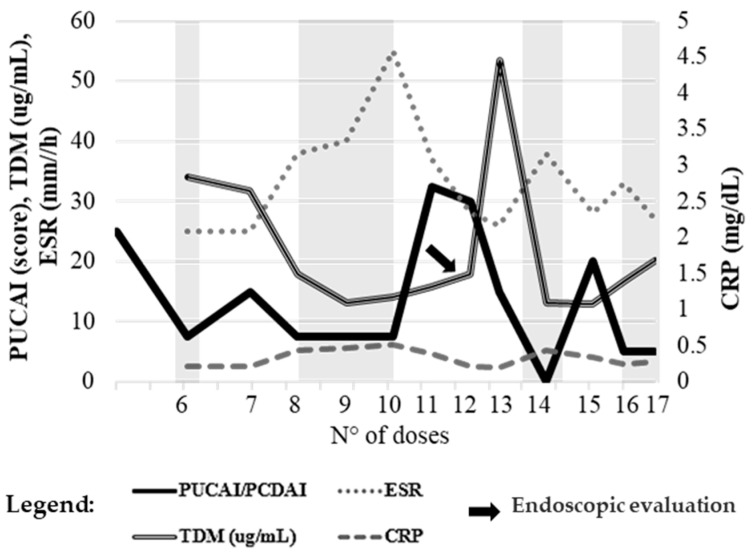 Figure 1
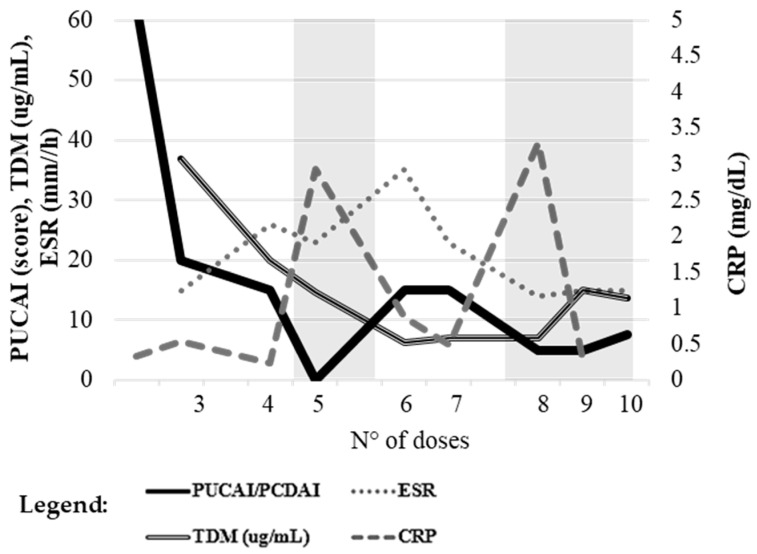 Figure 2
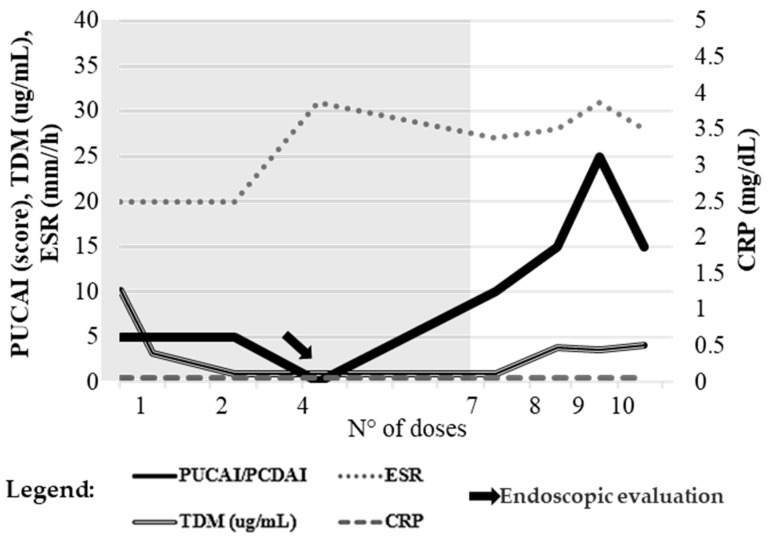 Figure 3
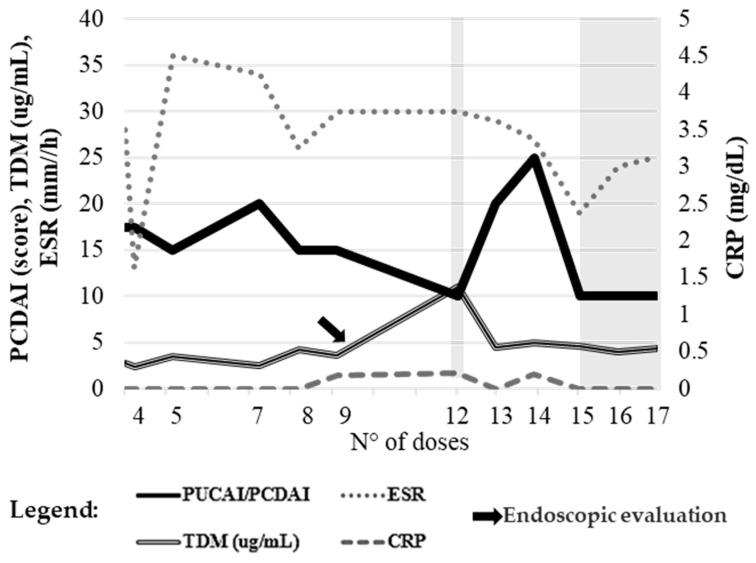 Figure 4
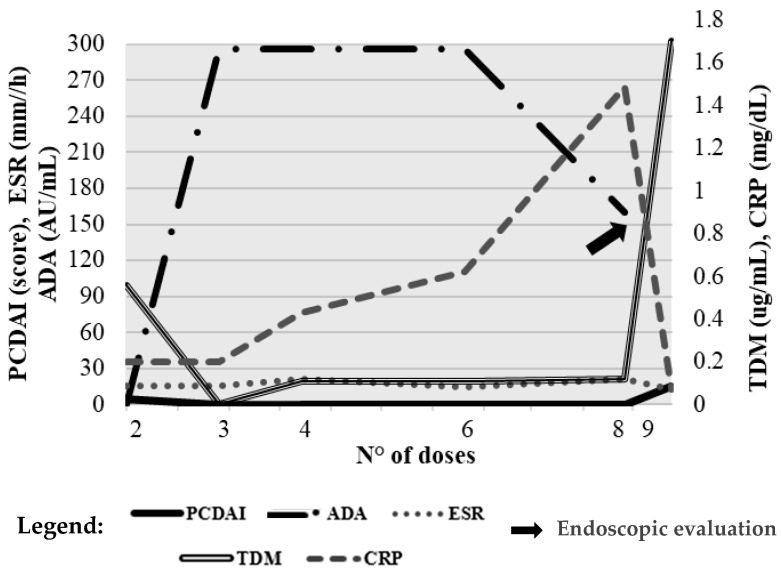 Figure 5
Peer Reviews
No public reviews on file for this paper yet. If you reviewed it on a platform where reviews are public (OpenReview, ICLR, NeurIPS, ICML), you can paste yours below so the community can read it here.
Videos
No videos yet. Explain this paper in a talk, walkthrough, or lecture? Add one.
Taxonomy
TopicsInflammatory Bowel Disease · Biosimilars and Bioanalytical Methods · Immunodeficiency and Autoimmune Disorders