Development of Approaches for Transgene Expression in the Pathogenic Free-Living Amoeba Naegleria fowleri
Caroline M. Palmentiero, Jillian E. M. McKeon, Colm P. Roster, James C. Morris

TL;DR
Researchers developed a method to insert and express genes in the amoeba Naegleria fowleri, enabling future genetic studies.
Contribution
A novel transfection method using polyethyleneimine nanoparticles to enable transgene expression in Naegleria fowleri.
Findings
Transfected amoebae showed resistance to up to 100 µg/mL puromycin and expressed mCherry fluorescence.
Each transfected cell contained 45–65 copies of the transgene, with stable expression through multiple passages.
The method enables future genetic manipulation techniques like forward and reverse genetics in this pathogen.
Abstract
The absence of molecular tools for manipulation of gene expression in the pathogenic free-living amoeba Naegleria fowleri has historically limited our understanding of gene function in the organism and has coincidently impacted the identification of potential druggable pathways and proteins. Here, we describe the development of approaches for the generation of transgenic amoebae using polyethyleneimine nanoparticles to deliver plasmids designed to confer antibiotic resistance and fluorescence to the cells. Through a series of optimization steps, we found that transfection of plasmids encoding the fluorescent protein mCherry fused by a T2A self-cleaving peptide to a codon-optimized puromycin acetyltransferase selectable marker yielded fluorescent cells that were resistant up to 100 µg/mL puromycin. Transfected trophozoites harbored between 45 and 65 copies of the transgene per cell and…
Genes, proteins, chemicals, diseases, species, mutations and cell lines named across the full text — each resolved to its canonical identifier and authoritative record.
Click any figure to enlarge with its caption.
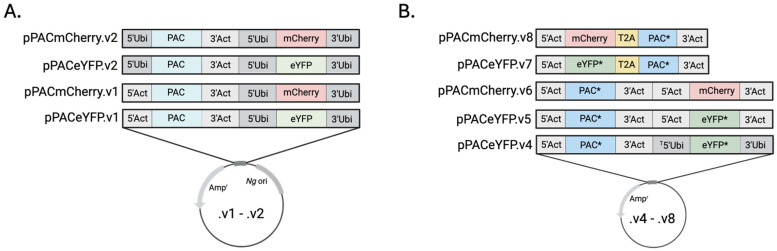 Figure 1
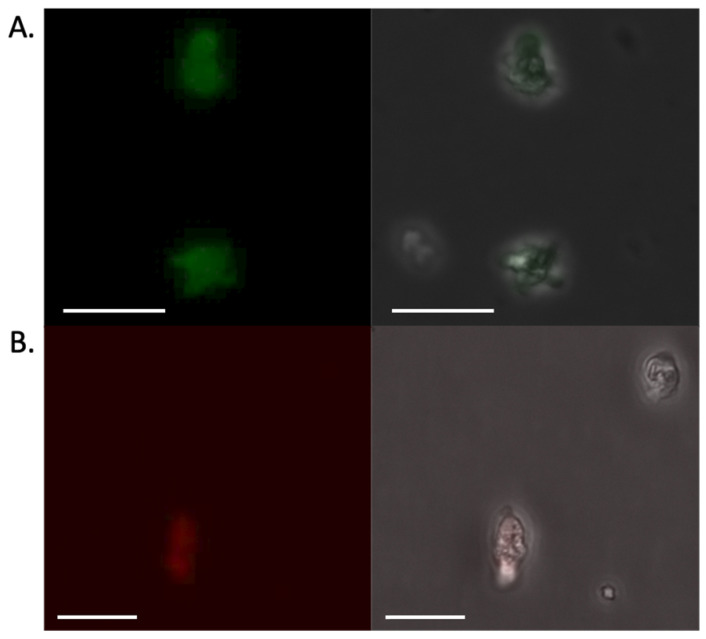 Figure 2
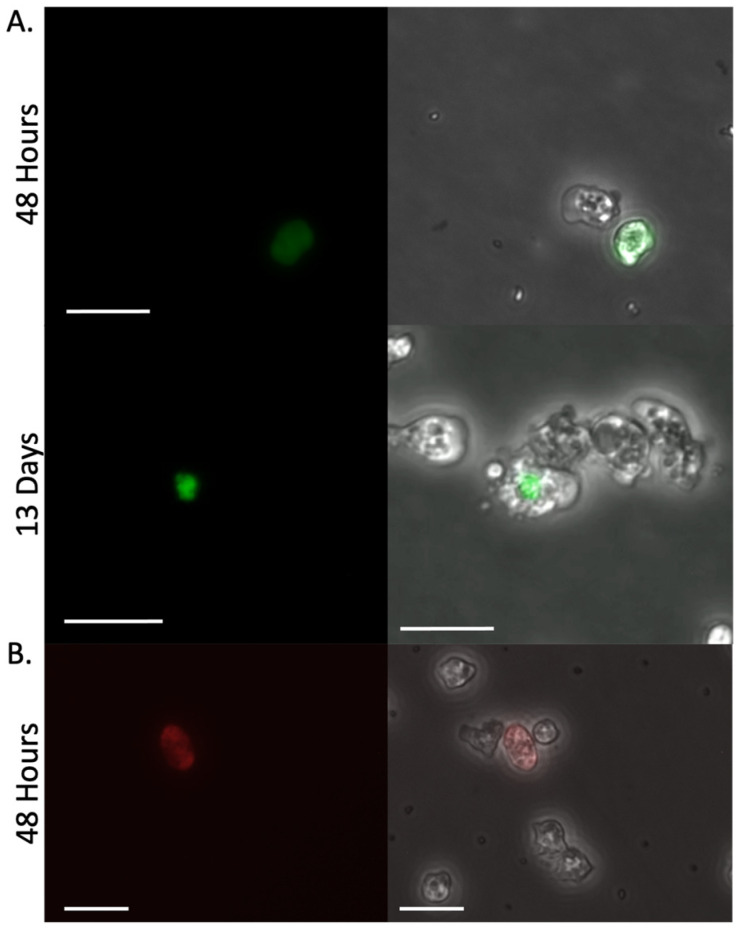 Figure 3
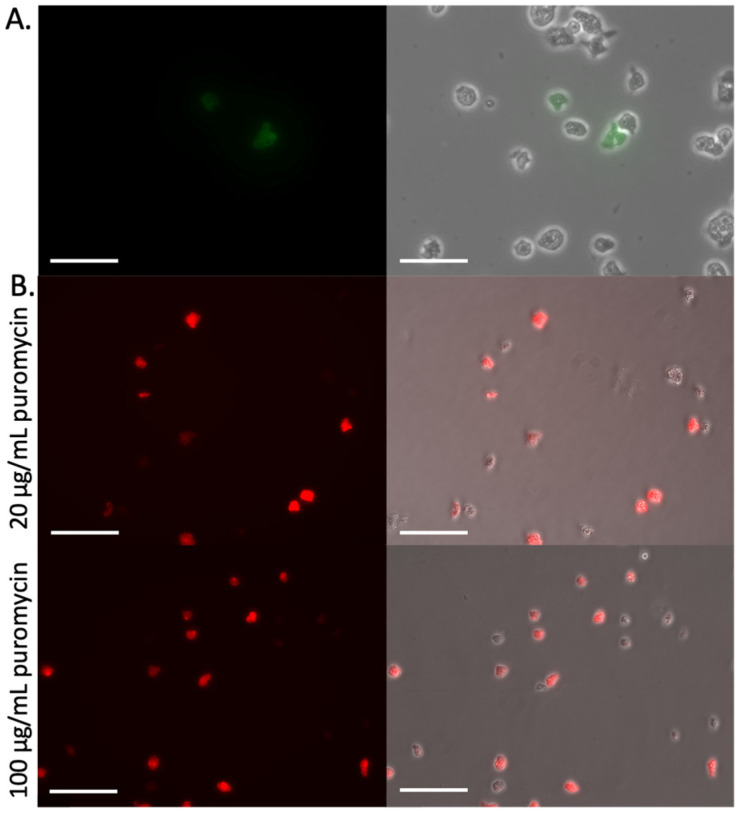 Figure 4
Peer Reviews
No public reviews on file for this paper yet. If you reviewed it on a platform where reviews are public (OpenReview, ICLR, NeurIPS, ICML), you can paste yours below so the community can read it here.
Videos
No videos yet. Explain this paper in a talk, walkthrough, or lecture? Add one.
Taxonomy
TopicsLegionella and Acanthamoeba research · Amoebic Infections and Treatments · Cancer Research and Treatments