Deciphering the Natural Reassortment Dynamics of Infectious Bursal Disease Virus, Isolated from Field Outbreaks in Southern India, Through Complete Genome Sequencing
Raja Paramasivam, Megan Justice, Tuticorin Maragatham Alagesan Senthilkumar, Manoharan Parthiban, Ardhanary Thangavelu, Angappan Mangala Gowri, Ramasamy Bharathi, Hong Hwang, Jerry Malayer, Samuel Pushparaj

TL;DR
This study analyzes the complete genome of infectious bursal disease virus (IBDV) isolates from southern India to understand their genetic diversity and potential for reassortment.
Contribution
The study reveals natural genome reassortment in IBDV isolates through comparative analysis of VP2 and VP1 genes.
Findings
All isolates share five conserved amino acids in VP2 but have a substitution at residue 294 (I294V).
Segment B of the isolates resembles vaccine and non-vvIBDV strains with a consistent D242 signature.
Phylogenetic analysis suggests reassortment between very virulent and classical strains.
Abstract
The present study was carried out to analyze the complete genome sequences of infectious bursal disease virus (IBDV) isolates obtained from field outbreaks in the southern regions of India. Bursal tissue samples were collected and screened by RT-PCR, targeting the VP2 gene. Positive samples were subjected to serological identification via AGID. Following this, eight samples (BGE14, BGE15, MDI14, THI14, EDE14, RPM14, VCN14, and NKL14) were subjected to virus isolation in 9 to 11-day-old embryonated chicken eggs, and their complete genomes were sequenced. Analysis of the VP2 hypervariable region (HVR) revealed that all eight isolates had five unique and highly conserved amino acids (A222, I242, Q249, I256, and S299). However, all the isolates reveal a substitution of Isoleucine by Valine at residue 294 (I294V). Furthermore, analysis of segment B from all Indian IBDV sequences revealed…
Genes, proteins, chemicals, diseases, species, mutations and cell lines named across the full text — each resolved to its canonical identifier and authoritative record.
Click any figure to enlarge with its caption.
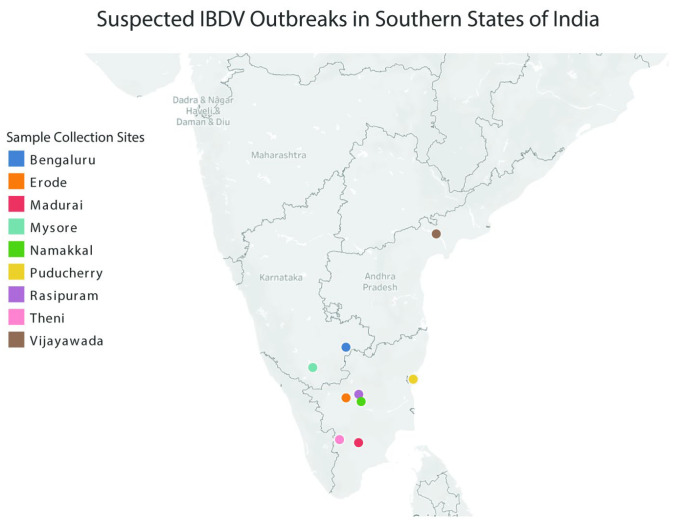 Figure 1
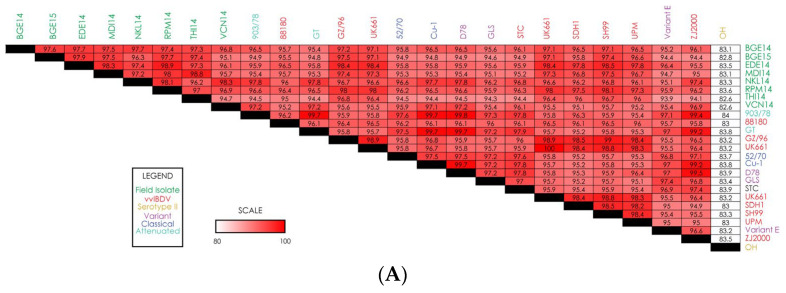 Figure 2
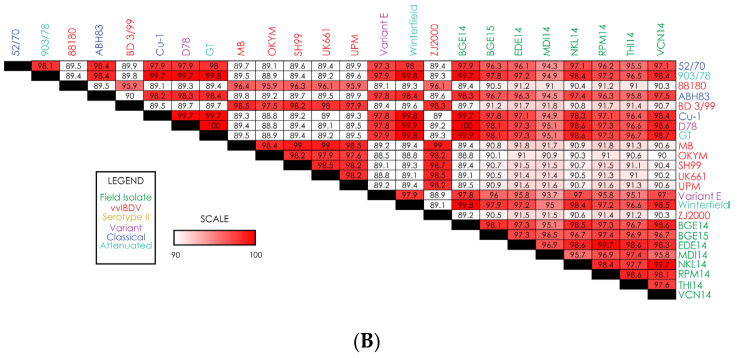 Figure 3
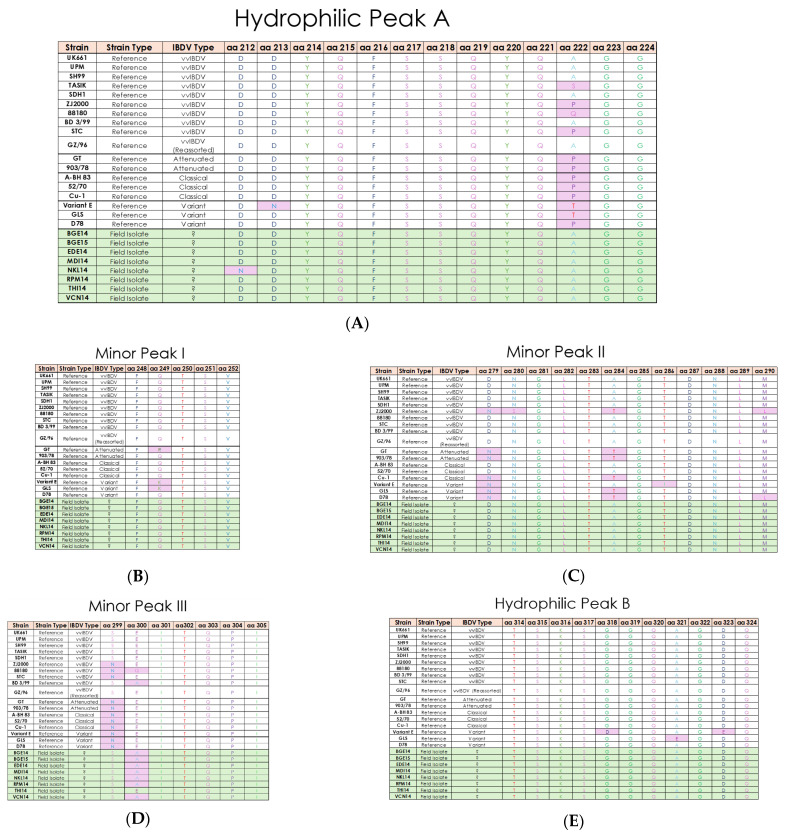 Figure 4
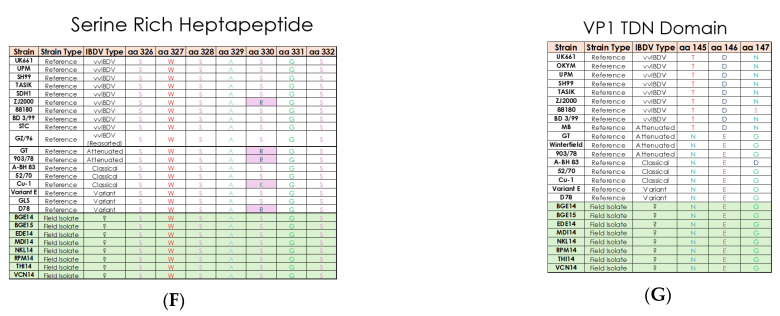 Figure 5
 Figure 6
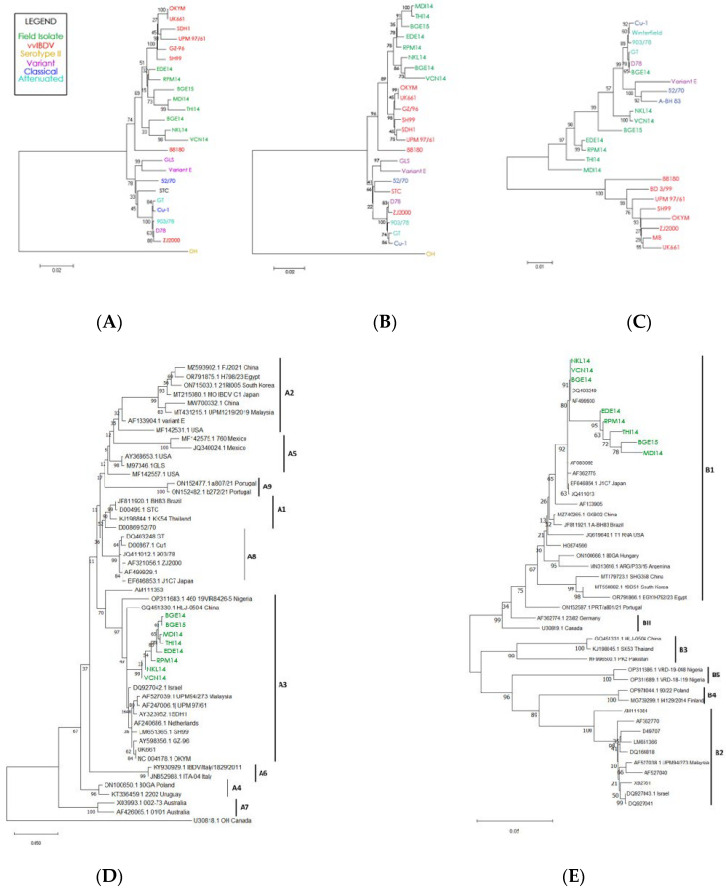 Figure 7
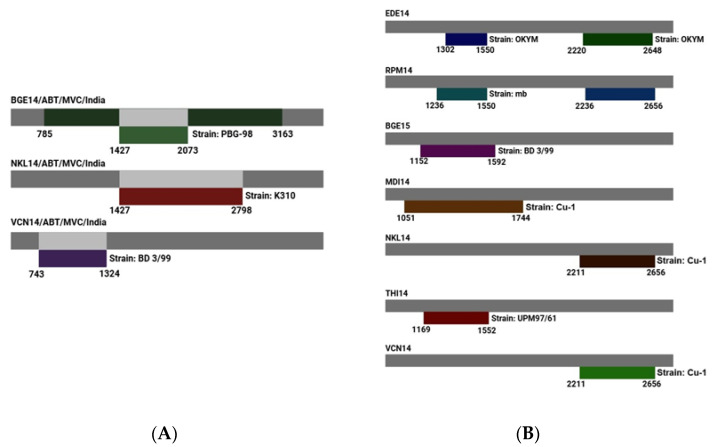 Figure 8
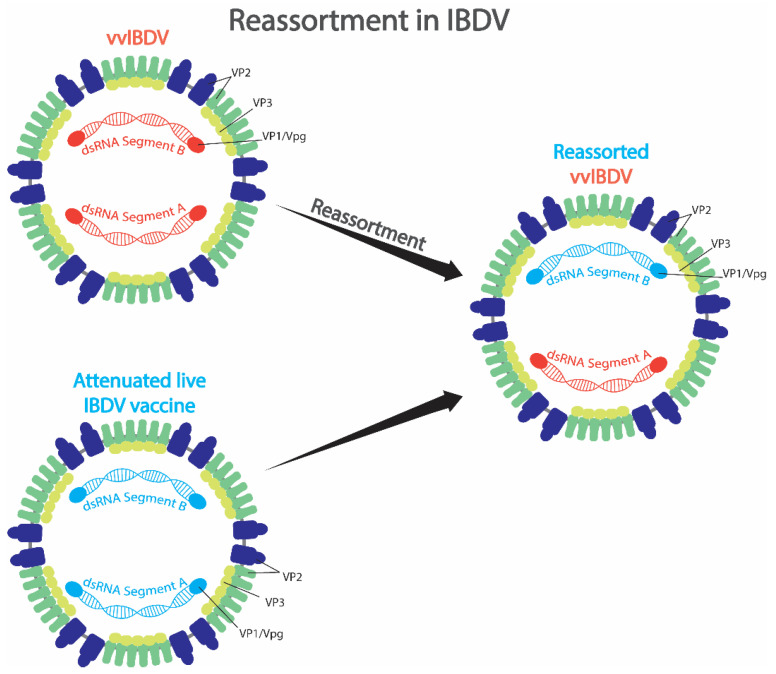 Figure 9
Peer Reviews
No public reviews on file for this paper yet. If you reviewed it on a platform where reviews are public (OpenReview, ICLR, NeurIPS, ICML), you can paste yours below so the community can read it here.
Videos
No videos yet. Explain this paper in a talk, walkthrough, or lecture? Add one.
Taxonomy
TopicsVirology and Viral Diseases · Poxvirus research and outbreaks · Microbial infections and disease research