A Predictive Computational Framework for Staphylococcus aureus Biofilm Growth Stages in Hydrodynamic Conditions
Sarees Shaikh, Abiye Mekonnen, Abdul Nafay Saleem, Patrick Ymele-Leki

TL;DR
This paper introduces a computational model to predict how Staphylococcus aureus biofilms grow and detach under different fluid conditions, which could help in controlling infections.
Contribution
The study introduces a novel computational framework to segment and model S. aureus biofilm dynamics under hydrodynamic conditions.
Findings
Intermediate shear rates trigger early detachment and suppress regrowth of S. aureus biofilms.
Lower and higher shear regimes promote biofilm persistence.
The model identifies thresholds in mechanical and nutritional inputs affecting biofilm stability.
Abstract
Biofilms formed by Staphylococcus aureus on medical devices and tissue surfaces are a major contributor to persistent infections due to their resistance to antibiotics. Hydrodynamic forces in physiological and device-associated environments significantly influence biofilm development, yet the dynamics of detachment and regrowth under flow remain poorly quantified. In this study, biofilm surface coverage was measured in microfluidic flow assays across combinations of shear rates and nutrient concentrations. A computational workflow was used to segment biofilm trajectories into three kinetic phases—growth, exodus, and regrowth—based on surface coverage dynamics. Each phase was modeled using parametric functions, and fitted parameters were interpolated across experimental conditions to reconstruct biofilm lifecycles throughout the flow–nutrient conditions. The analysis revealed that…
Genes, proteins, chemicals, diseases, species, mutations and cell lines named across the full text — each resolved to its canonical identifier and authoritative record.
Click any figure to enlarge with its caption.
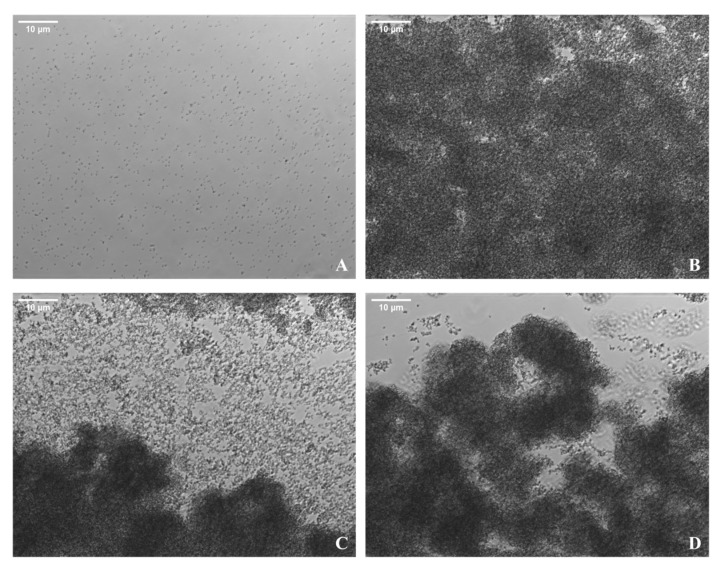 Figure 1
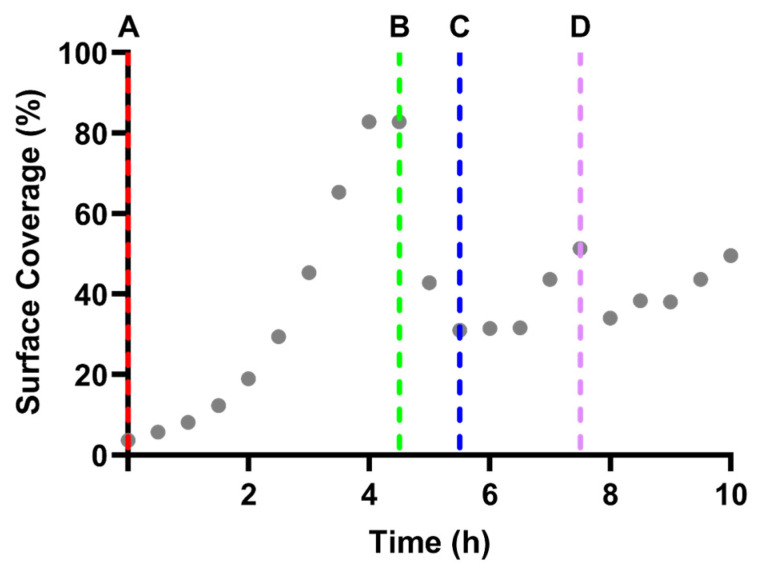 Figure 2
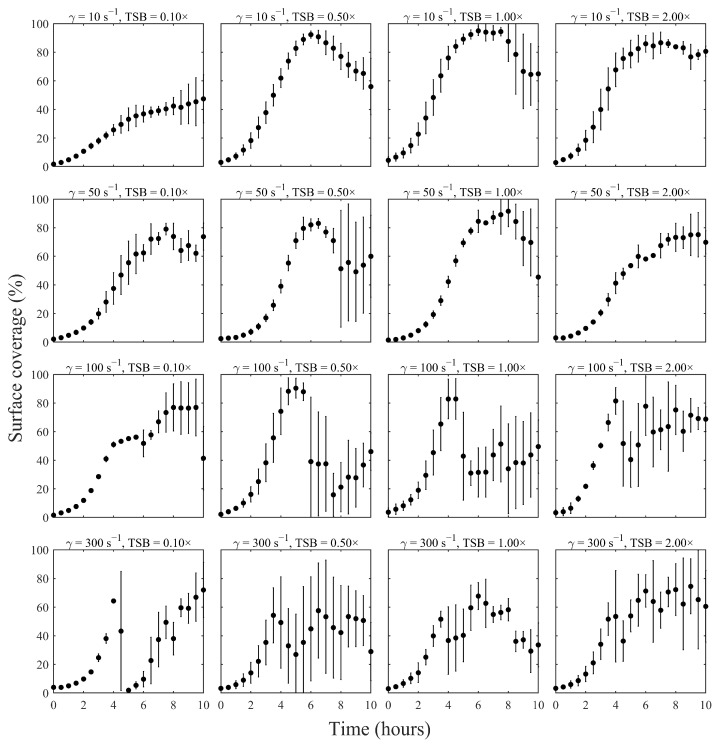 Figure 3
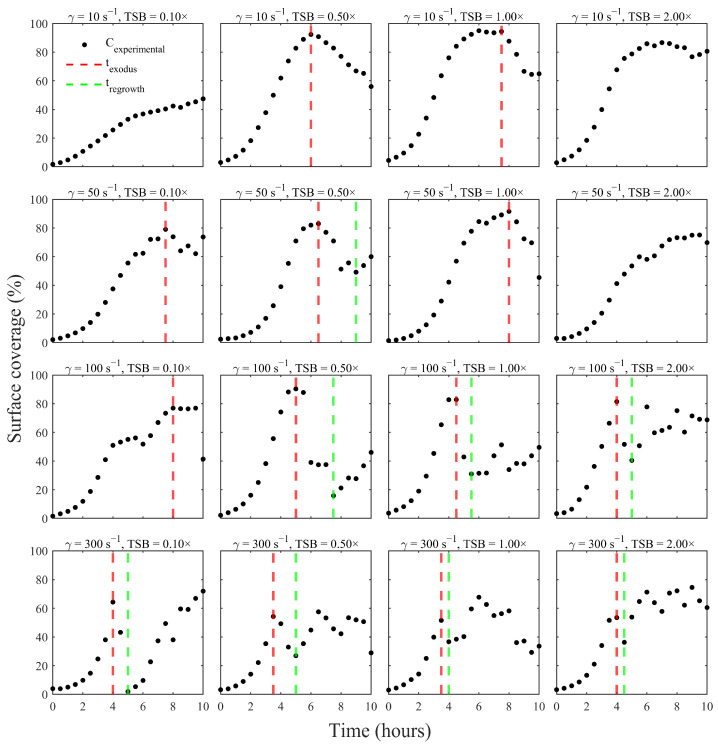 Figure 4
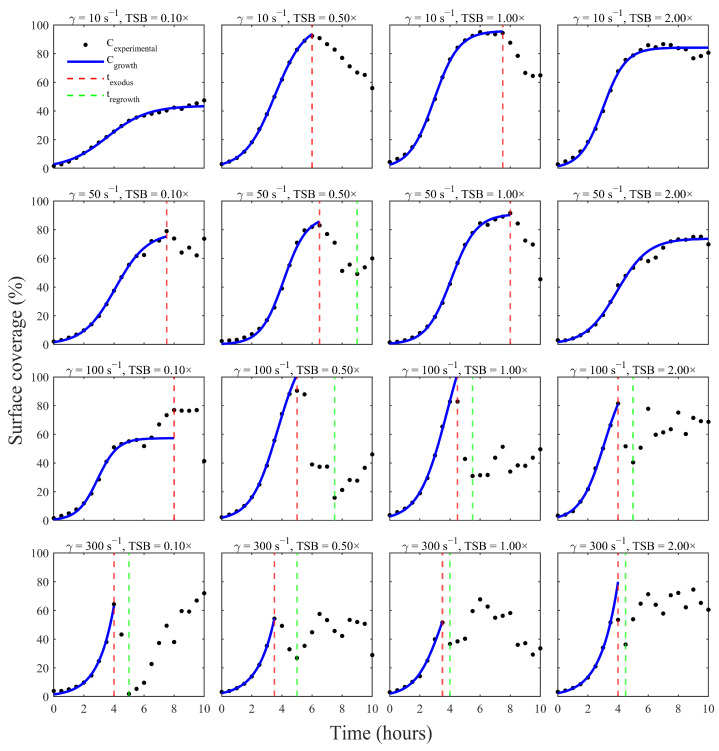 Figure 5
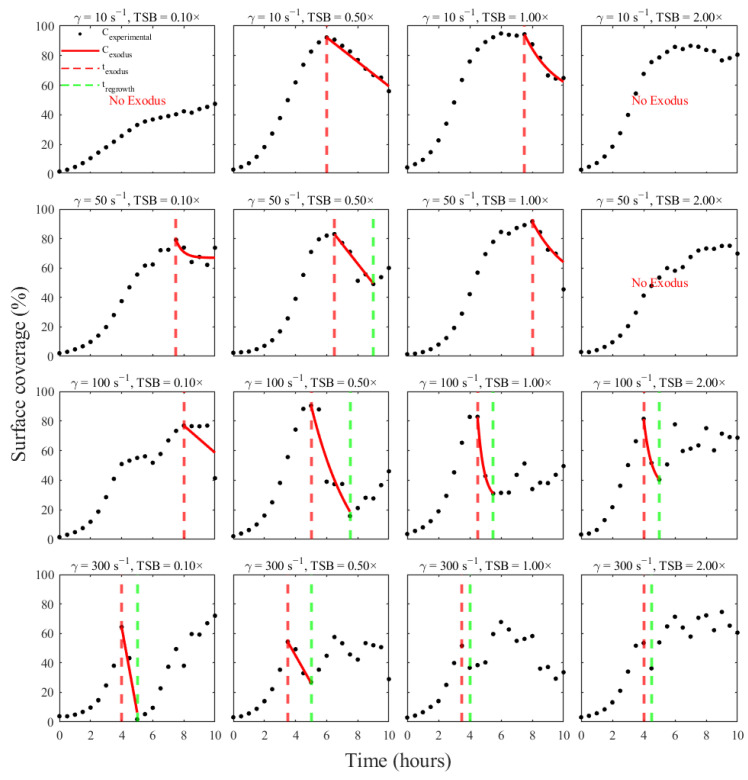 Figure 6
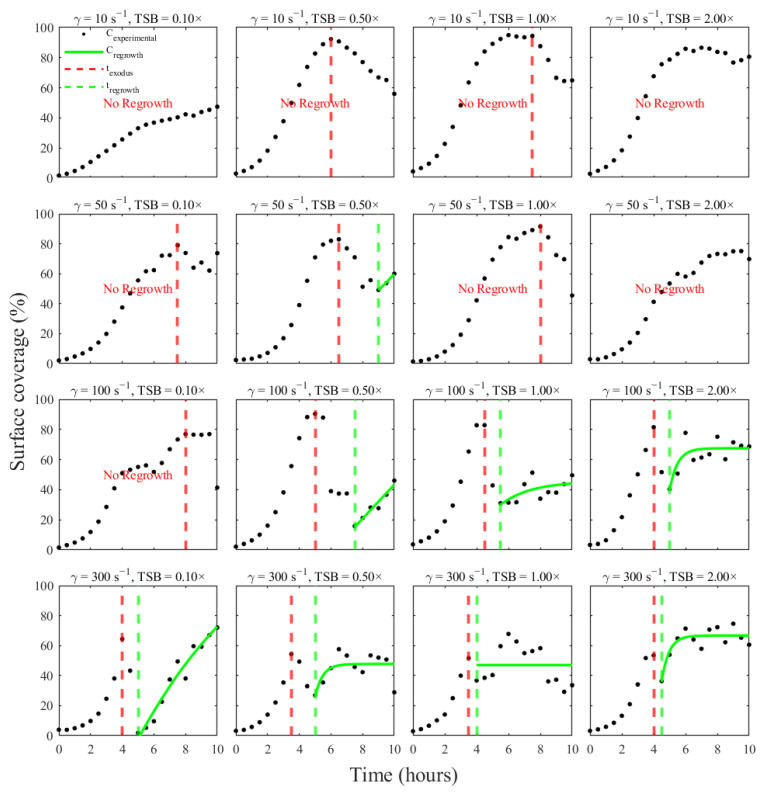 Figure 7
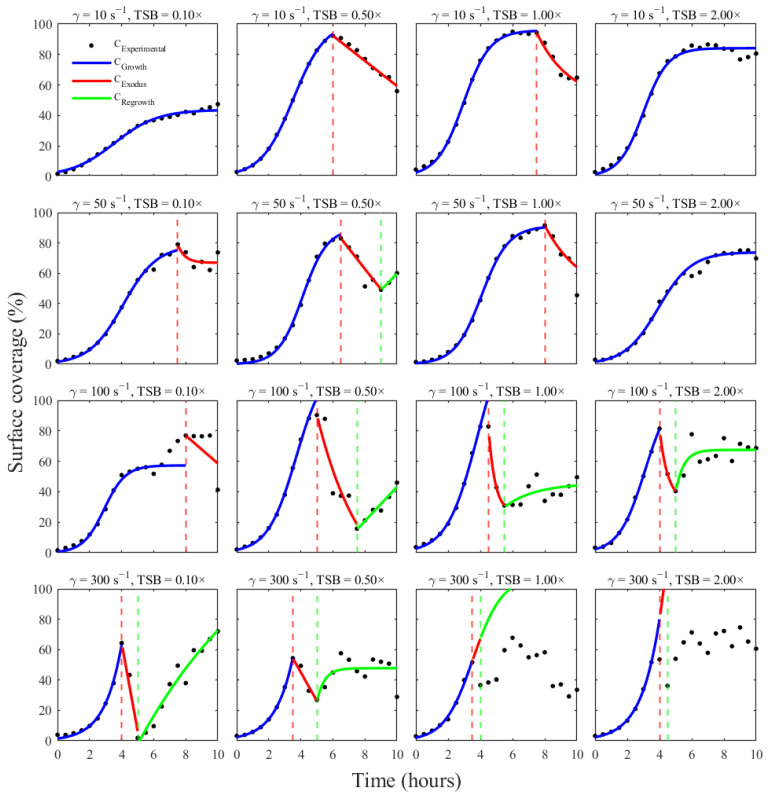 Figure 8
Peer Reviews
No public reviews on file for this paper yet. If you reviewed it on a platform where reviews are public (OpenReview, ICLR, NeurIPS, ICML), you can paste yours below so the community can read it here.
Videos
No videos yet. Explain this paper in a talk, walkthrough, or lecture? Add one.
Taxonomy
TopicsBacterial biofilms and quorum sensing · 3D Printing in Biomedical Research · Infections and bacterial resistance