Streamlined Radiosynthesis of [18F]Fluproxadine (AF78): An Unprotected Guanidine Precursor Enables Efficient One-Step, Automation-Ready Labeling for Clinical Use
Xinyu Chen, Kaito Ohta, Hiroyuki Kimura, Yusuke Yagi, Takanori Sasaki, Naoko Nose, Masaru Akehi, Tomohiko Yamane, Rudolf A. Werner, Takahiro Higuchi

TL;DR
A new one-step method for making the PET radiotracer [18F]fluproxadine improves efficiency and automation for clinical use.
Contribution
A practical one-step radiosynthesis method for [18F]fluproxadine using an unprotected guanidine precursor is introduced.
Findings
Direct [18F]fluorination using an unprotected precursor reduced synthesis time to 60–70 minutes.
Microwave heating achieved a radiochemical conversion of up to 64% in just 1.5 minutes at 140 °C.
The method enables isocratic HPLC purification and is compatible with automation.
Abstract
Background/Objectives: [18F]Fluproxadine (formerly [18F]AF78) is a PET radiotracer targeting the norepinephrine transporter (NET) with potential applications in cardiac, neurological, and oncological imaging. Its guanidine moiety, while essential for NET binding, presents major radiosynthetic challenges due to high basicity and the harsh deprotection conditions required for protected precursors. Previous methods relied on multistep procedures, strong acids, and complex purification, limiting clinical translation. This study aimed to develop a practical one-step radiosynthesis suitable for routine and automated production. Methods: A direct SN2-type nucleophilic [18F]fluorination was performed using an unprotected guanidine precursor to eliminate deprotection steps. Reaction parameters, including the base system, solvent composition, precursor concentration, and temperature, were…
Genes, proteins, chemicals, diseases, species, mutations and cell lines named across the full text — each resolved to its canonical identifier and authoritative record.
Click any figure to enlarge with its caption.
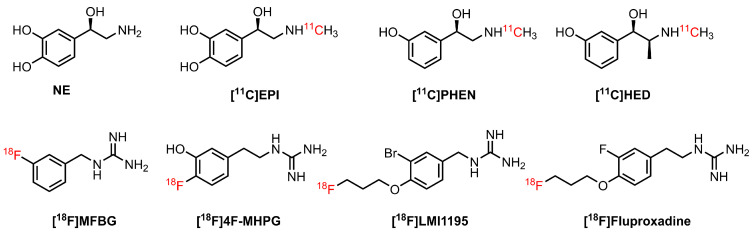 Figure 1
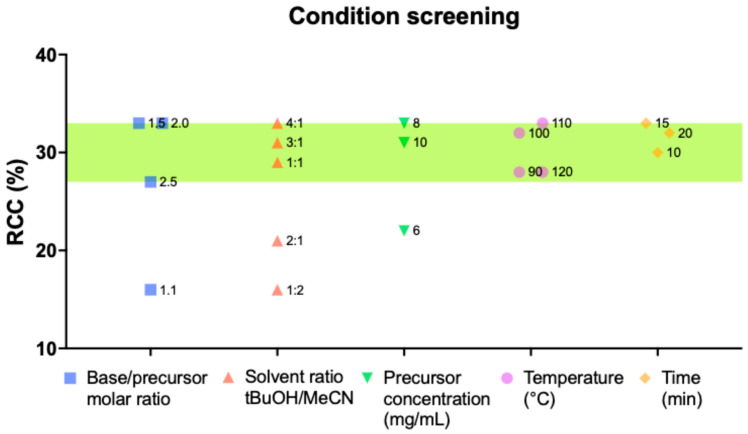 Figure 2
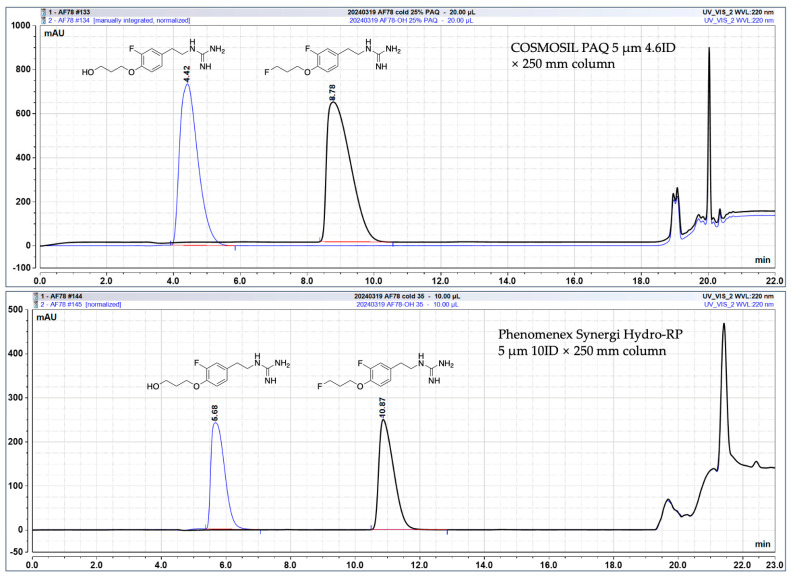 Figure 3
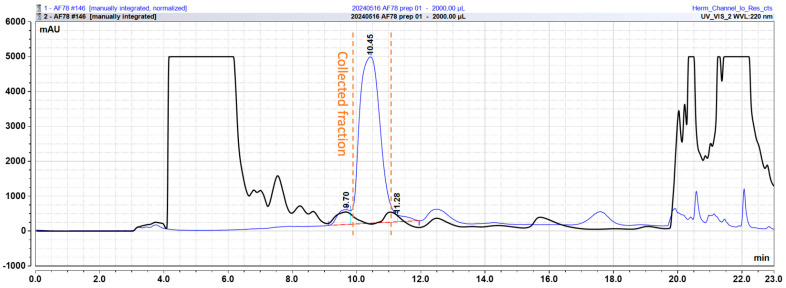 Figure 4
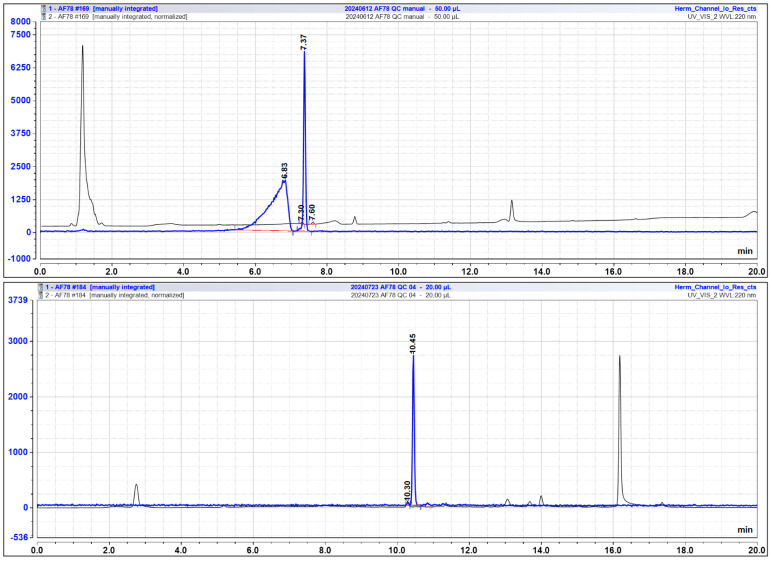 Figure 5
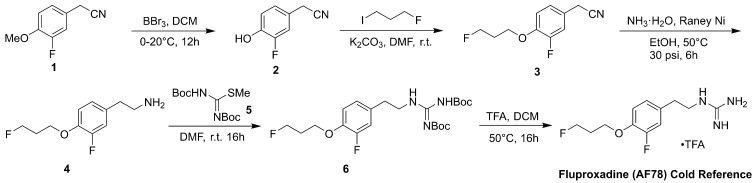 Figure 6
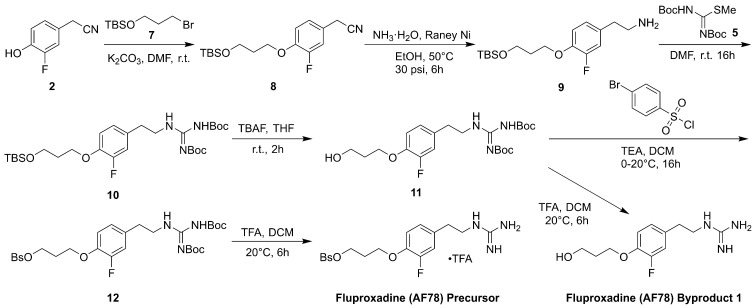 Figure 7
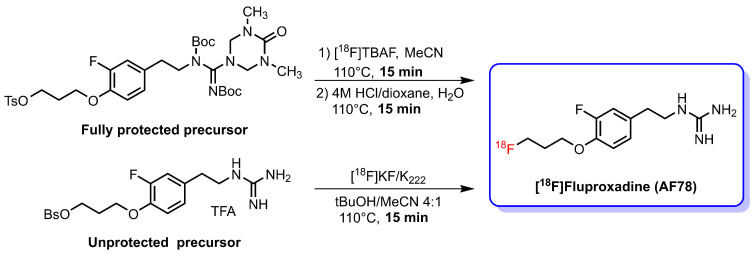 Figure 8
Peer Reviews
No public reviews on file for this paper yet. If you reviewed it on a platform where reviews are public (OpenReview, ICLR, NeurIPS, ICML), you can paste yours below so the community can read it here.
Videos
No videos yet. Explain this paper in a talk, walkthrough, or lecture? Add one.
Taxonomy
TopicsMedical Imaging Techniques and Applications · Chemical Reactions and Isotopes · Fluorine in Organic Chemistry