Recent Advances in Transcription Factor–Mediated Regulation of Salvianolic Acid Biosynthesis in Salvia miltiorrhiza
Song Chen, Fang Peng, Shan Tao, Xiufu Wan, Hailang Liao, Peiyuan Wang, Can Yuan, Changqing Mao, Xinyi Zhao, Chao Zhang, Bing He, Mingzhi Zhong

TL;DR
This paper reviews how transcription factors control the production of beneficial compounds in Salvia miltiorrhiza, aiming to improve their stable and high-yield production.
Contribution
The paper synthesizes recent findings on transcriptional regulation of salvianolic acid biosynthesis and proposes strategies for metabolic engineering.
Findings
Transcription factors like SmMYB111 and SmMYC2 activate key genes to boost phenolic acid accumulation.
Negative regulators such as SmMYB4 and SmMYB39 suppress pathway genes or disrupt activator complexes.
Future strategies include integrating single-cell omics and genome editing for predictive metabolic engineering.
Abstract
Salvia miltiorrhiza Bunge is a traditional Chinese medicinal plant whose roots are rich in water-soluble phenolic acids. Rosmarinic acid and salvianolic acid B are representative components that confer antibacterial, antioxidant, and cardio-cerebrovascular protective activities. However, these metabolites often accumulate at low and unstable levels in planta, which limits their efficient development and use. This review summarises recent advances in understanding salvianolic acid biosynthesis and its transcriptional regulation in S. miltiorrhiza. Current evidence supports a coordinated pathway composed of the phenylpropanoid route and a tyrosine-derived branch, which converge to generate rosmarinic acid and subsequently more complex derivatives through oxidative coupling reactions. Key findings on transcription factor families that fine-tune pathway flux by regulating core structural…
Genes, proteins, chemicals, diseases, species, mutations and cell lines named across the full text — each resolved to its canonical identifier and authoritative record.
Click any figure to enlarge with its caption.
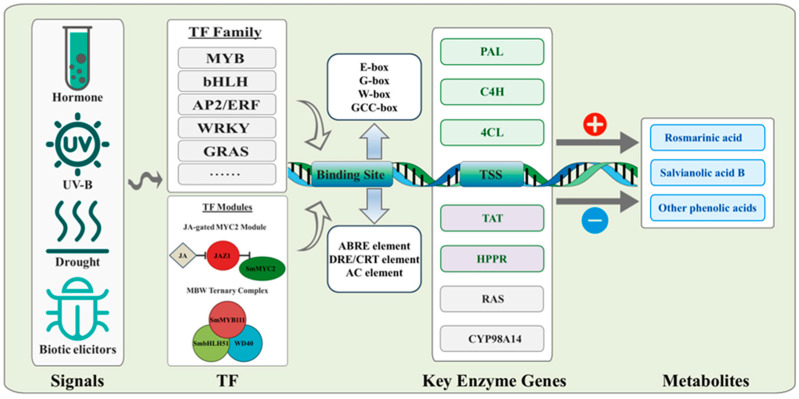 Figure 1
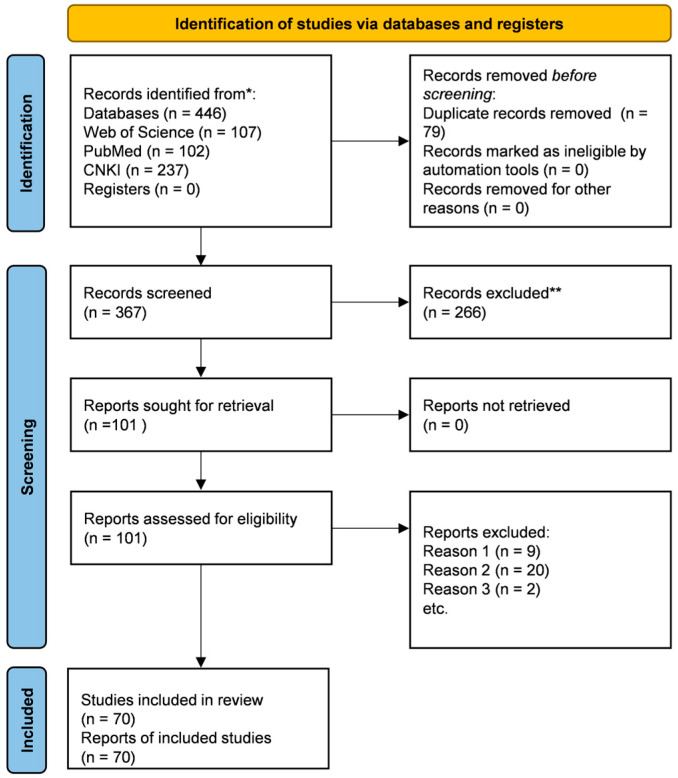 Figure 2
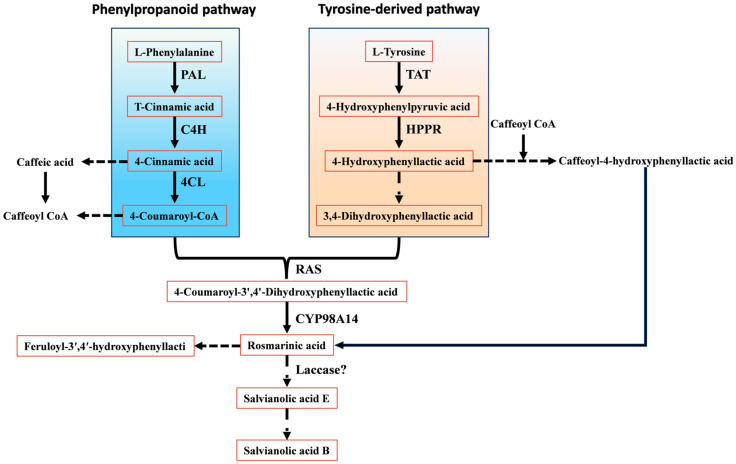 Figure 3
Peer Reviews
No public reviews on file for this paper yet. If you reviewed it on a platform where reviews are public (OpenReview, ICLR, NeurIPS, ICML), you can paste yours below so the community can read it here.
Videos
No videos yet. Explain this paper in a talk, walkthrough, or lecture? Add one.
Taxonomy
TopicsTraditional Chinese Medicine Analysis · Plant biochemistry and biosynthesis · Plant Gene Expression Analysis