Plasma Phospholipid Biomarkers Related to the Risk of Cognitive Decline in the Elderly: Results from a Cohort Study
Ting-Ting Liu, Jia-Wei Xie, Xin Long, Xin-Can Yu, Shan-Shan Jia, Qing-Qing Man, Jing Li, Pu-Jun Quan, Ke-Chang Shan, Jian Zhang, Shuang Song, Dan Liu

TL;DR
This study identifies blood phospholipid biomarkers that predict cognitive decline in elderly individuals, improving early detection and risk assessment.
Contribution
The study introduces a novel panel of eight phospholipid biomarkers that enhance prediction of cognitive decline when added to traditional risk factors.
Findings
Eight phospholipid species were identified as biomarkers for cognitive decline using LASSO regression.
Four specific phospholipids (PE(O-40:5), LPC(18:3), PI(38:2), PA(39:4)) showed significant associations with cognitive decline risk.
Adding these biomarkers improved the predictive model's AUC from 0.743 to 0.866.
Abstract
Phospholipids provide both structural and functional varieties for neuro cells, and their dysregulation in brain has been related to pathogenesis of cognitive impairment. The reflection of these phospholipid alterations in the blood might serve as biomarkers for the early recognition of cognitive decline risk preceding clinical symptoms and provide potential targets for intervention. In this cohort study, detailed phospholipid molecular profiles including 229 species were quantified. A total of 209 participants aged 60–80 years (including 138 women and 73 men) were followed for one year, during which 32 participants developed significant cognitive decline, defined as a decrease of three or more points in the Montreal Cognitive Assessment score. A biomarker panel of eight phospholipid molecular species related to cognitive decline was identified by Least Absolute Shrinkage and Selection…
Genes, proteins, chemicals, diseases, species, mutations and cell lines named across the full text — each resolved to its canonical identifier and authoritative record.
Click any figure to enlarge with its caption.
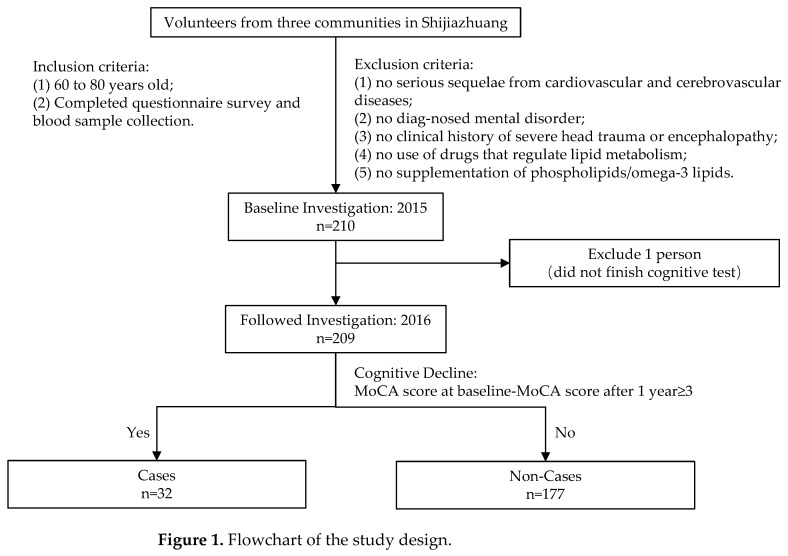 Figure 1
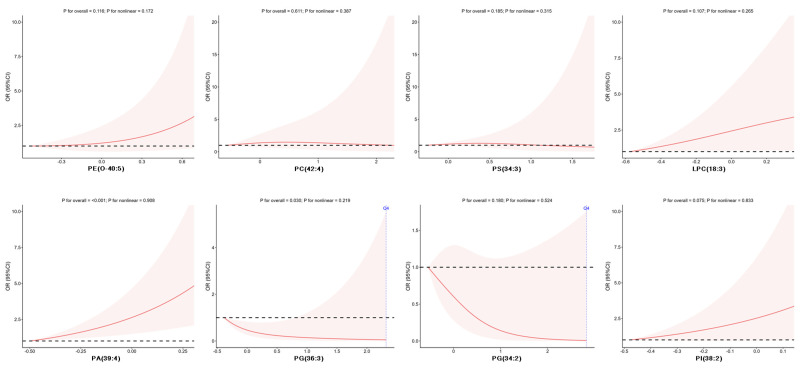 Figure 2
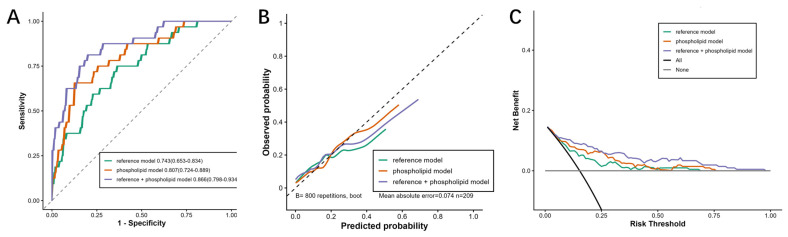 Figure 3
Peer Reviews
No public reviews on file for this paper yet. If you reviewed it on a platform where reviews are public (OpenReview, ICLR, NeurIPS, ICML), you can paste yours below so the community can read it here.
Videos
No videos yet. Explain this paper in a talk, walkthrough, or lecture? Add one.
Taxonomy
TopicsDementia and Cognitive Impairment Research · Alzheimer's disease research and treatments · Fatty Acid Research and Health