Effects of Slope and Strip-Cutting Width on Bamboo Shoot Emergence, Culm Formation, and Understory Vegetation Diversity in Moso Bamboo Forests in China
Dawei Fu, Fengying Guan, Zhen Li, Minkai Li, Yifan Lu, Xiao Zhou, Xuan Zhang

TL;DR
This study examines how strip-cutting width and slope affect bamboo growth and plant diversity in Chinese bamboo forests, finding that 5 m widths on moderate slopes optimize both productivity and biodiversity.
Contribution
The study identifies an optimal strip-cutting width and slope combination that balances bamboo productivity with understory vegetation diversity.
Findings
A 5 m strip-cutting width on moderate slopes (15–24°) increased bamboo shoot and culm numbers by 27% and 13% compared to narrower and wider widths.
Herb and shrub species diversity indices were highest in 5 m plots on moderate and steep slopes.
Principal component analysis showed 5 m strip-cutting on moderate slopes outperformed other treatments in ecological and production outcomes.
Abstract
Moso bamboo (Phyllostachys edulis) harvesting is labor-intensive and inefficient, while strip-cutting enables mechanized, cost-effective management and supports long-term production. Intensive strip-cutting disturbs bamboo ecosystems, altering soil, litter and understory vegetation. This may reduce long-term productivity despite moso bamboo’s rapid growth, especially in the mountainous areas like Anji, Zhejiang. To balance ecological and production goals, we evaluated strip-cutting widths of 3, 5, and 8 m under three slope classes, 5–14° (gentle, SL1), 15–24° (moderate, SL2), and 25–34° (steep, SL3), focusing on bamboo growth recovery and understory vegetation diversity. Compared with uncut control plots, the number of herbaceous and shrub species increased in all treatment plots. In 5 m moderate slope plots, shoot and culm numbers were 27% and 13% higher than those in the 3 m and 8 m…
Genes, proteins, chemicals, diseases, species, mutations and cell lines named across the full text — each resolved to its canonical identifier and authoritative record.
Click any figure to enlarge with its caption.
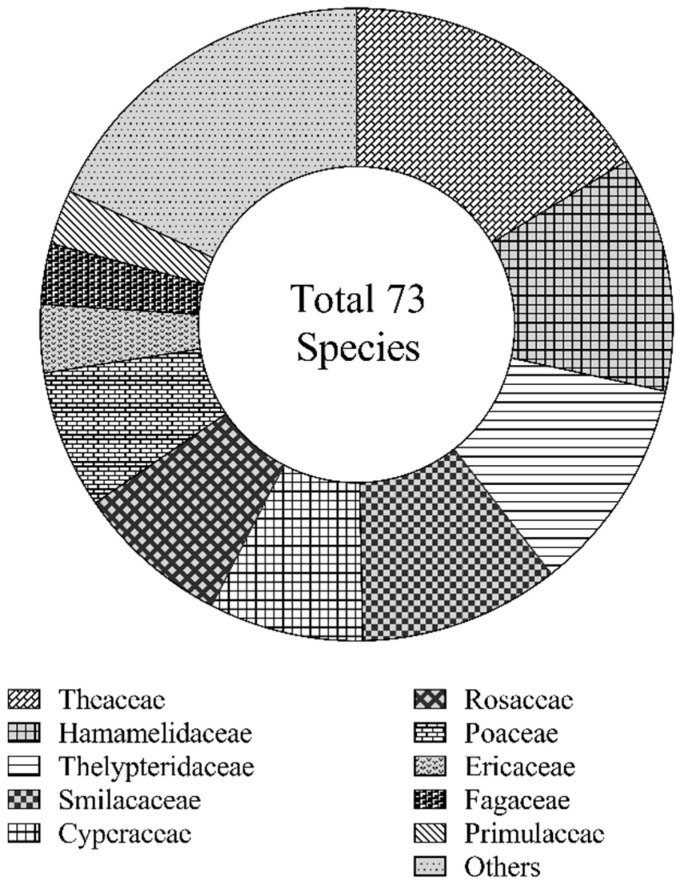 Figure 1
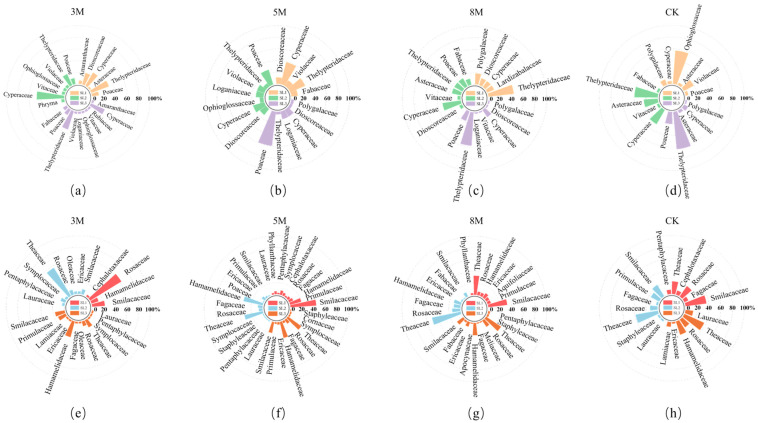 Figure 2
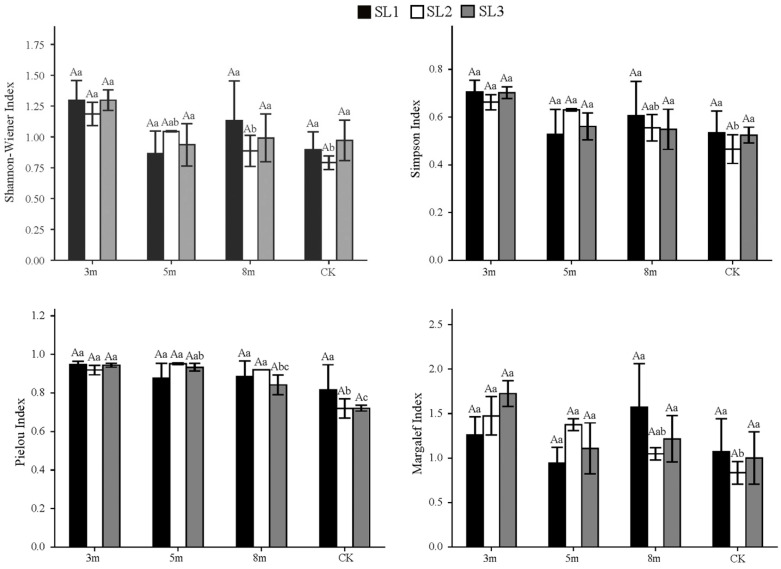 Figure 3
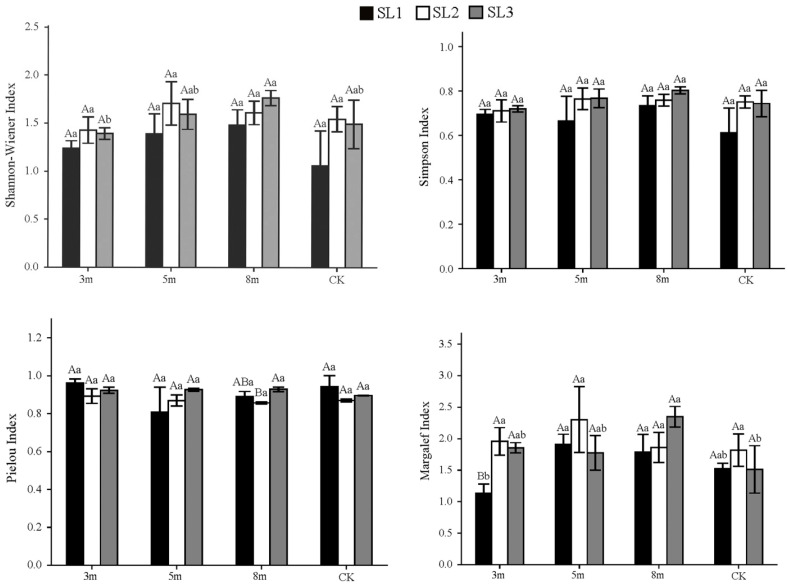 Figure 4
 Figure 5
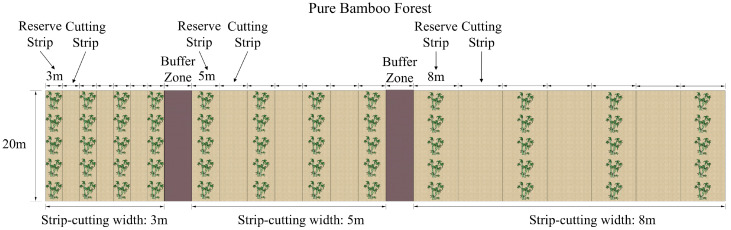 Figure 6
Peer Reviews
No public reviews on file for this paper yet. If you reviewed it on a platform where reviews are public (OpenReview, ICLR, NeurIPS, ICML), you can paste yours below so the community can read it here.
Videos
No videos yet. Explain this paper in a talk, walkthrough, or lecture? Add one.
Taxonomy
TopicsBamboo properties and applications · Plant Taxonomy and Phylogenetics · Ecology and Vegetation Dynamics Studies