High Occurrence of Pathogenic Free-Living Amoebae in Arid Environments
Patricia Pérez-Pérez, Javier Chao-Pellicer, Rubén L. Rodríguez-Expósito, Marco Peña-Prunell, Angélica Domínguez-de-Barros, Omar García-Pérez, Elizabeth Córdoba-Lanús, María Reyes-Batlle, José E. Piñero, Jacob Lorenzo-Morales

TL;DR
This study found high levels of potentially harmful free-living amoebae in arid environments, highlighting a possible health risk to humans.
Contribution
The study reports the first detailed molecular characterization of FLA in Fuerteventura Island's arid environments.
Findings
Acanthamoeba was the most prevalent FLA genus in soil samples.
Vermamoeba vermiformis was the most isolated FLA species in water samples.
q-PCR detection was faster and cheaper than traditional methods.
Abstract
Free-living amoebae (FLA) are protozoa ubiquitous in nature, isolated from a variety of environments worldwide. In addition to their natural distribution, some species have been found to be pathogenic to humans. In the present study, FLA presence was evaluated and characterized at the molecular level from different water and soil samples in Fuerteventura Island, Canary Islands, Spain. A total of 31 samples were analyzed by culture and molecular assays (q-PCR and PCR). Moreover, the microbiological quality of the water samples was examined as required by current legislation and international standards. The obtained data revealed that the genus Acanthamoeba was the most prevalent genus of FLA in soil samples and the species Vermamoeba vermiformis was the most isolated in water samples collected from Fuerteventura by culture and molecular assays, q-PCR, and conventional PCR/Sanger…
Genes, proteins, chemicals, diseases, species, mutations and cell lines named across the full text — each resolved to its canonical identifier and authoritative record.
Click any figure to enlarge with its caption.
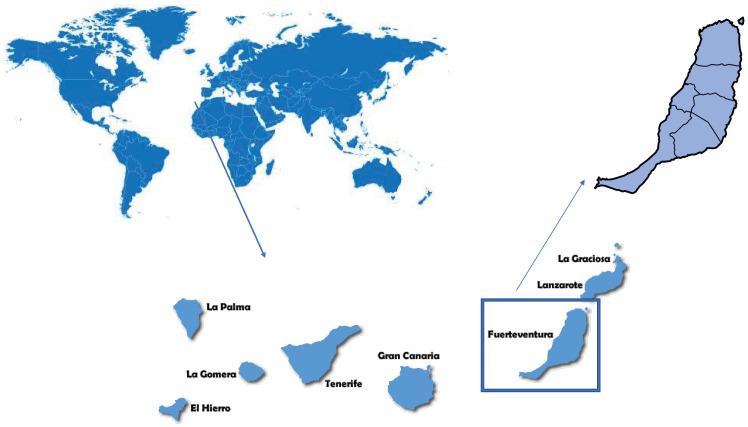 Figure 1
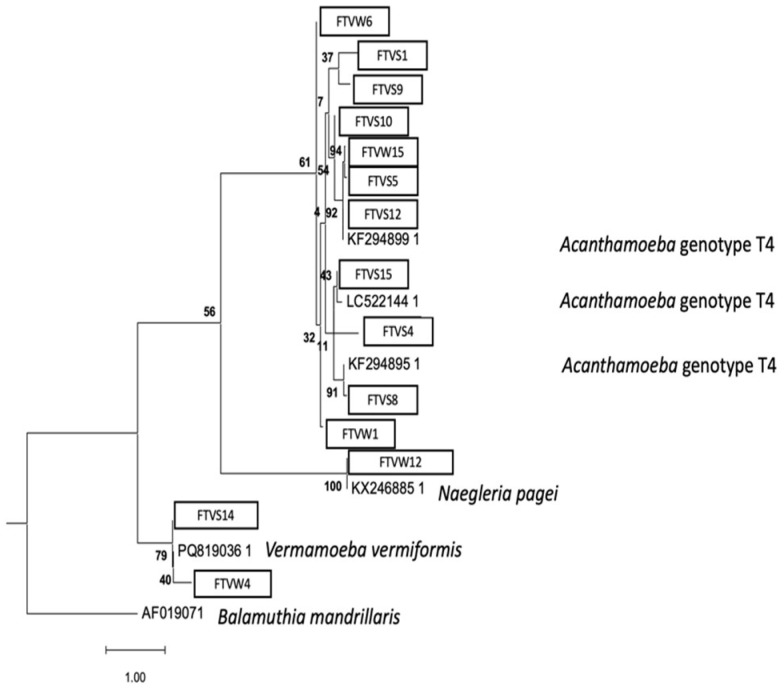 Figure 2
Peer Reviews
No public reviews on file for this paper yet. If you reviewed it on a platform where reviews are public (OpenReview, ICLR, NeurIPS, ICML), you can paste yours below so the community can read it here.
Videos
No videos yet. Explain this paper in a talk, walkthrough, or lecture? Add one.
Taxonomy
TopicsLegionella and Acanthamoeba research · Amoebic Infections and Treatments · Protist diversity and phylogeny