New Strategies for Preventing Perinatal Group B Streptococcus (GBS) Infections
Dorota Kaminska, Magdalena Ratajczak, Wiktoria Nowicka, Jolanta Dlugaszewska, Marzena Gajecka

TL;DR
This paper explores new ways to prevent Group B Streptococcus infections in newborns, as current antibiotic methods face challenges like resistance and microbiome disruption.
Contribution
The paper highlights the need for alternative prevention strategies, such as vaccines and methods to reduce maternal colonization, due to rising antibiotic resistance and microbiome concerns.
Findings
Current prevention relies on maternal screening and antibiotics, but resistance and microbiome disruption are growing concerns.
Alternative approaches like vaccines and reducing maternal colonization are being explored as potential solutions.
New strategies are urgently needed to address the limitations of existing prevention methods.
Abstract
Group B Streptococcus (GBS) is a component of the natural human microbiota, colonizing the genitourinary tract and the distal gastrointestinal tract. Due to its production of numerous virulence factors, GBS can cause infections in pregnant women, newborns, and immunocompromised individuals. In newborns, GBS infection may present as severe pneumonia, meningitis, or sepsis. Screening for maternal GBS colonization, combined with intrapartum antibiotic prophylaxis for colonized women, is currently regarded as the most effective strategy for preventing neonatal GBS infections. However, growing concerns regarding antibiotic resistance and the negative impact of antibiotics on the neonatal microbiome have intensified the search for alternative approaches. These include the development of a vaccine and methods to reduce vaginal colonization in pregnant women.
Genes, proteins, chemicals, diseases, species, mutations and cell lines named across the full text — each resolved to its canonical identifier and authoritative record.
Click any figure to enlarge with its caption.
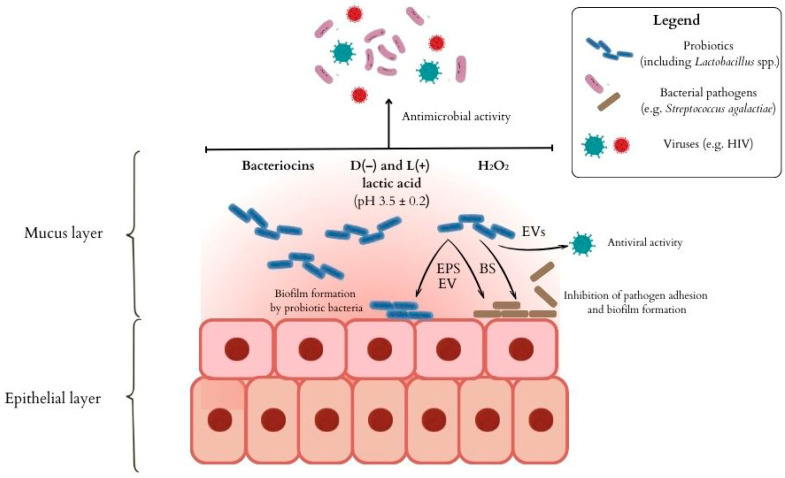 Figure 1
Peer Reviews
No public reviews on file for this paper yet. If you reviewed it on a platform where reviews are public (OpenReview, ICLR, NeurIPS, ICML), you can paste yours below so the community can read it here.
Videos
No videos yet. Explain this paper in a talk, walkthrough, or lecture? Add one.
Taxonomy
TopicsNeonatal and Maternal Infections · Preterm Birth and Chorioamnionitis · Infant Nutrition and Health