Molecular Detection of Theileria equi, Babesia caballi, and Borrelia burgdorferi Sensu Lato in Hippobosca equina from Horses in Spain
Abel Dorrego, Sergi Olvera-Maneu, Eduard Jose-Cunilleras, Paloma Gago, Alejandra Raez, Belen Rivera, Ariana Oporto, Sergio Gonzalez, Fatima Cruz-Lopez

TL;DR
This study found evidence that forest flies in Spain can carry pathogens that cause equine diseases, suggesting they may play a role in spreading these infections.
Contribution
The study provides the first molecular evidence of Theileria equi and Babesia caballi in Hippobosca equina, highlighting their potential epidemiological role.
Findings
11.2% of forest flies tested positive for Theileria equi DNA.
One fly was found positive for Borrelia burgdorferi sensu lato.
Nested PCR showed higher detection rates for piroplasms compared to real-time PCR.
Abstract
The forest fly (Hippobosca equina) is an obligate haematophagous dipteran insect (order Diptera) that primarily infests horses and may contribute to the circulation of vector-borne pathogens. This study aimed to investigate the presence of Anaplasma phagocytophilum, Borrelia burgdorferi s.l., Babesia caballi, and Theileria equi, important vector-borne pathogens of equids, in forest flies collected from horses in endemic areas of Spain. A total of 170 forest flies were collected from 39 equids across four geographical regions in Spain (Segovia, Madrid, Toledo, and Menorca) and blood samples were collected from 27 of these horses. All flies were morphologically and molecularly identified as H. equina, and DNA extracted from flies and equine blood was screened using multiplex real-time and nested PCR, followed by sequencing and phylogenetic analysis. Neither flies nor horses tested…
Genes, proteins, chemicals, diseases, species, mutations and cell lines named across the full text — each resolved to its canonical identifier and authoritative record.
Click any figure to enlarge with its caption.
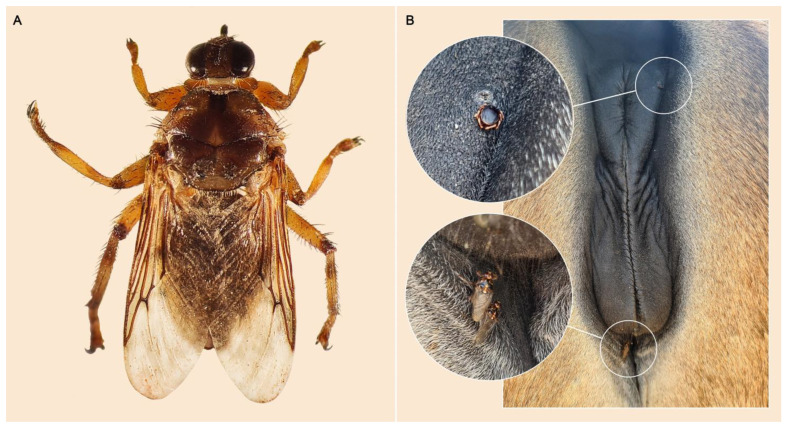 Figure 1
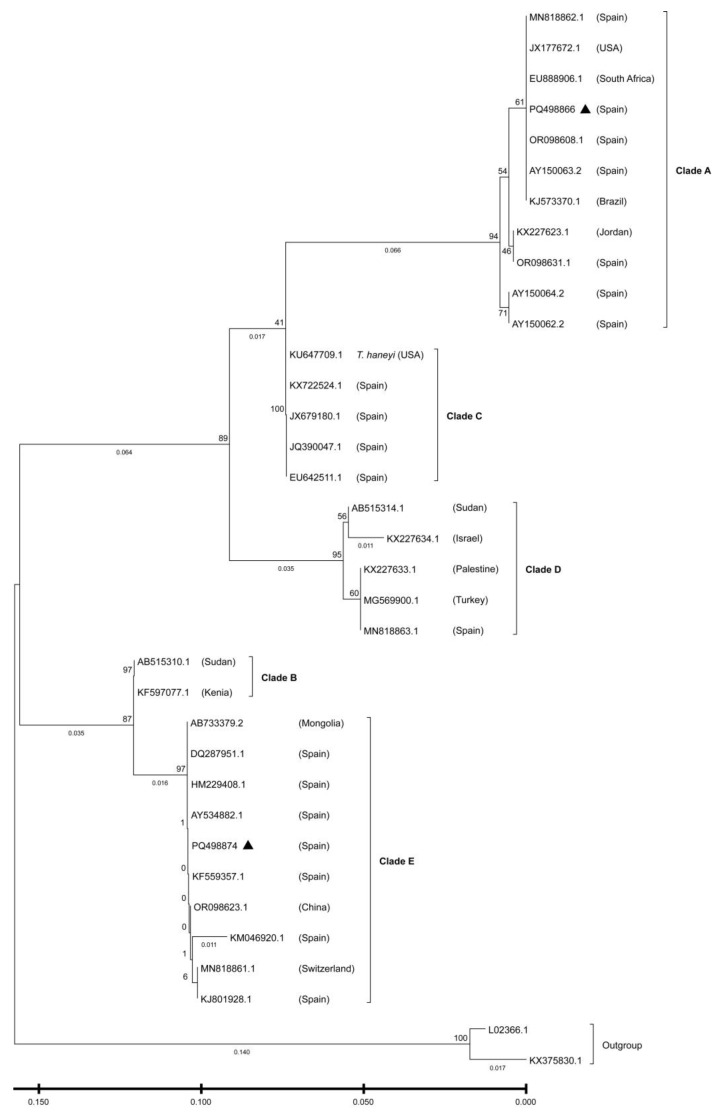 Figure 2
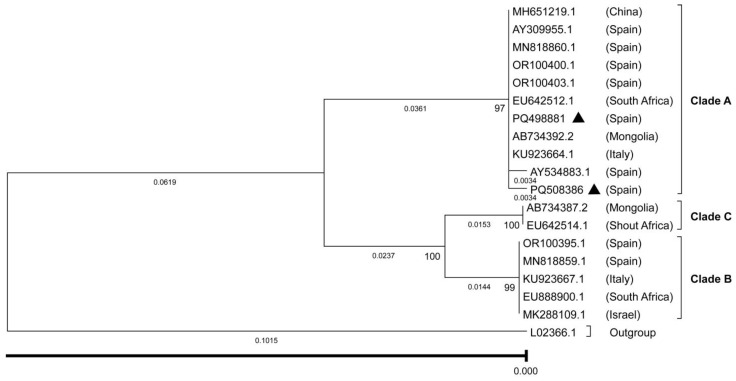 Figure 3
Peer Reviews
No public reviews on file for this paper yet. If you reviewed it on a platform where reviews are public (OpenReview, ICLR, NeurIPS, ICML), you can paste yours below so the community can read it here.
Videos
No videos yet. Explain this paper in a talk, walkthrough, or lecture? Add one.
Taxonomy
TopicsVector-borne infectious diseases · Vector-Borne Animal Diseases · Bartonella species infections research