Risk Factors for Postnatal Growth Faltering and Undernutrition at Discharge in Very Preterm Infants: A Retrospective Study Applying the ESPGHAN Consensus Definitions
Isadora Beghetti, Dalila Magno, Ettore Benvenuti, Arianna Aceti, Luigi Tommaso Corvaglia

TL;DR
This study identifies risk factors for growth issues in very preterm infants using standardized definitions, finding that conditions like bronchopulmonary dysplasia and weight loss are linked to poor growth outcomes.
Contribution
The study applies the latest ESPGHAN growth definitions to identify distinct risk factors for growth faltering and undernutrition in very preterm infants.
Findings
45.3% of very preterm infants experienced growth faltering and 33.1% were undernourished at discharge.
Bronchopulmonary dysplasia and higher postnatal weight loss were major risk factors for growth faltering.
Female sex and human milk feeding were associated with lower risk of growth faltering.
Abstract
Background: Postnatal growth failure in very preterm infants remains a major concern in neonatal care and clinical management is complicated by the lack of a standardized definition. This study aims to identify risk factors for growth faltering (GF) and undernutrition (UN) at hospital discharge, defined according to the latest consensus definitions established by the European Society for Paediatric Gastroenterology, Hepatology and Nutrition (ESPGHAN). Methods: We conducted a retrospective observational study of 416 preterm infants (gestational age < 32 weeks and/or birth weight < 1500 g). Growth was monitored using the Intergrowth 21st standards. In line with ESPGHAN criteria, GF was defined longitudinally as a weight for age (WFA) z-score decline ≥ 1 SD from birth, while UN was defined cross-sectionally as a WFA or length for age z-score < −2 SD at discharge. Logistic regression models…
Genes, proteins, chemicals, diseases, species, mutations and cell lines named across the full text — each resolved to its canonical identifier and authoritative record.
Click any figure to enlarge with its caption.
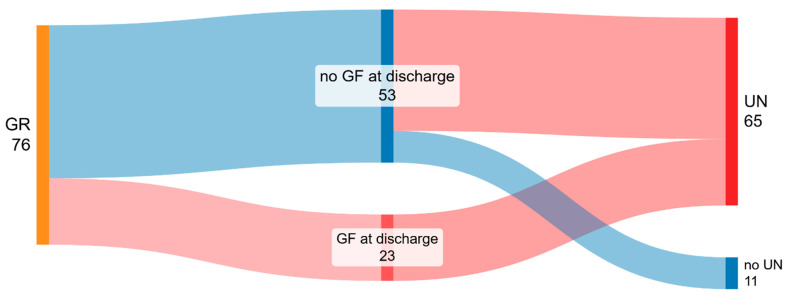 Figure 1
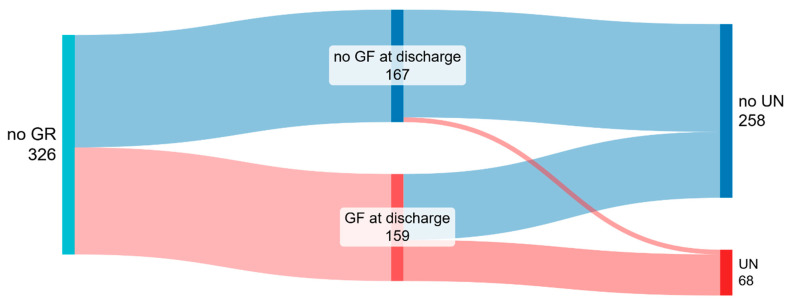 Figure 2
 Figure 3
Peer Reviews
No public reviews on file for this paper yet. If you reviewed it on a platform where reviews are public (OpenReview, ICLR, NeurIPS, ICML), you can paste yours below so the community can read it here.
Videos
No videos yet. Explain this paper in a talk, walkthrough, or lecture? Add one.
Taxonomy
TopicsInfant Nutrition and Health · Infant Development and Preterm Care · Child Nutrition and Feeding Issues