Association of UGT1A9 Polymorphisms with Cardiac Injury Biomarkers and Clinical Features
Mert Özen, Işık Tekin, Abdo A. Elfiky, Murat Seyit, Yasemin Adalı, Yasemin Berberoğlu, Alten Oskay, Atakan Yılmaz, Tülay Oskay, Vefa Çakmak, İbrahim Türkçüer, Gergana Lengerova, Martina Bozhkova, Steliyan Petrov, Aylin Köseler

TL;DR
This study finds that UGT1A9 gene variations affect CK-MB levels in cardiac patients, possibly influencing how we interpret heart injury markers.
Contribution
The study links UGT1A9*3 polymorphisms to CK-MB variability, suggesting implications for personalized cardiac care.
Findings
UGT1A9*3 carriers had higher CK-MB levels compared to other genotypes.
Troponin I levels were not influenced by UGT1A9 genotypes.
UGT1A9*3 may indicate statin-related muscle injury rather than true heart damage.
Abstract
Background/Objectives: This study evaluates the relationship between UGT1A9 polymorphisms, cardiac biomarker patterns, and clinical presentations in patients admitted to the Pamukkale University Emergency Department with cardiac symptoms. Methods: A total of 207 consecutive patients presenting with chest pain, dyspnea, palpitations, or other cardiac complaints were initially enrolled. Patients with incomplete clinical data or unsuccessful genotyping were excluded prior to analysis, and all remaining samples were included in the final evaluation. UGT1A9 *1, *2, and *3 alleles were genotyped using allele-specific PCR and TaqMan® assays. Patients were classified into wt/wt, wt/*3, and *3/*3 groups. Statistical analyses included Kruskal–Wallis, Mann–Whitney U, and chi-square tests. Results: Genotype distribution was 64% wt/wt, 32% wt/*3, and 4% *3/*3. CK-MB levels differed significantly…
Genes, proteins, chemicals, diseases, species, mutations and cell lines named across the full text — each resolved to its canonical identifier and authoritative record.
Click any figure to enlarge with its caption.
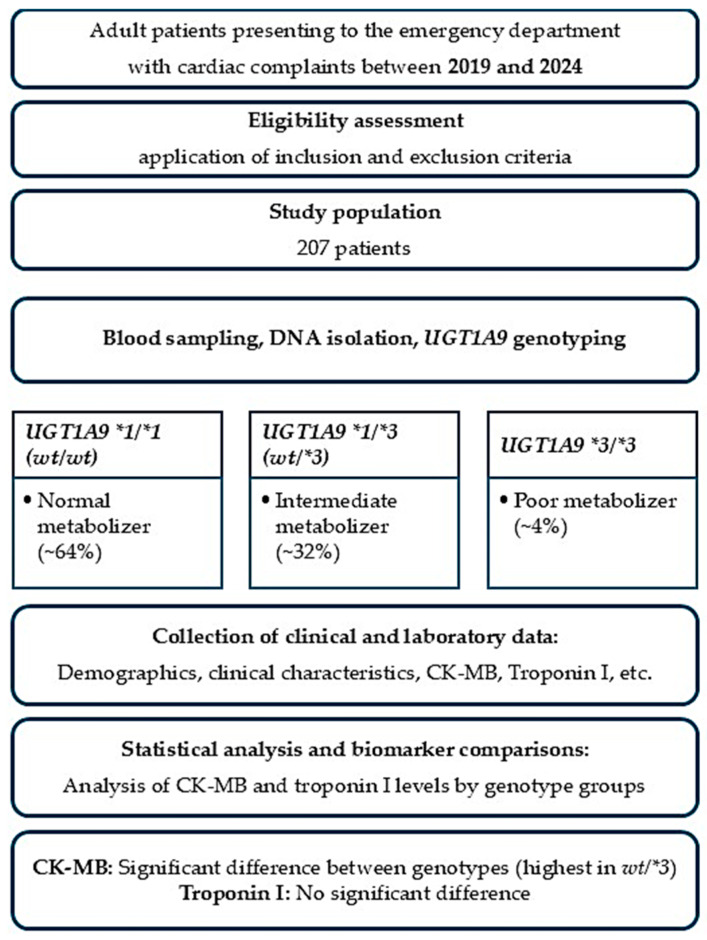 Figure 1
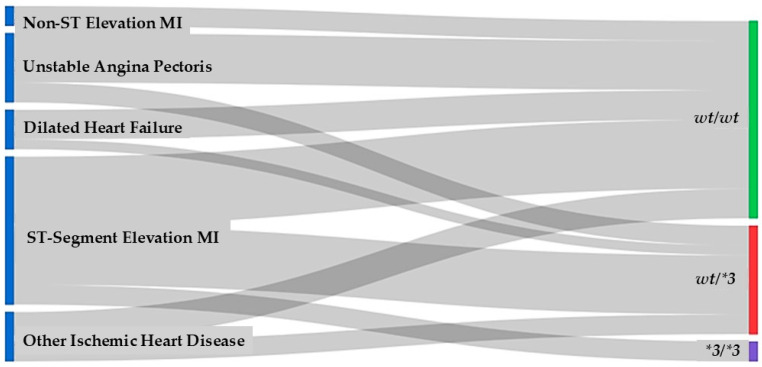 Figure 2
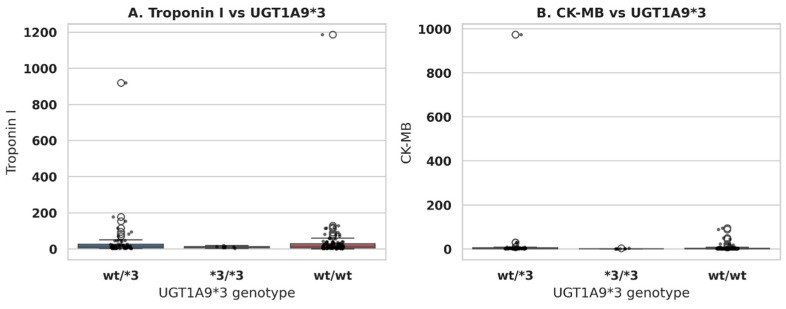 Figure 3
 Figure 4
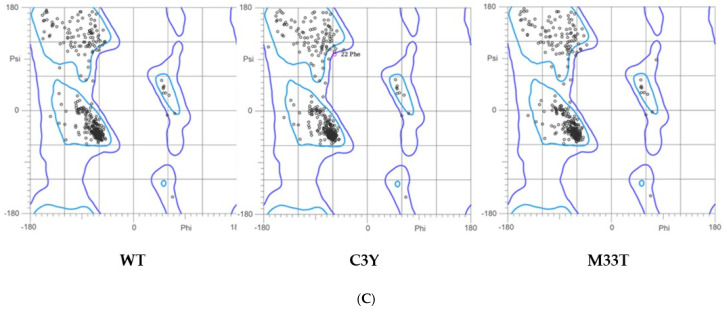 Figure 5
Peer Reviews
No public reviews on file for this paper yet. If you reviewed it on a platform where reviews are public (OpenReview, ICLR, NeurIPS, ICML), you can paste yours below so the community can read it here.
Videos
No videos yet. Explain this paper in a talk, walkthrough, or lecture? Add one.
Taxonomy
TopicsBlood disorders and treatments · Acute Myocardial Infarction Research · Immune Response and Inflammation