Remarkably High Effective Mobility of 301 cm2/V·s in 3 nm Ultra-Thin-Body SnO2 Transistor by UV Annealing
An-Chieh Shih, Yi-Hao Zhan, Albert Chin

TL;DR
A 3 nm ultra-thin SnO2 transistor achieves high mobility and performance through UV annealing, outperforming other 2D materials and silicon.
Contribution
Demonstrates a 3 nm SnO2 transistor with a record effective mobility of 301 cm2/V·s using UV annealing.
Findings
UV annealing significantly improves effective and field-effect mobility in 3 nm SnO2 transistors.
The subthreshold swing is sharpened to 201 mV/decade, enhancing low-power performance.
SnO2's wide bandgap allows operation at higher voltages, enabling potential ternary logic applications.
Abstract
At an ultra-thin 3 nm SnO2 channel thickness, a record-high effective mobility (µeff) of 301 cm2/V·s, field-effect mobility (µFE) of 304 cm2/V·s, and a sharp subthreshold swing (SS) of 201 mV/decade are achieved at a high carrier density (Ne) of 5 × 1012 cm−2. These excellent transport properties are attributed to ultraviolet (UV) light annealing. The resulting µeff is significantly higher than that of Molybdenum Disulfide (MoS2) and Tungsten Diselenide (WSe2), and is more than twice that of single-crystalline Si channel transistors at the same quasi-two-dimensional (2D) thickness of 3 nm (equivalent to five monolayers of MoS2). UV annealing not only enhances µeff and µFE but also sharpens the SS, which is crucial for low-power operation. This improved SS is attributed to reduced scattering from charged interface traps, as supported by µeff-Ne analysis, thereby increasing the…
Genes, proteins, chemicals, diseases, species, mutations and cell lines named across the full text — each resolved to its canonical identifier and authoritative record.
Click any figure to enlarge with its caption.
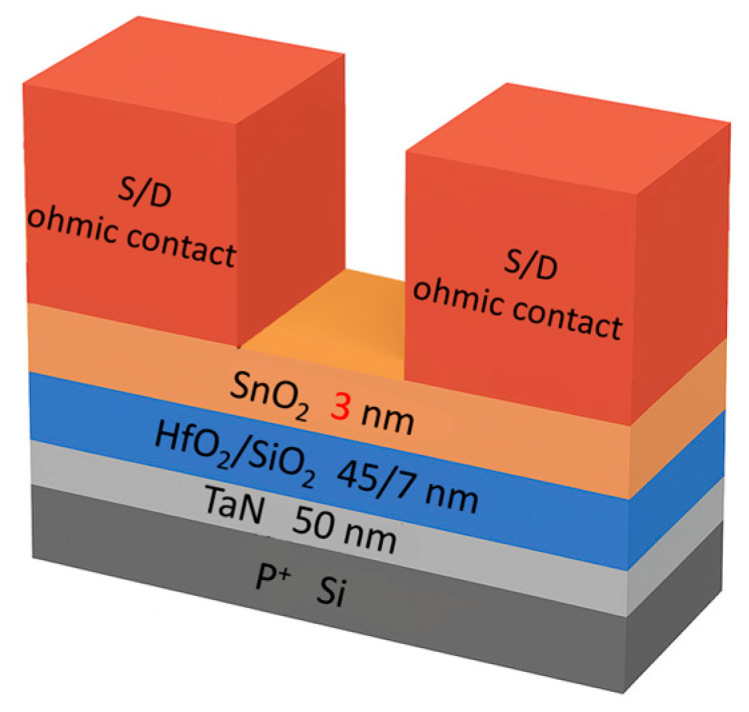 Figure 1
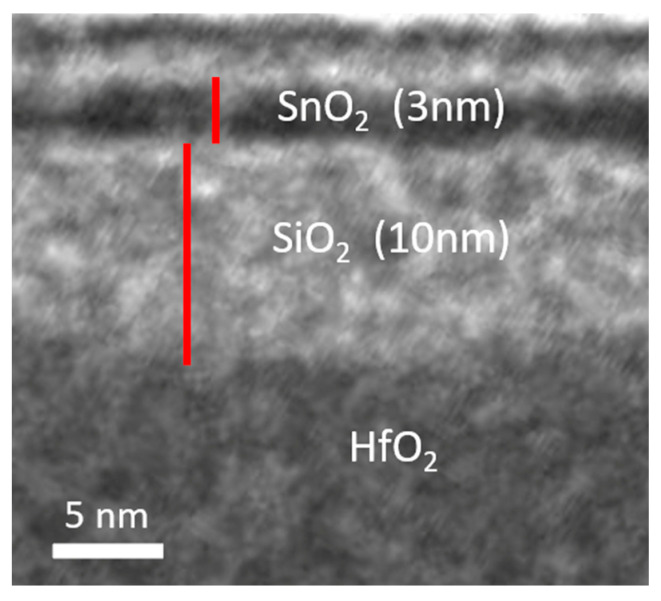 Figure 2
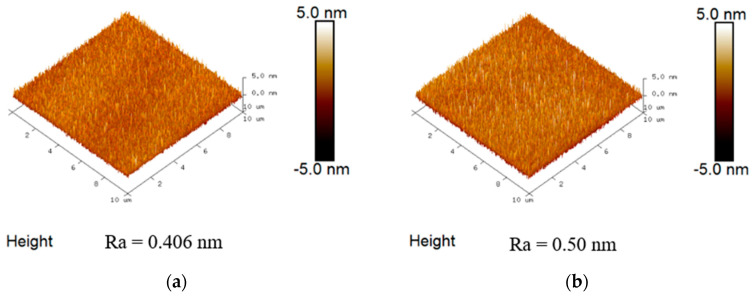 Figure 3
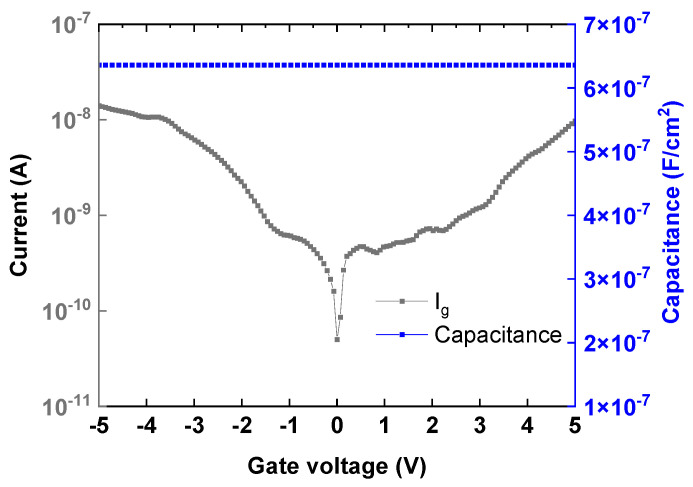 Figure 4
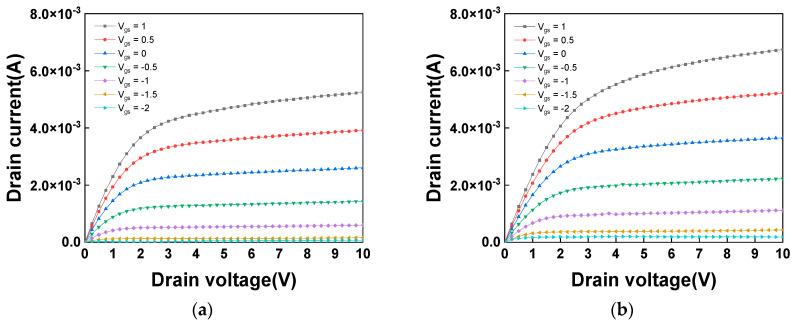 Figure 5
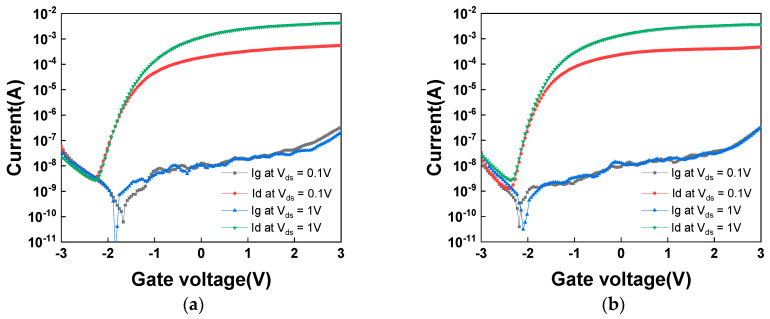 Figure 6
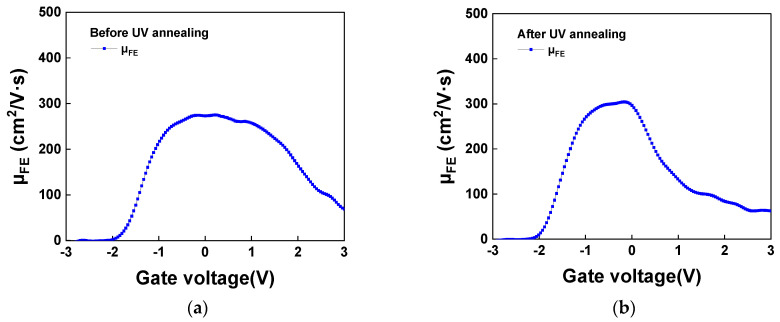 Figure 7
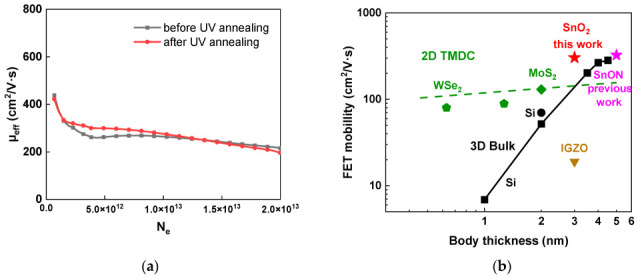 Figure 8
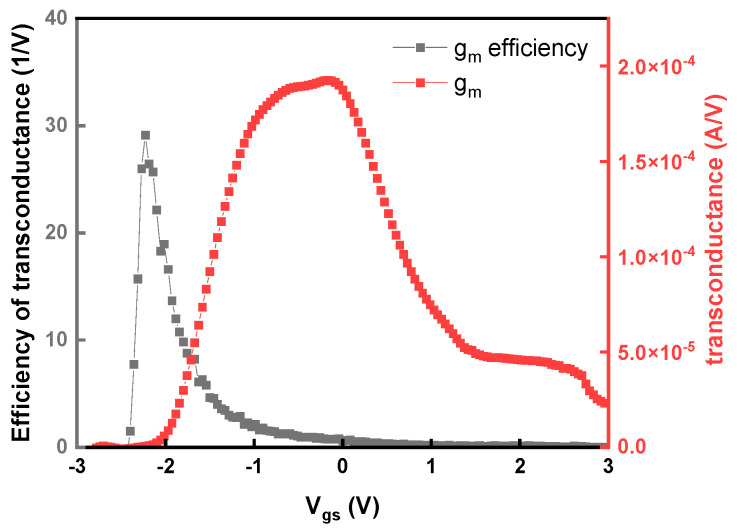 Figure 9
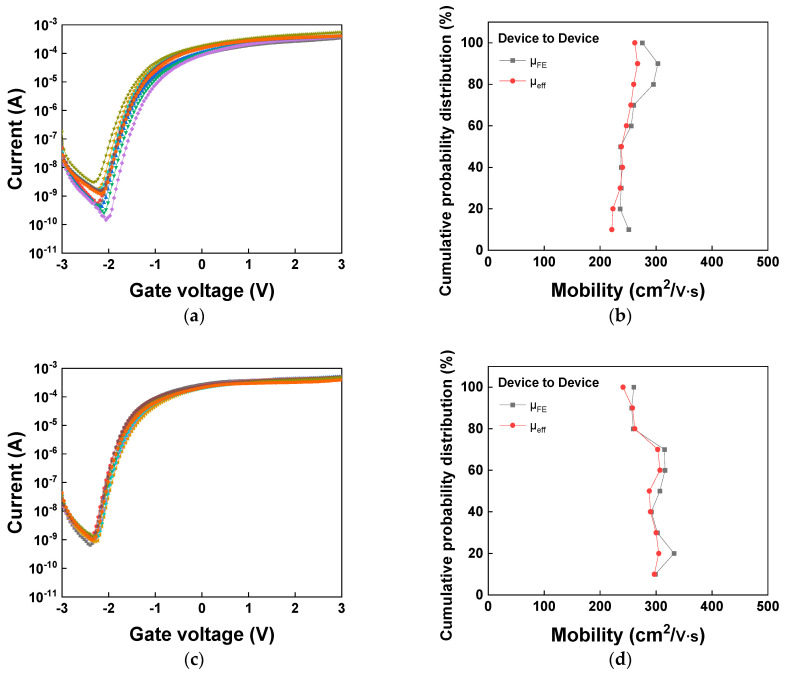 Figure 10
Peer Reviews
No public reviews on file for this paper yet. If you reviewed it on a platform where reviews are public (OpenReview, ICLR, NeurIPS, ICML), you can paste yours below so the community can read it here.
Videos
No videos yet. Explain this paper in a talk, walkthrough, or lecture? Add one.
Taxonomy
Topics2D Materials and Applications · Nanowire Synthesis and Applications · Advancements in Semiconductor Devices and Circuit Design